Planning a wedding in Suffolk County means navigating 10 different towns, each with its own rules. Here's what you actually need to know.
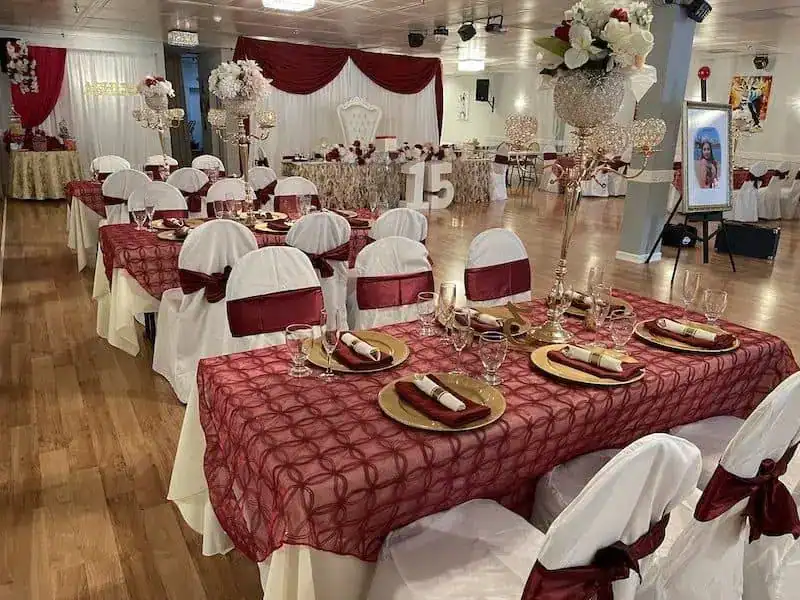
Most couples planning a wedding in Suffolk County assume there’s a single set of rules that covers everything. There isn’t. Suffolk County is made up of 10 separate towns — Babylon, Islip, Huntington, Smithtown, Brookhaven, Riverhead, Southold, Southampton, East Hampton, and Shelter Island — and each one sets its own permit requirements, noise cutoffs, and event regulations. What your venue needs in Patchogue is not the same as what’s required in Montauk or Greenport. Getting this wrong can mean fines, a DJ who has to stop at 9 PM, or a venue that isn’t legally cleared to host your event. Here’s what to know before you sign anything.
The first thing to understand is that your venue’s permit situation is not your responsibility to manage — but it is your responsibility to verify. A legitimate venue will have a Certificate of Occupancy (CO) confirming the building is legally approved for its intended use and the guest count you’re planning. If the space isn’t permanently designated for events, they’ll also need a Temporary Place of Assembly (TPA) permit. Without one, the gathering isn’t legal — full stop.
Beyond the building itself, any event where 75 or more people are expected indoors requires a posted sign showing maximum occupancy. It sounds like a small detail until a fire marshal shows up and it isn’t posted. Ask your venue directly: Do you have a valid CO for event use? Do you have a TPA if needed? What’s your posted capacity? A venue that hesitates on those questions is worth a second look.
New York State marriage licenses are issued by the Town Clerk — not a county-wide office, and not online. In Suffolk County, that means you go to the Town Clerk of whichever town you live in or plan to marry in. Both of you need to appear in person. The fee is $40, and once the license is issued, you cannot legally hold the ceremony until 24 hours have passed from the exact time of issuance.
The license is valid for 60 days from the day after it’s issued. That window matters more than people realize. If you pick up your license too early and your wedding date falls outside that 60-day window, the license expires and you have to start over. The safest approach is to get it 30 to 45 days before the wedding — far enough in advance that you’re not rushing, close enough that you’re well within the valid period.
Your officiant also needs to be legally authorized to perform the ceremony in New York State. Ordained ministers, judges, and justices of the peace all qualify. If a friend or family member is officiating, they need to be ordained through a recognized organization and may need to register with the county clerk depending on the town. It’s worth confirming this directly with your Town Clerk’s office — requirements can vary by town, and the last thing you want is a paperwork issue that surfaces after the fact.
New York’s requirements are relatively straightforward on the legal side. The complexity comes from the permit layer — which is where most couples run into trouble.
This is the part that catches people off guard. Because Suffolk County has no unified special event permit system, the rules depend entirely on which of the 10 towns your venue sits in. The Town of Southold, for example, requires applications to be submitted at least 60 business days before the event. Miss that window by even a day and you’re looking at a $500 late fee. Submit between 14 and 29 days out and that fee jumps to $1,000. The base permit fee is $300, and applicants must provide a certificate of insurance with a minimum of $2 million in coverage naming the Town of Southold.
East Hampton has similar insurance requirements — $2 million per occurrence for the full duration of the event, including setup and breakdown days. If you’re not a Suffolk County resident, you’ll need to designate a local resident as your agent for service of process. These aren’t suggestions; they’re requirements that go through a multi-department review involving the Town Board, Police Department, Planning, Zoning, and others.
Towns like Brookhaven (where our Patchogue studio is located) and Islip have their own noise control ordinances that govern commercial and entertainment uses. Amplified music, outdoor speakers, and late-night events all fall under these rules. The statewide baseline is New York Penal Law 240.20(2), which covers unreasonable noise as disorderly conduct — but individual towns enforce their own, often stricter standards on top of that.
The practical takeaway: find out which town your venue is in before you book, then contact that Town Clerk’s office directly to understand what permits apply. Don’t assume your venue has handled everything. Some have. Some haven’t. Asking the question early is free. Finding out the week of your wedding is not.
Want live answers?
Connect with a Ballroom Factory Dance Studio expert for fast, friendly support.
Entertainment regulations for weddings in New York cover three main areas: alcohol service, amplified music, and the physical space where guests will be dancing. Each one has rules that apply regardless of whether your venue mentions them, and each one can affect your event if they’re not handled correctly.
None of these are complicated once you understand the framework. The challenge is that most wedding planning guides either skip them entirely or describe the NYC rules, which don’t apply to Suffolk County. What follows is how it actually works on Long Island.

If your wedding venue isn’t a licensed bar or restaurant, someone needs a permit to legally serve alcohol there. In New York, that typically means either a One-Day Alcohol Event Permit or a Catering Permit held by your caterer.
As of April 2024, the One-Day Beer and Wine Permit was updated to include liquor and spirits — a significant change that many couples and even some vendors don’t know about yet. The cost is approximately $36 per day, and it covers beer, wine, cider, and liquor for a single 24-hour period. This permit is issued through the New York State Liquor Authority (NYSLA) and is the most common route for couples hosting a wedding at a non-licensed venue.
The alternative is a Catering Permit, which allows a licensed catering company to provide alcohol at a private event like a wedding reception. If your caterer already holds one of these, you may not need a separate One-Day Permit — but you should confirm this in writing before the event, not the morning of.
One rule that applies across the board: you cannot purchase alcohol from a grocery store or liquor store and serve it at a rented venue. Even if the venue describes itself as “BYOB” or “dry hire,” the venue still needs a permit on file to legally allow drinking on the property. This is a common misunderstanding, and it’s the kind of detail that creates problems when it’s not addressed upfront. If your venue tells you to just bring your own bottles and doesn’t mention a permit, that’s a question worth asking before you commit.
Proximity also matters. NYSLA rules can restrict alcohol service within 200 feet of a school, church, or place of worship. If your venue is in a residential area or near any of those, it’s worth verifying there are no restrictions before you finalize your bar setup.
Noise is where a lot of receptions run into trouble — not because couples are being unreasonable, but because the rules vary so much from town to town and venues don’t always communicate them clearly during the booking process.
Suffolk County has no county-wide quiet hours ordinance. Each town sets its own. In practical terms, this means a reception in Huntington may have a different music cutoff than one in Riverhead or Shelter Island. Islip, Babylon, and Huntington — three of the most populous towns in Suffolk County — each have specific rules covering amplified music and entertainment at events. Brookhaven’s Noise Control ordinance, Chapter 50, governs commercial and entertainment venues including event spaces. Violating these ordinances isn’t just a fine risk; it means your DJ gets told to stop mid-reception.
Ask your venue directly: What time does amplified music need to end? Has your venue ever had a noise complaint? Are there decibel limits we need to communicate to our DJ or band? A venue that has hosted multiple weddings will know these answers without hesitation. One that stumbles is worth pressing further.
On the dance floor side, building and fire codes in New York set requirements for venues where dancing takes place — occupancy limits, fire egress, posted capacity signs, and general safety compliance. These apply to event spaces, banquet halls, and venues like ours that offer their floors for private events. It’s worth noting that the NYC Cabaret Law, which once restricted dancing in certain establishments, was repealed in 2017 — but building code, zoning, and fire safety requirements for venues with dancing remain fully in force statewide. Your venue should be able to show you their posted capacity and confirm they’re compliant with local fire codes. If they can’t, that’s a gap.
One more layer worth knowing: Suffolk County Chapter 365 governs catering contracts specifically. Adopted in 1987 after the county received numerous complaints about predatory catering agreements, this law requires specific disclosures and governs refund rights when couples book catering services long in advance. If you’re signing a catering contract — which most couples do, often a year or more out — knowing this law exists gives you real consumer protection if something goes wrong.
The goal here isn’t to make wedding planning feel more complicated. It’s to make sure you’re asking the right questions early enough that nothing blindsides you later. With the average Long Island wedding costing around $58,245 — the highest in the country — the stakes are real, and the details matter.
Start with your venue’s CO and TPA status. Confirm which town you’re in and what that town’s permit timeline looks like. Get clarity on alcohol permitting in writing. Ask your DJ or band about the noise cutoff before you book them. And if you’re planning an outdoor event near the water or in the Hamptons or North Fork, build in extra lead time — those towns enforce their rules consistently.
When you’re ready to think about the entertainment side of your wedding — specifically the part where you and your partner actually have to dance in front of everyone — that’s where we come in. At Ballroom Factory Dance Studio in Patchogue, NY, we’ve helped dozens of Suffolk County couples build first dances they’re genuinely proud of, from custom Dirty Dancing-style routines to elegant waltzes to upbeat father-daughter choreography. Reach out to us directly and we’ll take it from there.
Summary:
Article details:
Share: