Patchogue has quietly become one of Long Island's most active arts communities. Here's how dance plays a bigger role in that story than most people realize.

If you live on the South Shore of Suffolk County, you already know that Patchogue isn’t the same town it was twenty years ago. The downtown has real energy now — theaters, galleries, festivals, independent cinema, live music. People drive in from across Long Island just to spend an evening there. What doesn’t always make it into that conversation is dance. Not performances you watch from a seat, but dance you actually do. The kind that connects you to other people, builds something in you over time, and makes you feel like you belong somewhere. That’s what this page is about.
The American Planning Association named Downtown Patchogue Village a Great Place in America in 2019. That’s not a local award — that’s a national recognition for arts-driven community revitalization, and it didn’t happen by accident. It happened because Patchogue made a sustained, deliberate investment in culture as infrastructure.
The Patchogue Theatre for the Performing Arts reopened in 1998 after years of closure and now draws roughly 150,000 patrons a year. The Patchogue Arts Council, founded in 2008, runs MoCA L.I. — a contemporary art museum that also produces MoCA L.I.ghts every October, transforming downtown buildings into open-air light art installations. Arts on Terry brings more than 200 artists to the streets each year. The Great South Bay Music Festival fills the summer calendar. Alive After Five keeps the downtown alive on weekday evenings. Governor Hochul recently announced a $2 million state grant toward a new Patchogue Arts Council cultural center, part of a broader $47 million downtown revitalization effort.
This is a community that takes its arts seriously. And dance — real, participatory, social dance — belongs in that conversation.

When most people think about dance venues, they picture a stage. But the more interesting question for anyone who actually wants to dance — not just watch — is where can you go, in and around Patchogue, to learn, practice, and be part of a dance community?
The Patchogue Theatre hosts dance performances as part of its regular season, and The Gateway Performing Arts Center in nearby Bellport produces full-scale productions year-round. These are essential parts of the performing arts ecosystem on the South Shore. The American Dance Theatre of Long Island operates out of Bayport, just a few miles up the road.
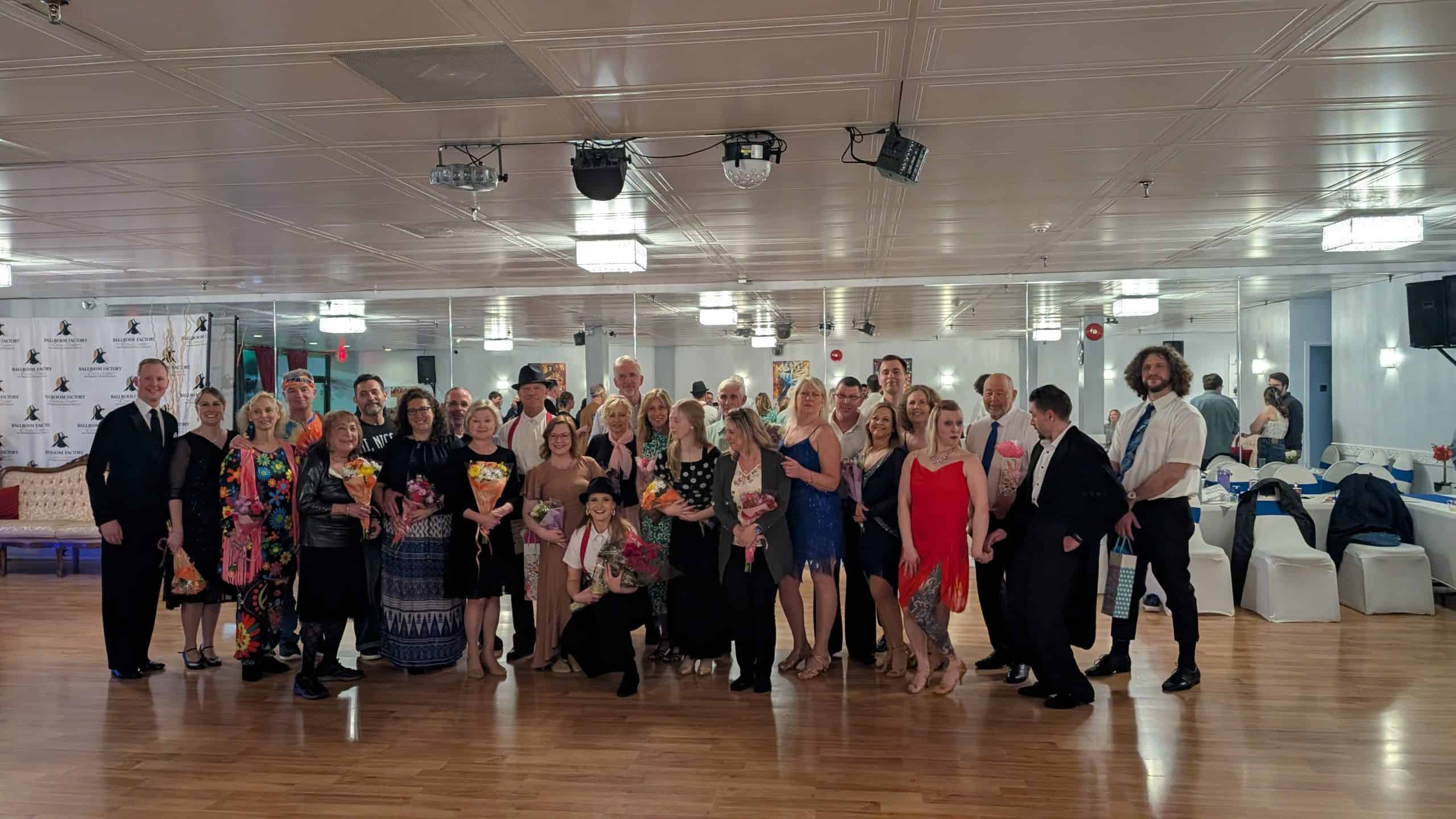
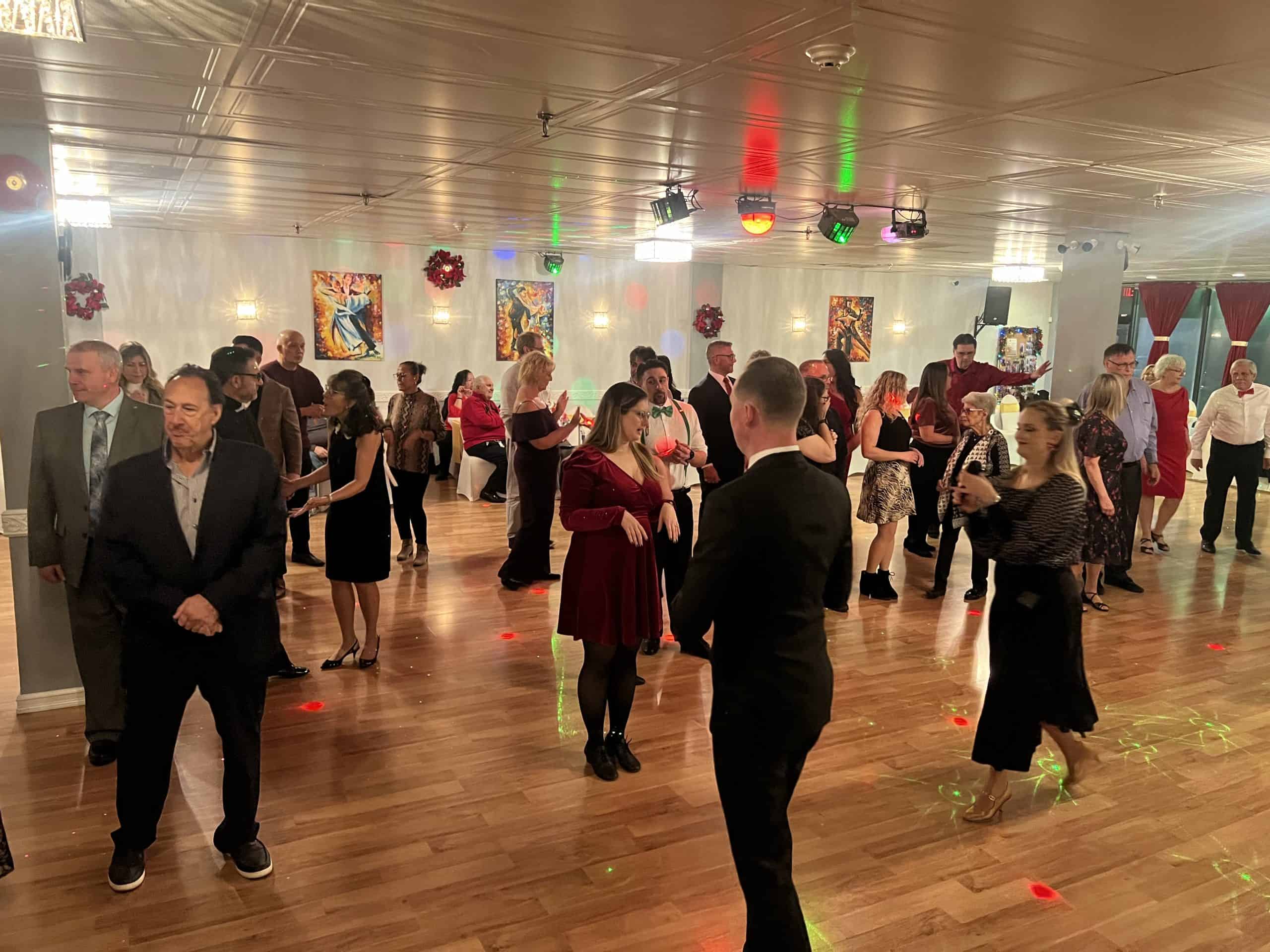
We’re located at 620 Waverly Ave in Patchogue, and we’ve been part of this community in a way that goes beyond a class schedule. Our studio is a working dance floor, a performance venue, and a gathering place — the kind of space where a complete beginner and an experienced dancer can both feel at home on the same evening. We host social dance parties, seasonal showcases including our Spring Showcase and Dinner Dance, and community events that give our students something to work toward and look forward to.
Suffolk County has a large and growing Latino population, particularly in communities like Brentwood, Central Islip, and Patchogue itself. That’s not a demographic footnote — it’s a reflection of a genuine, living dance culture. Salsa, Bachata, and Merengue aren’t niche offerings here. They’re part of the social fabric. We teach all three, alongside Waltz, Tango, Foxtrot, Cha-Cha, Rumba, Hustle, Swing, and more — because the South Shore’s dance community is as diverse as the people who live here.
What makes a dance venue worth your time isn’t just the floor space. It’s whether the people there make you feel like you can actually do this, even if you’ve never tried before. That’s something we hear consistently from students who walked in nervous and left wondering why they waited so long.
Patchogue adopted formal Culture District zoning — one of the few municipalities on Long Island to do so. That designation exists because the village recognized something that urban planners and community researchers have documented for years: arts participation doesn’t just make a place more interesting. It makes it more connected, more economically stable, and more livable.
Nonprofit arts and culture organizations generate $330 million in annual economic activity on Long Island, supporting nearly 5,000 jobs and more than $80 million in tax revenue. Long Island is home to 15% of New York State’s population but receives only about 2.5% of state arts grant funding. That gap makes community-level arts participation — the kind that happens in studios, not just theaters — more important, not less.
Dance education research consistently shows that participation improves self-image, community connection, and cognitive function across all age groups. For older adults in particular, ballroom dancing has documented benefits for balance, cardiovascular health, and mental sharpness. For couples, it’s one of the few shared activities that builds a skill, creates a memory, and gives you something to laugh about together. For someone who’s new to the area and looking for a way in — a reason to show up somewhere regularly and actually know people — a dance studio fills a social role that’s genuinely hard to find in suburban Long Island.
That’s just what the research says, and it matches what we hear from the people who take lessons here. Dance is participatory art. It belongs in a community that values culture, and Patchogue is exactly that kind of community.
Want live answers?
Connect with a Ballroom Factory Dance Studio expert for fast, friendly support.
Suffolk County’s performing arts landscape is broader than most people realize. The Patchogue Theatre is the largest theater in the county. The Gateway in Bellport is one of the most respected regional theaters on Long Island. Tilles Center at LIU Post in Brookville anchors the North Shore. The Long Island Arts Alliance, Suffolk Arts and Film, and the Huntington Arts Council all support artists and organizations across the county.
What’s less visible — but just as real — is the community-level performing arts ecosystem: the studios, the rehearsal spaces, the instructors who’ve been teaching for decades, the students who perform at showcases and go on to compete. That ecosystem is where most people’s relationship with the performing arts actually begins.

There’s a version of arts engagement that’s entirely passive — you buy a ticket, you watch, you go home. That’s valuable. But there’s another version where you’re actually in it, developing a skill, performing for people you know, and building relationships with other people who show up to the same place every week. That second version tends to have a much bigger impact on your life.
For most adults across Suffolk County, the barrier to participatory arts isn’t interest — it’s not knowing where to start, or worrying that they’ve already waited too long. Dance is one of the most accessible entry points precisely because it doesn’t require any prior experience, any equipment, or any particular athletic ability. You just have to show up.
Our studio serves students from more than 50 Suffolk County communities — Sayville, Holbrook, Medford, Islip, Ronkonkoma, Bohemia, Bayport, Bellport, Selden, East Patchogue, and many more. People drive from across the South Shore because the combination of what we offer — the styles, the instructors, the community — isn’t easy to find closer to home. We’re open Monday through Friday from 2:00 PM to 9:30 PM, with Saturday availability by appointment, which matters in a county where a lot of people are working around LIRR schedules and family commitments.
The students who get the most out of their time here aren’t necessarily the ones who come in with natural talent. They’re the ones who come in curious, stick with it past the first few awkward lessons, and suddenly find themselves at a showcase wondering how they got there. That progression happens faster than most people expect, especially with one-on-one instruction from instructors who’ve spent their careers learning how to meet students exactly where they are.
Dance remains one of the least available art forms in public schools, according to the Arts Education Partnership. That’s a national problem, and it means that private studios aren’t just a convenience — they’re often the primary access point for dance education in a community. When a studio like ours operates in a place like Patchogue, it’s not separate from the arts scene. It’s part of what keeps it functional.
Arts Education Partnership research shows that community dance programming creates pride in cultural heritage, fosters intergenerational connection, and gives participants — both younger and older — a stronger sense of belonging. That’s consistent with what we see here. Students in their 20s and students in their 60s are often in the same room, learning the same Waltz, and getting something different but equally meaningful out of the experience.
We also function as an event venue — for weddings, private parties, and gatherings that bring people together around celebration. That dual role matters in a community context. A space that hosts a Latin dance class on a Tuesday and a wedding reception on a Saturday is doing something different than a studio that only runs classes. It’s embedded in the life of the community in a more complete way.
Patchogue has invested seriously in its cultural identity. The Culture District zoning, the state grants, the restored theater, the working artists living at Artspace Patchogue — these are signals that this is a community that wants arts to be part of everyday life, not a special occasion. Dance fits that vision. It’s accessible, it’s social, it’s something you can start this week and still be doing ten years from now. And it’s happening right here, a few blocks from the Great South Bay, in our studio that’s been part of this community long enough to know what our students actually need.
Patchogue has built something real — a downtown arts scene that holds up to scrutiny, draws people from across Long Island, and keeps growing. Dance is a natural part of that story, even if it doesn’t always get the same attention as the theater or the gallery.
If you’ve been curious about lessons, or you’ve been to one of the festivals and thought about what it would feel like to actually dance rather than just watch, that instinct is worth following. Most of the students who come through our doors felt exactly the same way before they arrived — uncertain, a little self-conscious, and pleasantly surprised by how quickly that changes.
We’re at 620 Waverly Ave in Patchogue. Reach out, ask a question, or just come see the space. The arts scene here is worth being part of — and so is this.
Summary:
Article details:
Share: