Wondering how much time you actually need to learn a wedding dance? Here's what to expect — from your first lesson to the big day.
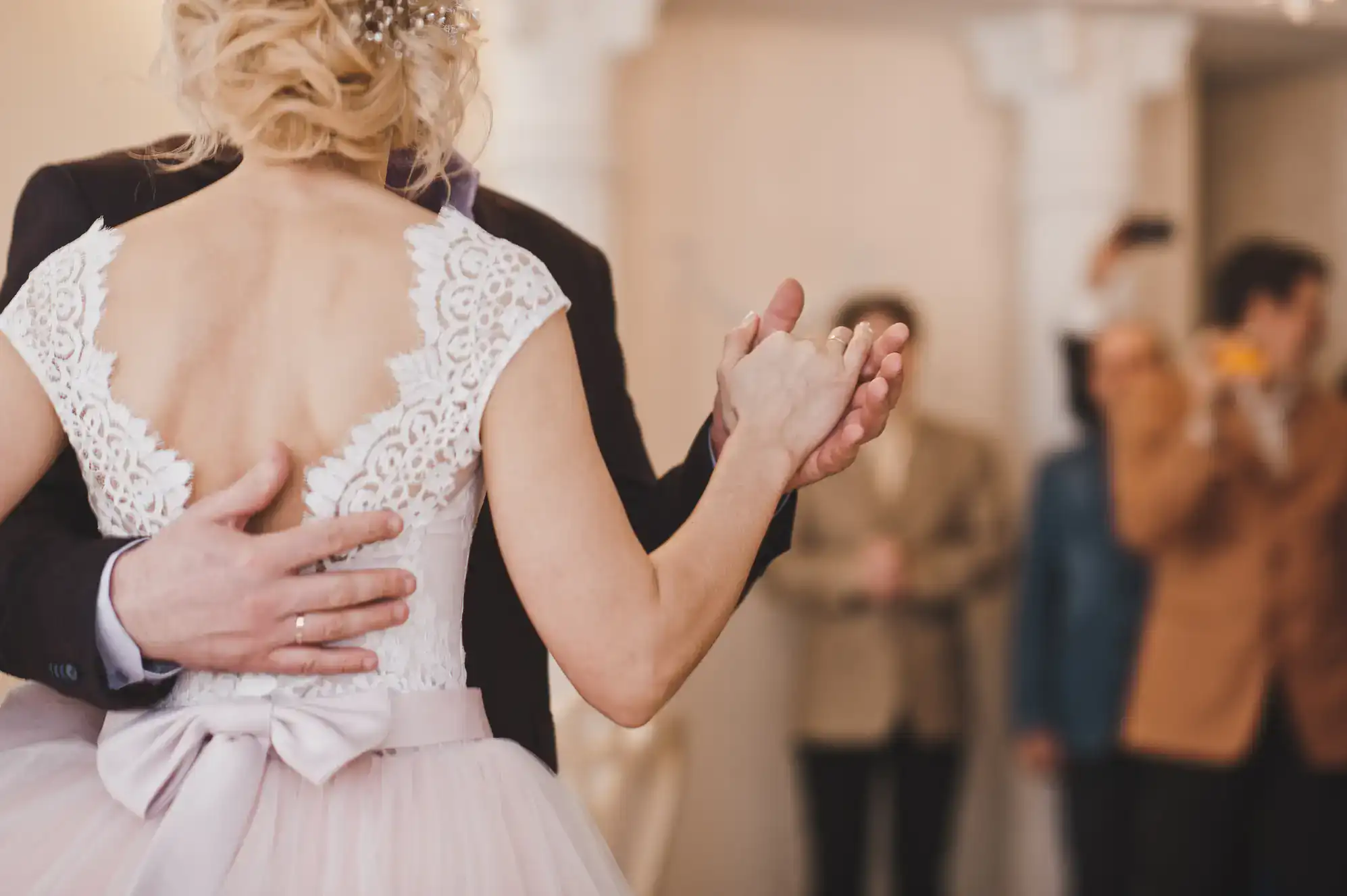
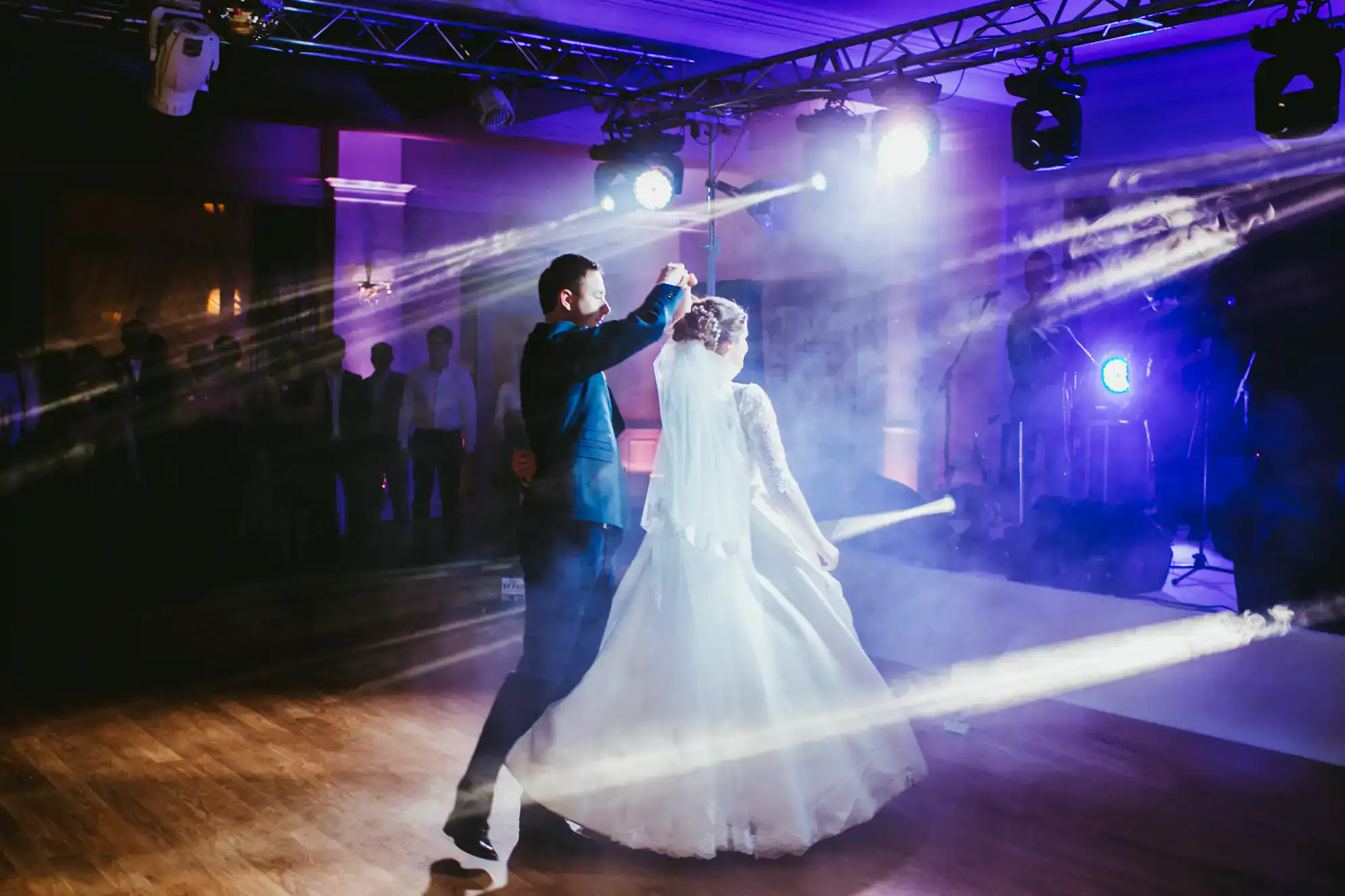
The first dance is one of those wedding moments everyone watches. It gets photographed, videoed, and replayed for years. And yet, for most couples, it’s the last thing they actually prepare for.
If you’ve been putting it off — or you’re not even sure where to start — you’re not alone. Most people who come to us have never taken a dance lesson in their life. Some book months in advance; others call us three weeks before the wedding. Either way, there’s more you can do in less time than you think. Here’s what you need to know.
The style you choose shapes everything — how the choreography feels, how much time you’ll need to learn it, and how it looks on the floor. Most couples pick a style based on their song, which is exactly the right instinct. The tempo, rhythm, and emotional tone of the music will naturally point you toward a few good options.
A slow, romantic ballad usually calls for a Waltz or Rumba. Something with a bit more swing in it might work beautifully as a Foxtrot. If your song has Latin roots — or you just want energy and movement — Salsa, Cha-Cha, or Bachata are all worth considering. The point is, there’s no single “correct” first dance. There’s just the one that fits you.
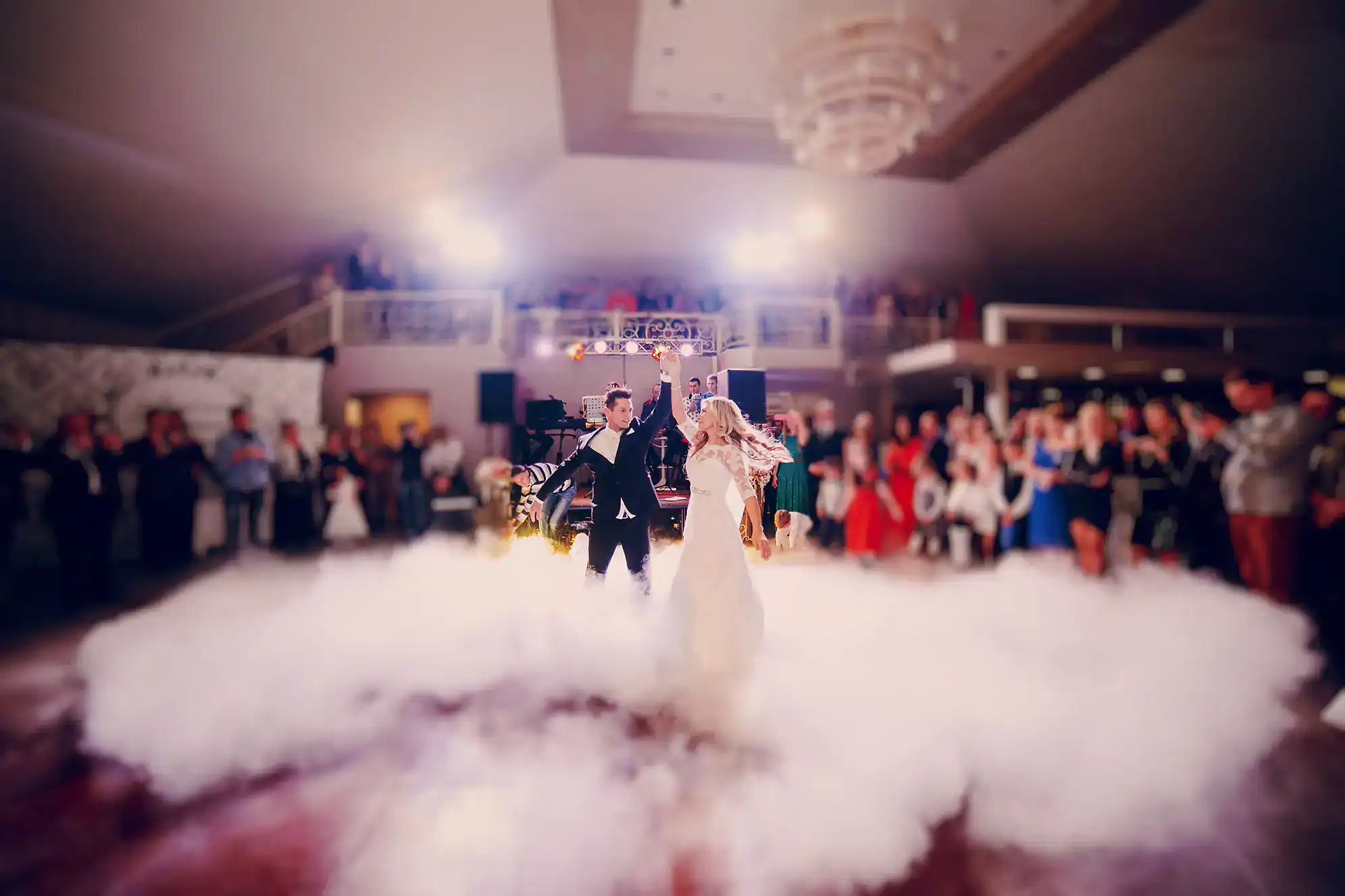
If you’re staring at your song list with no idea what style makes sense, you’re in good company. Most couples come in with a song they love and zero framework for what to do with it. That’s exactly what the first lesson is for — you bring the song, and we help you figure out what works.
The Waltz is the classic choice for a reason. It’s elegant, it flows naturally with slow-to-mid-tempo songs, and it gives couples a strong sense of connection on the floor without requiring a lot of athletic ability. The Rumba is another popular pick — it’s slower and more controlled, which makes it forgiving for beginners while still looking polished and intentional.
If you want something with more personality, the Foxtrot is smooth and versatile, pairing well with everything from jazz standards to modern pop. Cha-Cha is a surprisingly fast learner — the footwork is repetitive enough that it clicks quickly, and the energy it brings to the floor tends to get a great reaction from guests. Couples who want something distinctly Latin often gravitate toward Salsa or Bachata, both of which have a natural warmth and rhythm that translates well even for beginners.
And then there are couples who want something completely different — a choreographed routine to a pop song, a Dirty Dancing homage, a mashup that surprises the room. We’ve done all of it. The key is being honest about your timeline and what you can realistically pull off without it feeling stressful. A simpler routine executed confidently will always beat an ambitious one that falls apart under pressure.
The style decision also depends on your venue and your comfort level. A vineyard on the North Fork has a different feel than a country club in Hauppauge or a waterfront reception in Bay Shore. Some settings call for something formal and sweeping; others are better suited to something fun and relaxed. When you’re not sure, lean toward the style that feels most like the two of you — that’s usually the right answer.
Style selection isn’t just about the song. It’s also about what you and your partner are actually comfortable doing in front of everyone you know. That’s a real factor, and it’s worth being honest about it early.
If one of you is a natural mover and the other is convinced they have two left feet, the style needs to work for both of you — not just the more confident partner. This is one of the most common situations we see, and it’s very manageable when you’re working with a private instructor who can pace the lesson around the less experienced partner without making them feel singled out.
For couples where both partners are complete beginners, styles with a clear, repetitive structure tend to work best. The Waltz has a predictable three-count rhythm that most people can feel fairly quickly. The Rumba is slow enough that there’s room to breathe and self-correct. Cha-Cha has a simple enough footwork pattern that it often clicks within the first couple of lessons. These aren’t beginner-only styles — they’re genuinely beautiful dances that just happen to be accessible.
For couples with a bit more confidence or coordination, there’s more room to explore. Tango has a dramatic quality that photographs incredibly well. Foxtrot is smooth and adaptable to a wide range of songs. If you’re both comfortable with Latin rhythms, Salsa or Bachata can turn a first dance into a moment the room genuinely doesn’t expect.
The honest answer is that the best style is the one you’ll actually practice. Whatever you choose, consistent repetition between lessons — even 15 to 20 minutes a few times a week at home — makes an enormous difference. We’ll guide you on what to work on between sessions, and that homework is where a lot of the real progress happens.
Want live answers?
Connect with a Ballroom Factory Dance Studio expert for fast, friendly support.
This is the question almost every couple asks first, and the honest answer is: it depends on how complex you want the routine to be and how much time you have before the wedding.
What we can tell you from experience is that a simple, elegant routine — something that looks polished and feels comfortable — is achievable in five to ten private lessons for most couples. That’s not a marketing claim; it’s a realistic benchmark based on what we see in the studio. The timeline shifts based on your starting point, your song, your goals, and how consistently you practice between sessions.
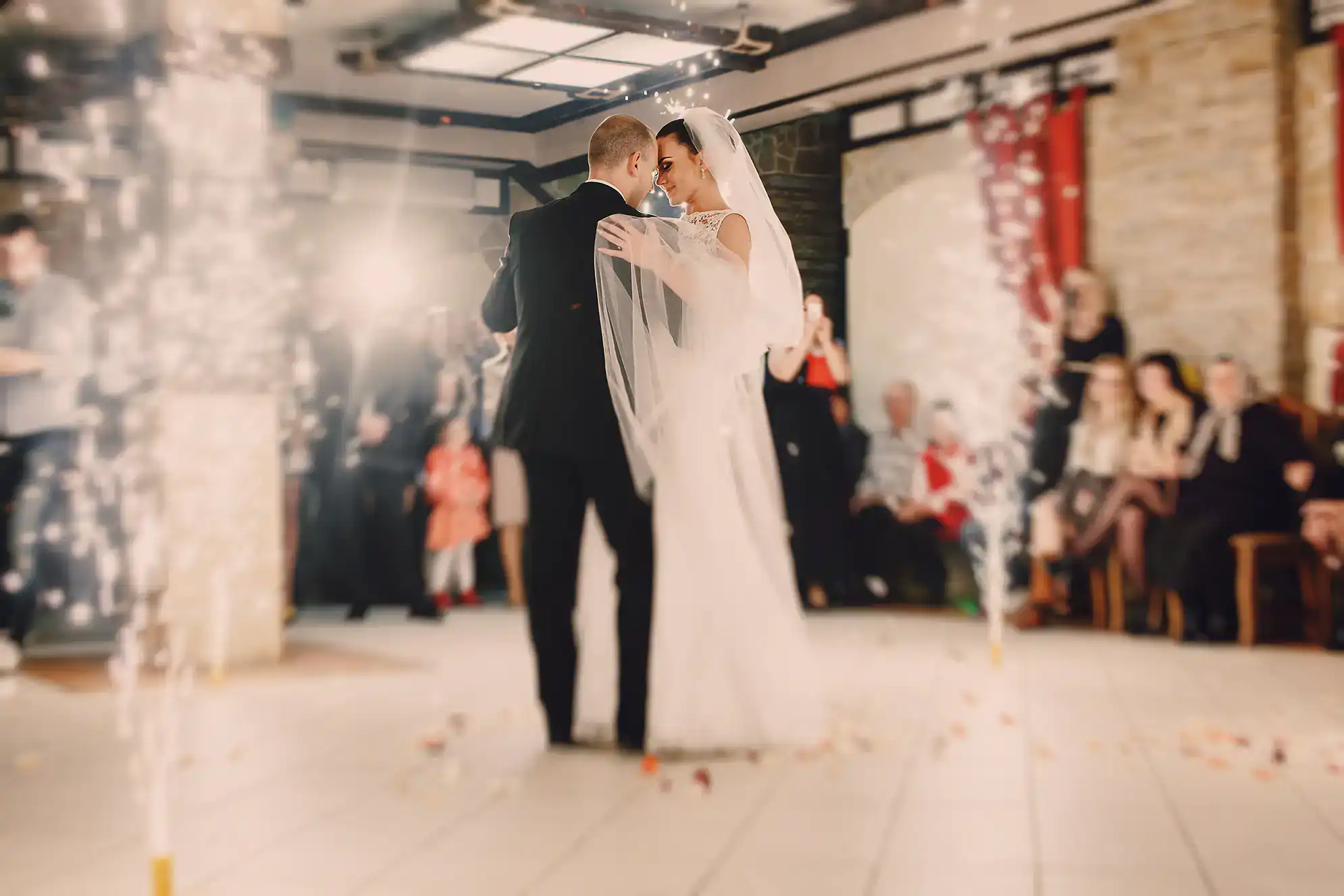
The number of lessons you need depends on three things: how much experience you’re starting with, how involved you want the choreography to be, and how far out your wedding is.
For complete beginners — couples who have genuinely never danced together before — starting at least ten to twelve weeks out gives you the most comfortable runway. At one lesson per week, that’s roughly ten to twelve sessions, which is enough time to learn a real routine, practice it until it feels natural, and walk into your wedding with genuine confidence rather than just hoping for the best.
If you have a little experience, or if you’re aiming for something relatively simple, six to eight weeks is a workable window. You won’t have the luxury of going slowly, but you also won’t feel rushed if you’re putting in the practice time between sessions.
For couples who are closer to the wedding — four to six weeks out — it’s still very much worth starting. A focused set of lessons in this window can give you a clear structure, solid footwork, and the kind of muscle memory that holds up when you’re nervous and the room is watching. We’ve had couples come in with five weeks to go and walk out of their first dance to a standing ovation.
Even if you’re weeks away and feeling behind, don’t write it off. A few well-structured lessons are always better than winging it. The goal isn’t perfection — it’s feeling like yourself on the floor instead of frozen.
A lot of people don’t book lessons because they don’t know what they’re walking into. So here’s what an actual first lesson looks like when you come to us in Patchogue.
You bring your song. We listen to it together, talk about what you like about it, and start mapping out what style and structure makes sense. There’s no judgment about your skill level — we’ve worked with people who described themselves as “the worst dancer in the world” and watched them nail a dip in front of a hundred guests. The first session is about getting comfortable, establishing some basic frame and footwork, and giving you something to take home and practice.
From there, each lesson builds on the last. We’re not running you through a template. The choreography is built around your song, your style, and what you can realistically execute well. If something isn’t clicking, we adjust. If you’re moving faster than expected, we add more. The whole process is designed around you — not a curriculum.
For couples throughout Suffolk County, we understand the reality of the schedule. A lot of our clients are commuting into the city or juggling demanding jobs in Hauppauge, Melville, or Ronkonkoma. Our evening hours — open until 9:30 PM Monday through Friday — exist for exactly that reason. You shouldn’t have to choose between wedding prep and the rest of your life.
We also serve couples from across the county, from Babylon and Bay Shore in the west to Brookhaven, Coram, and out toward the East End. If you’re planning a vineyard wedding in Riverhead or a waterfront reception in Sayville, we know those venues, we know what those settings call for, and we can tailor the routine accordingly. That local familiarity matters more than it might seem — a dance that fits the room always lands better than one that doesn’t.
The most common regret couples have isn’t starting too early — it’s waiting too long and running out of time to enjoy the process. Learning your first dance shouldn’t feel like a last-minute scramble. It should be one of the more fun parts of planning a wedding.
Whether you have three months or three weeks, there’s a version of this that works for your timeline and your goals. The style, the structure, the pacing — all of it gets built around you.
If you’re somewhere in Suffolk County and you’ve been putting this off, now is a good time to stop doing that. Reach out to us at Ballroom Factory Dance Studio in Patchogue, tell us your song and your date, and we’ll take it from there.
Summary:
Article details:
Share: