Your first dance should feel like you — not a performance you rehearsed out of obligation. Here's how to find the style and song that actually fits.
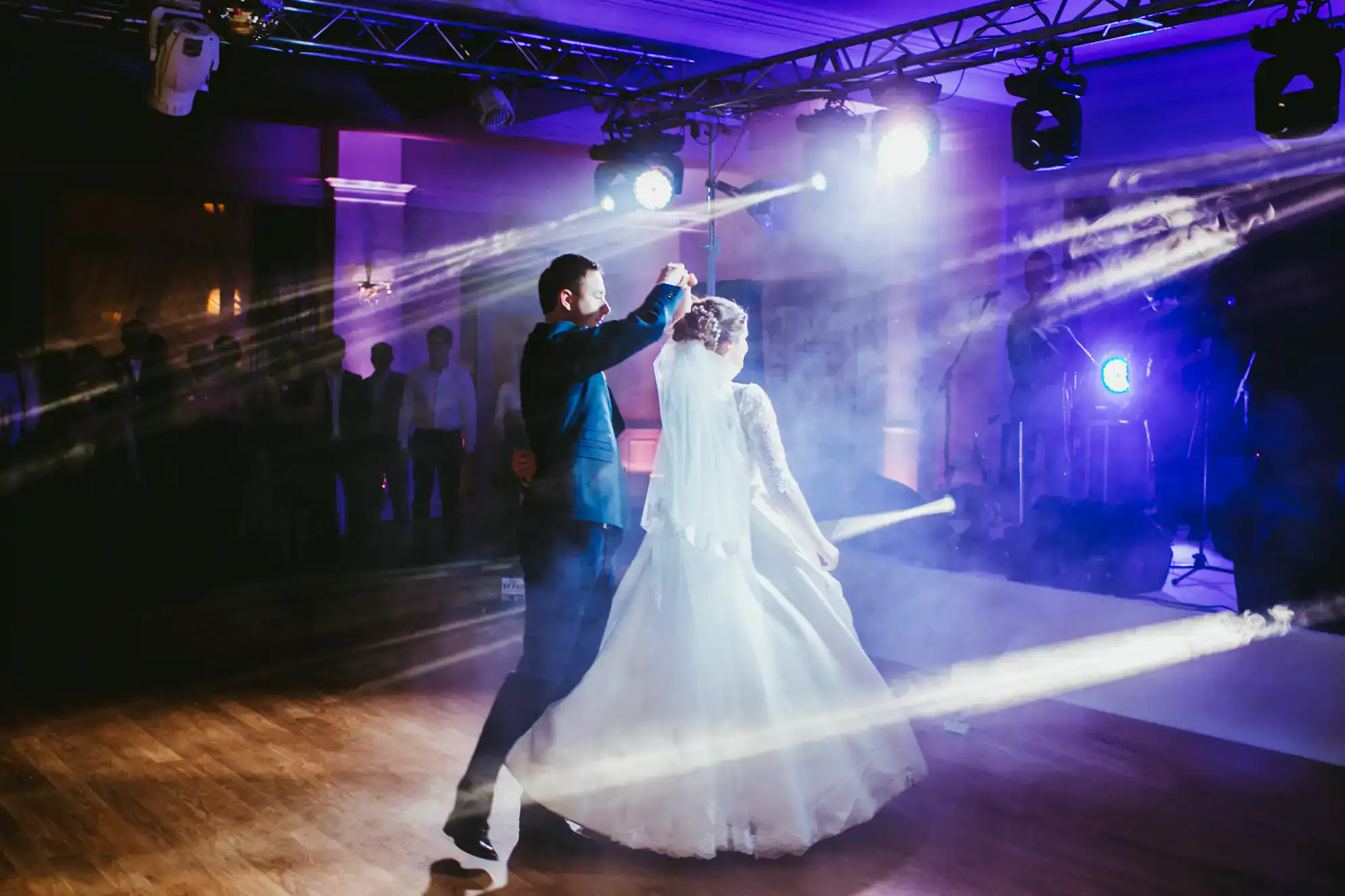
Most couples don’t spend a lot of time thinking about their first dance until the wedding is close — and then it suddenly feels like a very big deal. You’re standing in front of everyone you’ve ever known, and the pressure to not look awkward is real.
Here’s the thing: the couples who feel most confident on that floor aren’t necessarily the ones who can dance. They’re the ones who chose a style that fits who they actually are and spent a little time preparing for it. This guide will help you figure out which first dance style matches your personality, how to pick a song that works with it, and what the process of getting ready actually looks like.
The biggest mistake couples make is choosing a dance style based on what they’ve seen at other weddings — not what actually fits them. A slow, swaying Waltz looks beautiful when the couple is comfortable with it. It looks painfully long when they’re not.
The better starting point is your personality as a couple. Are you the type who gravitates toward classic, timeless things? Or do you tend to show up to parties and end up on the dance floor whether you planned to or not? Your honest answer to that question points directly toward the right style — and it makes the whole process easier from there.
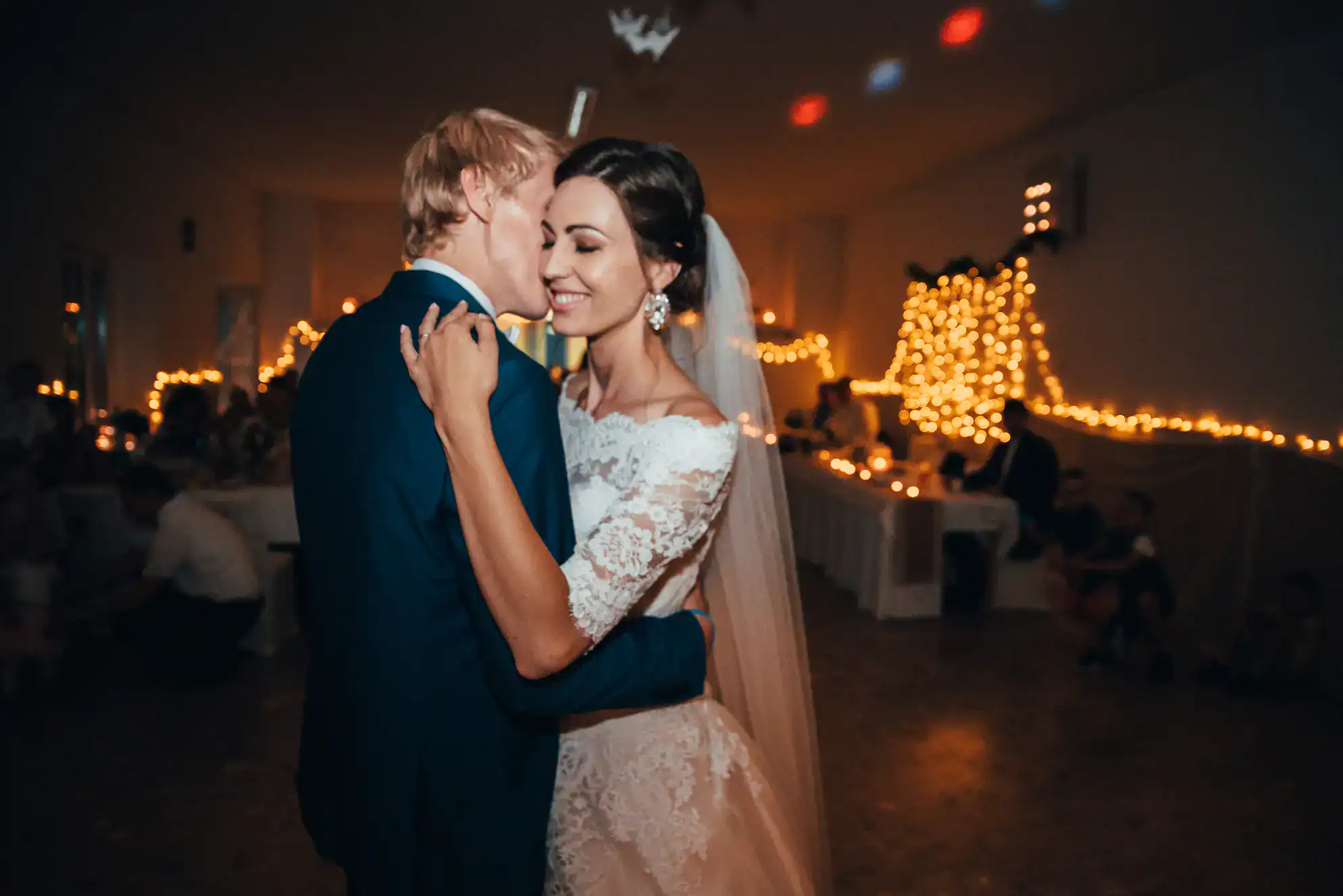
If you and your partner tend toward the romantic and understated — the kind of couple who appreciates a well-set table and a slow Sunday morning — a Waltz or Foxtrot is probably your match. Both styles have a graceful, flowing quality that looks effortlessly elegant even when you’re still learning. The Waltz moves in a steady three-count rhythm that feels natural once you find it, and the Foxtrot has a smooth, gliding quality that reads as polished without requiring a lot of footwork complexity. These are the styles that photograph beautifully and feel genuinely intimate.
If you’re a couple that’s a little more playful — the ones who end up doing impressions at dinner and aren’t afraid to be a little silly — something like a Cha-Cha or Swing might be a better fit. These styles have energy and personality built into them. They allow for interaction between partners, moments of humor, and a pace that keeps guests engaged. A Cha-Cha to an upbeat pop song or a Swing to something with a classic rock feel can genuinely surprise a room in the best way.
Then there’s the couple that has some Latin roots or just loves that kind of music — Salsa, Rumba, and Bachata are all worth considering. Salsa brings heat and rhythm; Rumba is slower and more sensual, often described as the dance of love; Bachata has a close-hold, swaying quality that feels deeply personal. For couples from communities across Suffolk County where Latin music is woven into daily life, choosing one of these styles isn’t just a fun idea — it’s a way to honor something real about who you are together.
And if none of these feel quite right on their own, fusion is increasingly common. Mixing a Waltz entrance with a Salsa finish, for example, gives you both the classic moment and the personality pop. About 10 to 15 percent of couples are now going this route, and it tends to produce some of the most memorable first dances.
Your song choice matters more than most couples realize — not just emotionally, but technically. The tempo of a song determines which dance styles are even possible, and the mood of it shapes how the routine will feel to perform and to watch.
As a general guide, songs in the 75 to 90 BPM range tend to work well for Waltz, Rumba, and slower Foxtrot. Songs between 100 and 130 BPM open up options like Cha-Cha, Swing, and Salsa. If your song falls outside those ranges, it doesn’t mean you’re stuck — we can help you find a version of the song that’s been edited to the right length and tempo, or suggest a style that works with what you have.
The mood of the song matters just as much. A song that makes you both cry probably isn’t the right foundation for a Cha-Cha. A high-energy anthem might feel strange set to a slow Waltz. Think about how you want the moment to feel — intimate and tender, joyful and celebratory, or somewhere in between — and let that guide your song shortlist before you get into specific titles.
One practical note on length: the ideal first dance runs somewhere around two minutes and thirty seconds. Long enough to feel like a real moment, short enough that neither you nor your guests are watching the clock. If your favorite song is four minutes long, it can almost always be edited down without losing what makes it meaningful. This is something we help couples think through during lessons — it’s a small detail that makes a noticeable difference in how the dance lands on the day.
The #1 thing couples say they wish they’d done differently? Starting sooner. Not because they needed more time to master complicated choreography, but because the extra lessons gave them the comfort and confidence that made the whole thing feel easy. When you’re relaxed, the dance looks good. When you’re tense and counting steps in your head, it shows.
Want live answers?
Connect with a Ballroom Factory Dance Studio expert for fast, friendly support.
A lot of couples put off booking lessons because the process feels mysterious. What actually happens in a first dance lesson? How many do you need? What if you genuinely cannot dance?
The honest answer is that the process is much more straightforward than it sounds, and the starting point is always the same: a conversation about who you are, what song you’re considering, and how much time you have before the wedding. Everything else builds from there.
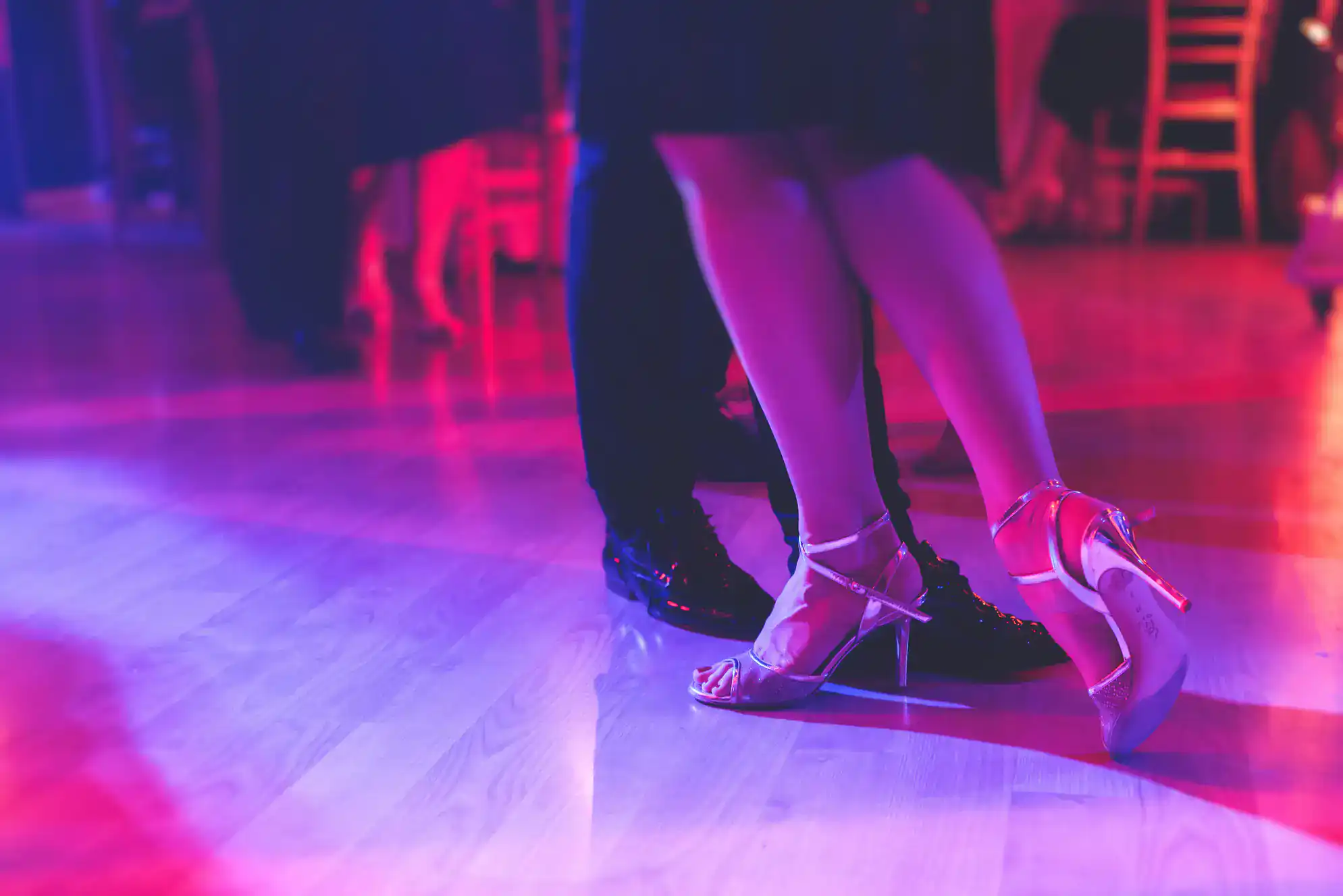
For most couples, five to ten private lessons is enough to build a polished, natural-looking routine. Five lessons gets you a clean, simple dance that looks intentional and confident. Ten lessons gives you more room to refine the details, add personality, and feel genuinely comfortable rather than just prepared.
The couples who get the most out of the process are usually the ones who come in with no dance background at all. That might sound counterintuitive, but it makes sense when you think about it — they have no habits to unlearn, and they tend to follow instruction more openly than people who took a few classes years ago and think they remember more than they do.
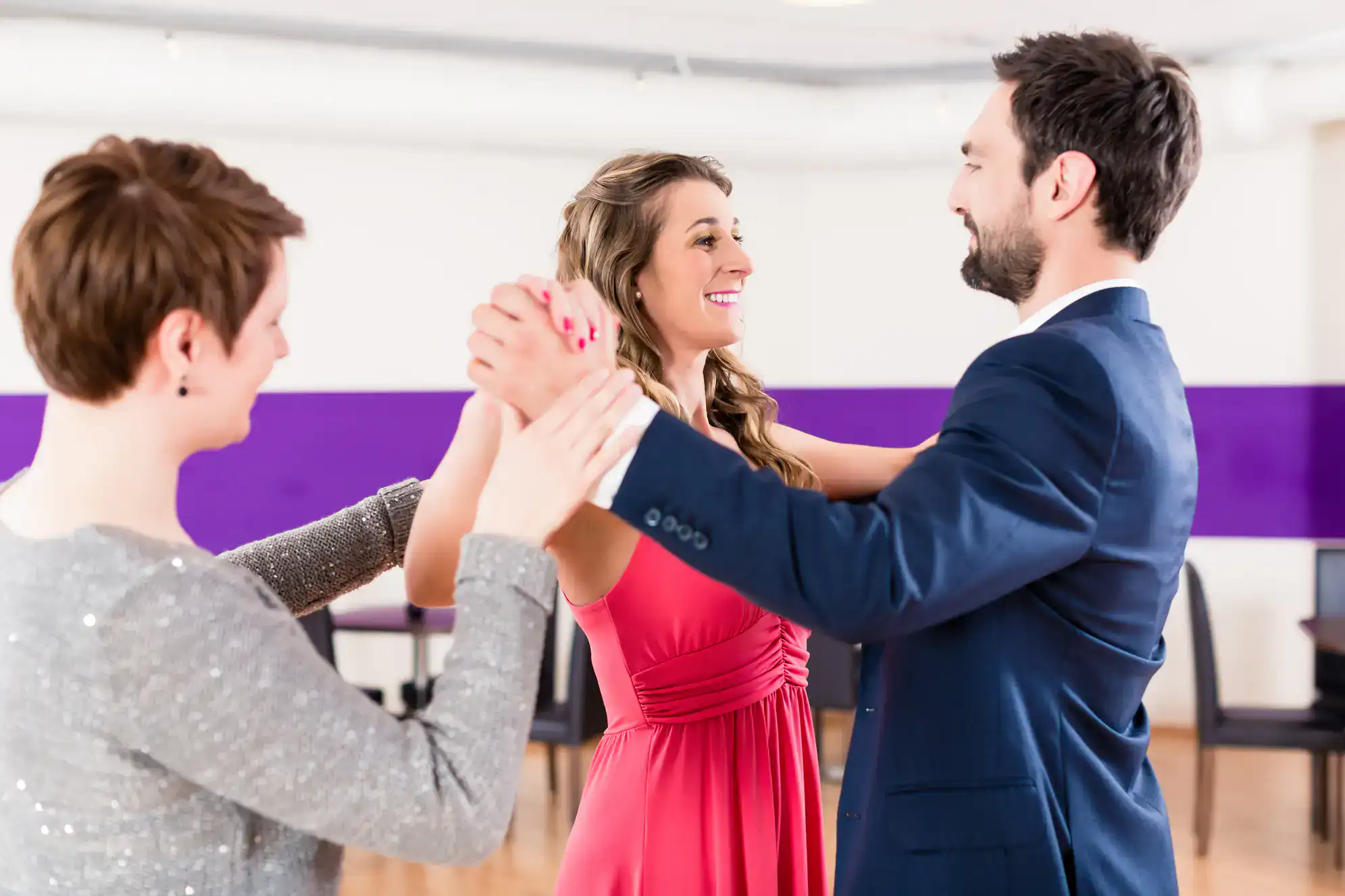
The first lesson typically covers basic frame and footwork — how to hold each other, how to move together, how to find the rhythm of the song. It’s less glamorous than what you might imagine, but it’s the foundation everything else is built on. By the third or fourth lesson, most couples can feel the routine starting to come together, and that shift in confidence is usually the moment they stop dreading the wedding and start looking forward to it.
The final lesson before the wedding is typically a full run-through — entrance, full routine, and exit — so that by the time you’re standing at the edge of the dance floor on the actual day, your body already knows what to do. That muscle memory is what keeps couples from blanking under pressure, and it’s the difference between a dance that looks rehearsed and one that looks natural.
Suffolk County weddings tend to be a particular kind of event. Receptions at catering halls in Smithtown, waterfront venues in Bay Shore, vineyard weddings out on the North Fork — these are not small, quiet gatherings. A typical Long Island reception has somewhere between 150 and 300 guests, which means the first dance happens in front of a full room of people who are paying close attention. That’s part of what makes preparation feel so worthwhile, and part of what makes so many couples from Holbrook to Huntington, Ronkonkoma to Riverhead, decide to take it seriously.
At our studio in Patchogue, we work with couples from all over Suffolk County — and the most common thing we hear when someone walks in for the first time is some version of “I really cannot dance.” We hear it so often that it’s almost become a running joke, except it’s not really a joke, because the fear behind it is genuine. The good news is that it doesn’t matter. Not even a little. The couples who come in most convinced they’re hopeless are often the ones who surprise themselves most.
Our instructors — Karolina and Pavel — build every routine from scratch around your specific song, your comfort level, and the amount of time you have. There’s no template being applied to you. If you want something classic and understated, that’s what gets built. If you’ve always secretly wanted to do something a little dramatic and unexpected, that’s on the table too. One of the more memorable routines we’ve put together was a full Dirty Dancing-inspired first dance for a couple who came in as complete beginners. They pulled it off beautifully, and their guests are still talking about it.
Our studio — spacious floors, full-length mirrors, professional lighting — is designed to replicate the feeling of performing in a real venue. That matters more than it sounds. Practicing in the same kind of space where you’ll be performing builds a kind of physical familiarity that carries over on the day. Our evening hours run until 9:30 PM on weeknights, which works well for the many couples in Suffolk County who are commuting into the city and can’t make a 6 PM class happen.
The first dance doesn’t have to be the thing you’re quietly dreading for six months. With the right style, the right song, and a few focused lessons, it becomes one of the moments you’re actually looking forward to — and one of the ones your guests remember longest.
Start by thinking honestly about who you are as a couple and what kind of moment you want to create. Let that guide your style choice. Pick a song that fits the mood, not just one you love in isolation. And give yourself enough time to feel comfortable, not just prepared.
If you’re getting married anywhere in Suffolk County and want to work through this with people who’ve helped hundreds of couples do exactly that, reach out to us at Ballroom Factory Dance Studio. The first conversation costs you nothing, and it usually answers most of the questions you’ve been sitting on.
Summary:
Article details:
Share: