Not sure how to find a ballroom dance teacher in Suffolk County who's actually worth your time? Here's what to look for — and what most studios won't tell you.
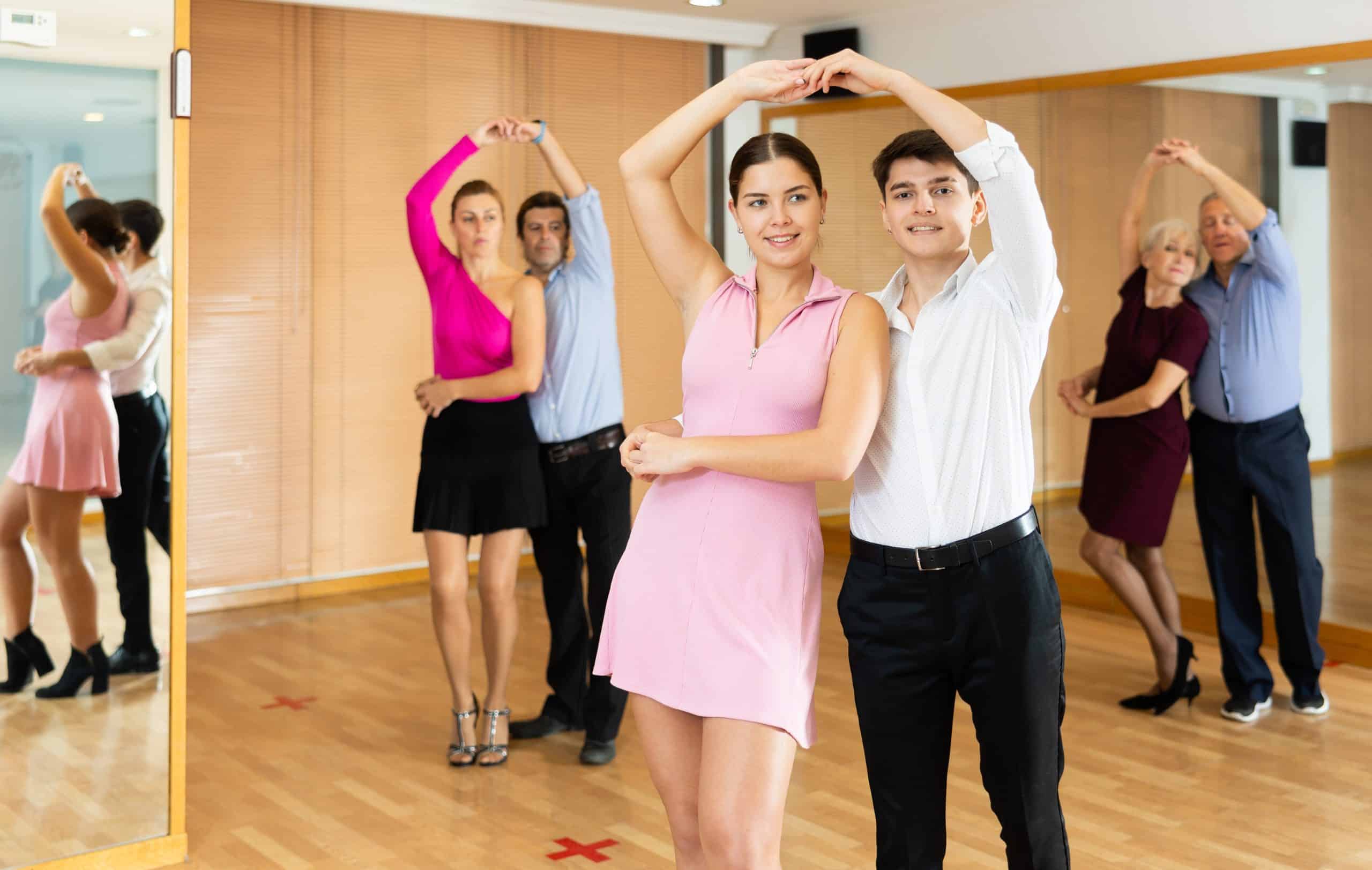
You’ve decided you want to learn to dance. Maybe there’s a wedding coming up. Maybe you’ve wanted to do this for years and you’re finally ready. Either way, you’re now staring at a list of studios and instructors and you have no real way to tell who’s actually good.
That’s the problem with ballroom dance. The industry isn’t licensed or regulated in New York — anyone can call themselves a teacher. So the search for a ballroom dance teacher in Suffolk County becomes less about finding someone and more about figuring out who you can actually trust.
Here’s what to look for, what to expect, and what the experience should feel like when you find the right fit.
The first thing worth knowing is that being a great dancer and being a great teacher are two completely different things. Plenty of instructors can execute a flawless Waltz. Far fewer can explain what you’re doing wrong, adjust to how you learn, and make you feel capable instead of hopeless by the end of the lesson.
When you’re evaluating a ballroom dance teacher, look for someone with credentials from a recognized organization like the NDCA — the National Dance Council of America — or one of its affiliated certifying bodies. These certifications aren’t handed out casually. They require passing structured exams at Bronze, Silver, and Gold levels across multiple dance styles. In an unregulated industry, that kind of credential is one of the clearest signals that someone has put in the work.
Beyond credentials, pay attention to how they communicate. A good instructor meets you where you are. They don’t assume you know the terminology, and they don’t make you feel behind for starting as an adult.
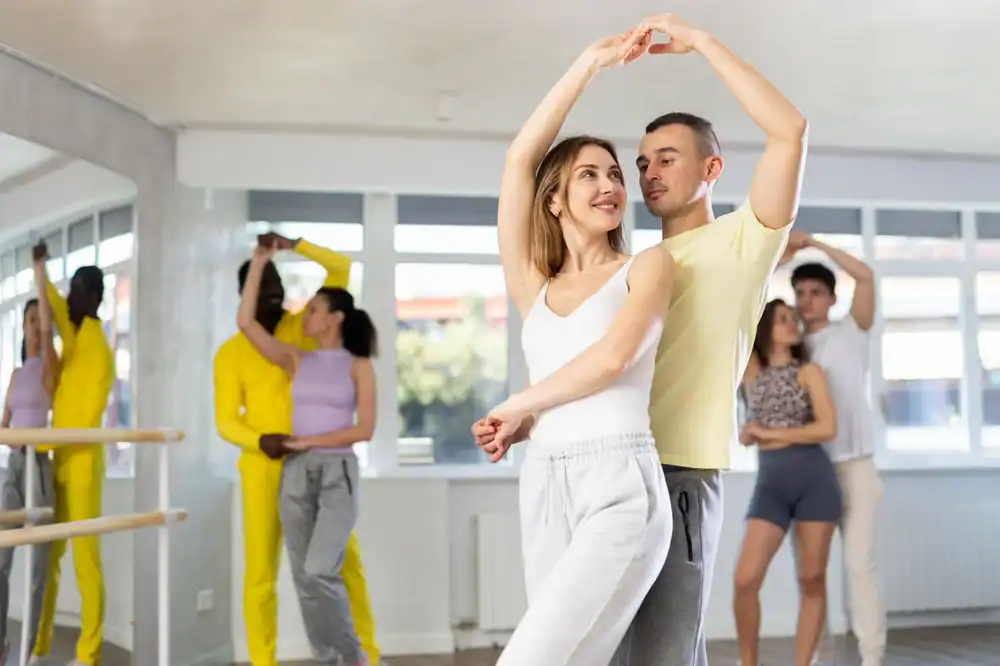
A lot of people walk into their first ballroom dance lesson expecting to feel awkward — and honestly, some studios make it worse than it needs to be. You’re in a new environment, you don’t know the steps, and if you’re in a group class, you’re suddenly aware of everyone watching. That anxiety is real, and a good studio knows how to work with it rather than ignore it.
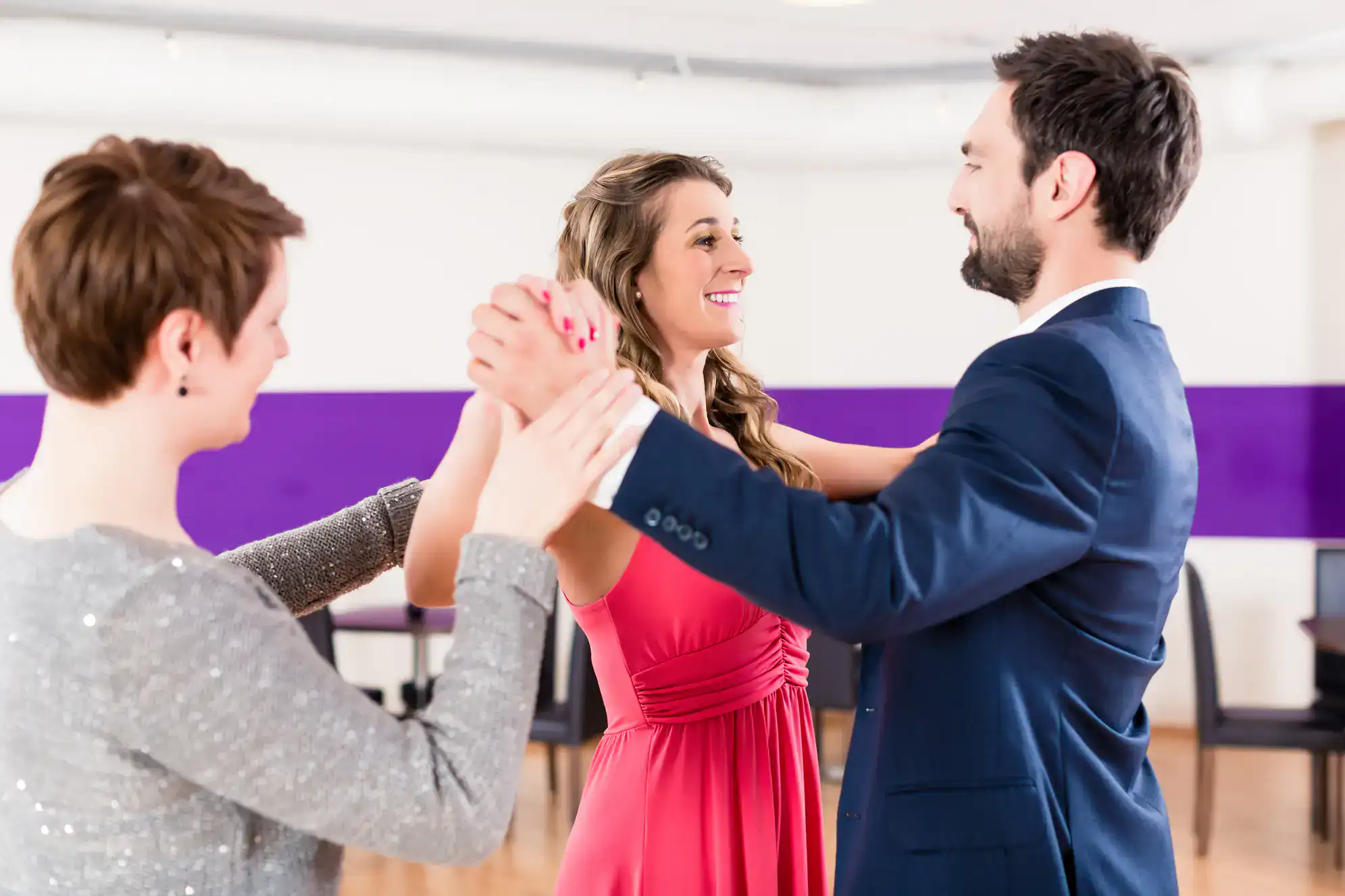
Your first lesson should feel like a conversation, not a performance. A quality instructor will spend time asking about your goals — are you preparing for a wedding first dance, looking for a social hobby, or just curious? They’ll assess where you are without making it feel like a test. And they’ll give you something tangible to leave with, even if it’s just the basic frame of a Waltz or the rhythm of a Cha-Cha.
Private lessons are almost always the better starting point for adult beginners. In a one-on-one setting, the instructor’s attention is entirely on you. They can slow down when something isn’t clicking, skip past what you’ve already picked up, and adjust the lesson in real time based on how you’re responding. Group classes have their place — especially once you’ve built some foundation — but they can’t replicate that level of individualized feedback.
One practical thing to watch for: studios that push you toward large packages or long-term contracts before you’ve even finished your first lesson. That’s a known pressure tactic in this industry, and reputable studios don’t do it. A good teacher is confident enough in what they offer to let you experience it first. Look for a studio that offers a clear, low-risk entry point — a single introductory lesson or a short consultation — before asking for any kind of commitment.
What you’re really evaluating in that first session isn’t just the instructor’s technical knowledge. It’s whether you feel comfortable enough to be bad at something in front of them. Because that’s what learning looks like, and the right teacher makes that feel fine.
This matters more than most people realize going in. If you start with a wedding Waltz and later want to add Salsa for social dancing, you don’t want to have to find a new studio. And if you’re not sure yet which style fits you, you want a teacher who can show you a few options and help you figure it out.
The core ballroom styles — Waltz, Tango, Foxtrot, Viennese Waltz — are what most people picture when they think of ballroom dance. But Latin styles like Salsa, Cha-Cha, Rumba, Samba, and Bachata are just as popular, especially for couples who want something with a bit more energy for a wedding reception or a night out. A well-rounded instructor should be fluent in both categories.
It’s also worth asking whether the studio teaches American syllabus dances, International syllabus dances, or both. American-style ballroom tends to feel more accessible for beginners and social dancers. International style is more commonly used in competitive ballroom. Neither is better — it depends entirely on what you’re trying to do.
A studio that offers a wide range of styles gives you flexibility as your interests evolve. You might walk in wanting to learn one dance for a specific occasion and find six months later that you’re genuinely hooked. Having access to that range under one roof — with instructors who know all of it — makes a real difference in how far you can go.
Want live answers?
Connect with a Ballroom Factory Dance Studio expert for fast, friendly support.
One of the most common things we hear from new students is some version of: “I thought it was too late for me to start.” It isn’t. Not even close.
Adult learners actually have real advantages in a ballroom dance setting. You’re motivated by a specific goal — a wedding, a milestone, a genuine desire to learn something new. You’re not there because a parent signed you up. That kind of intentional motivation, combined with one-on-one instruction tailored to where you actually are, tends to produce results faster than people expect.
For residents across Suffolk County — whether you’re in Bay Shore, Islip, Babylon, Sayville, or anywhere on the South Shore — Ballroom Factory Dance Studio is located in Patchogue, roughly 20 to 30 minutes east along Sunrise Highway from most South Shore communities. Our hours run Monday through Friday from 2:00 PM to 9:30 PM, with Saturday appointments available, which works well for people commuting into the city via the LIRR and getting back in the late afternoon.
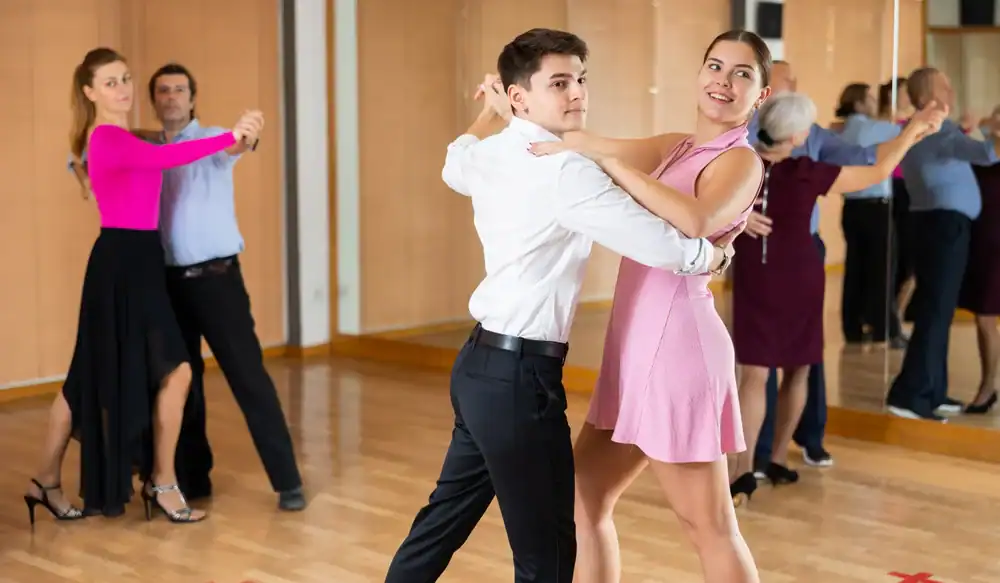
No — and this is one of the most common misconceptions that stops people from even picking up the phone. You do not need to arrive with a partner to start taking ballroom dance lessons. Many of our adult students begin as individuals, whether they’re single, whether their partner isn’t interested yet, or whether they simply want to get comfortable with the basics before bringing someone else into the room.
Private lessons are particularly well-suited for solo learners. Your instructor works with you directly, teaching you the structure and feel of each dance without requiring a second person to be there. Once you’ve built some foundation, group classes and studio social events become natural places to practice with others and meet people who share the same interest.
For couples who are preparing for a wedding first dance, coming in together is obviously the goal — but even then, it’s not unusual for one partner to take a solo lesson first to get oriented before the joint sessions begin. The point is that there’s no wrong way to start, and no prerequisite you have to meet before walking in.
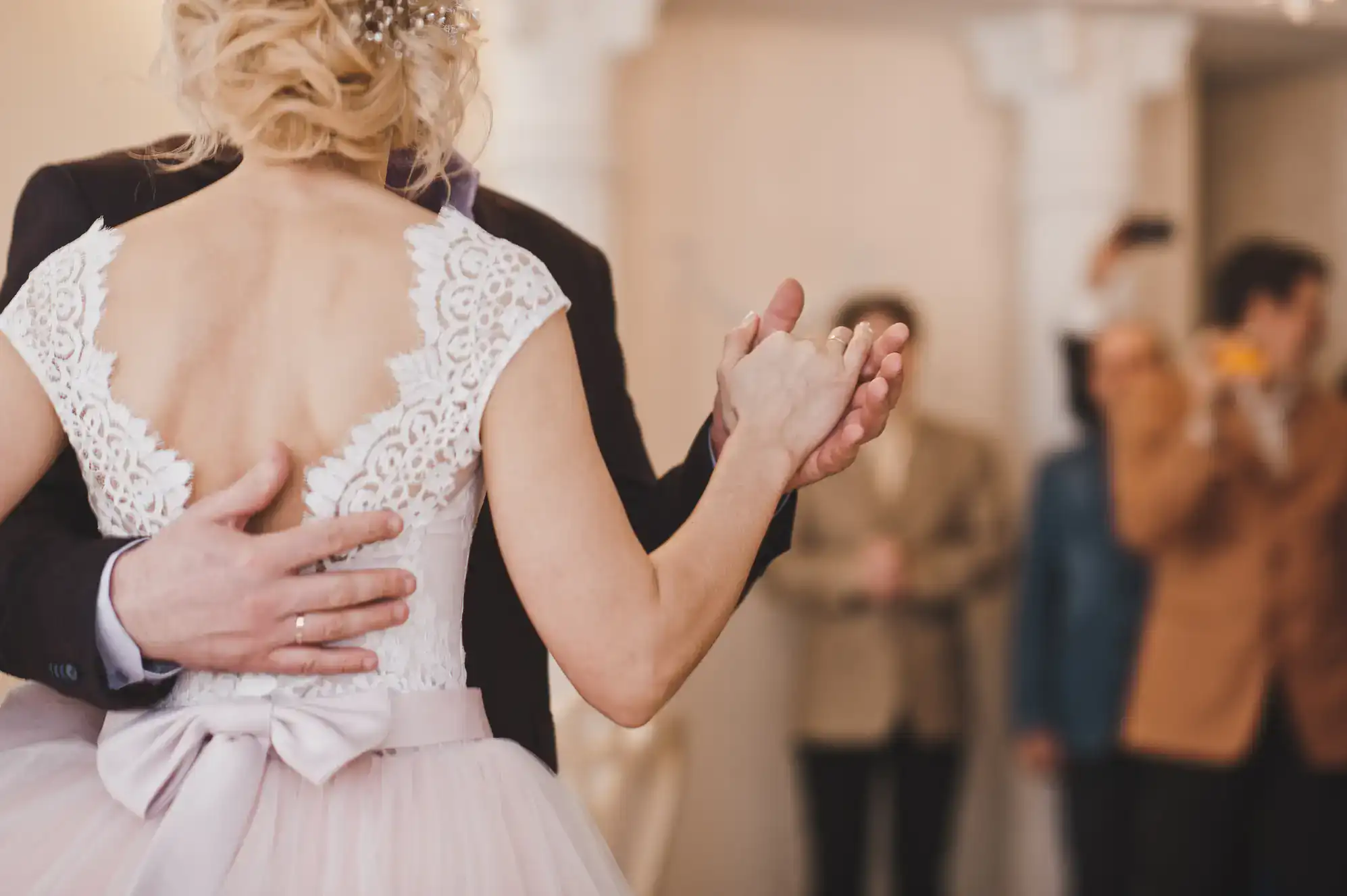
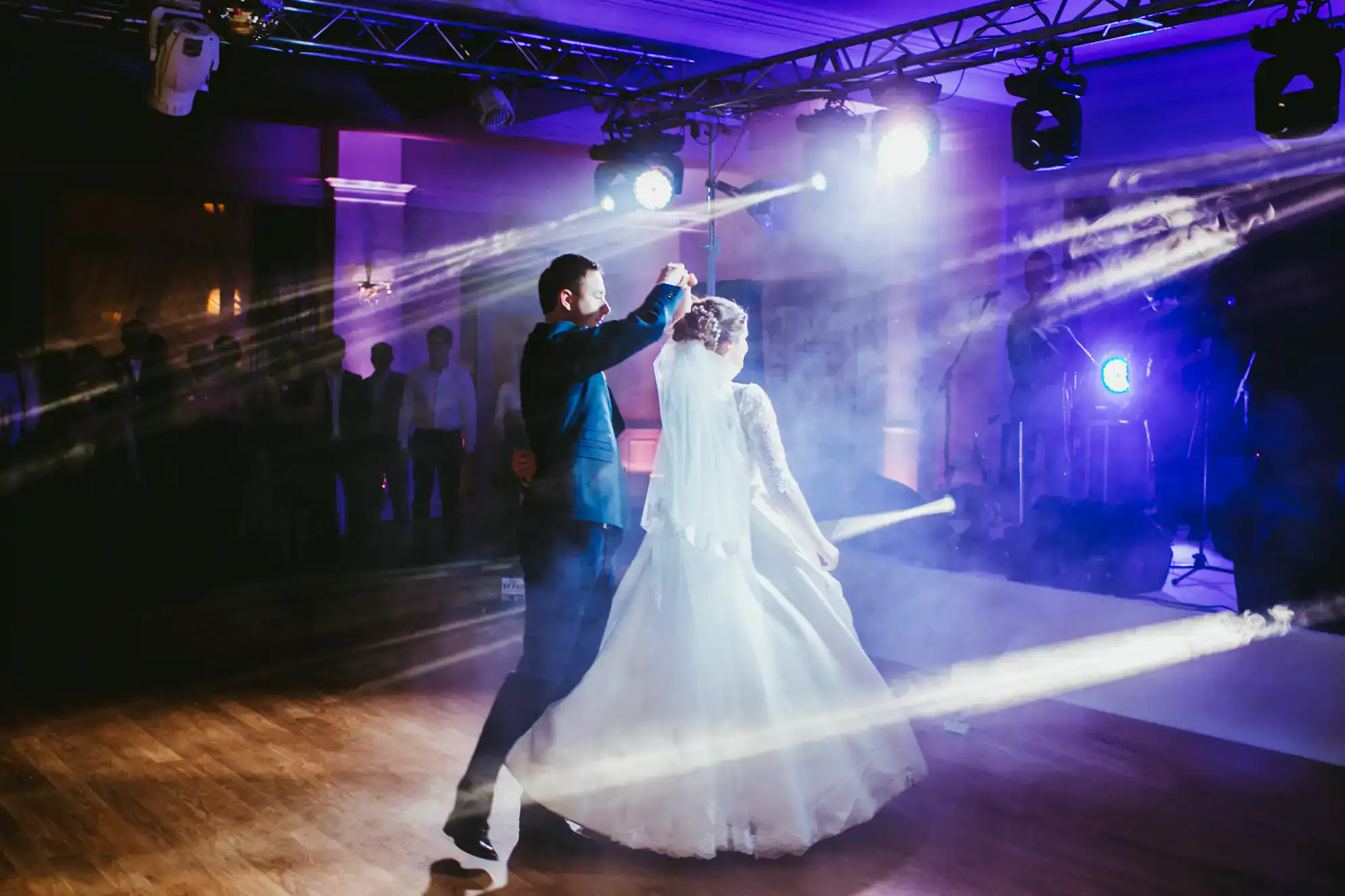
Suffolk County has a large and active wedding market, with venues across the South Shore drawing couples from Bay Shore, Babylon, Islip, Sayville, and beyond. A lot of those couples are in exactly the same position: they’ve booked a venue, picked a song, and suddenly realized they have no idea what to do with their feet when they get out on the floor. That’s a completely normal place to be, and it’s a solvable problem with the right instruction.
We’ve worked with couples across Suffolk County who came in describing themselves as having “two left feet” and left with choreography they were genuinely proud to perform in front of everyone they love. The process doesn’t have to be stressful. With a teacher who’s done this hundreds of times, it usually isn’t.
This is one of the most frequently asked questions we get from engaged couples across Suffolk County, and the honest answer is: earlier than you think. Most couples who feel genuinely confident on their wedding day started their lessons somewhere between three and six months out. That’s not a hard rule — some people move faster, some need more time — but it gives you enough runway to learn the choreography, get comfortable with it, and stop thinking about your feet.
If you’re starting closer to the wedding date, that’s still workable. Private lessons are efficient. You’re not waiting for a group to catch up, and the instruction is focused entirely on the specific dance you need for the specific song you’ve chosen. A skilled teacher can work with a compressed timeline. But the earlier you start, the more relaxed the whole process feels — and that relaxed feeling tends to show up in how you look on the dance floor.
For couples in Bay Shore, Islip, Babylon, and other South Shore communities in Suffolk County, the logistics are straightforward. Ballroom Factory Dance Studio is accessible via Sunrise Highway, our evening hours accommodate working schedules, and we offer an introductory consultation and first lesson for $39 per couple. That starting point is designed to be low-pressure — you come in, meet the instructor, get a feel for the space, and decide from there whether it’s the right fit. No contracts, no pressure, no obligation to commit to anything before you’re ready.
What we’ve found over the years is that most people who were nervous about starting end up being the ones who say they wish they’d started sooner. The fear of looking foolish going in almost always gives way to something that feels more like relief — and then, more often than not, something they actually look forward to each week.
The right ballroom dance teacher isn’t necessarily the closest one or the cheapest one. It’s the one who makes you feel capable from the very first lesson — who adjusts to how you learn, is honest about what you need, and doesn’t pressure you into anything before you’re ready.
In Suffolk County, where the options range from large franchise studios to independent instructors with no verifiable credentials, doing a little homework before you commit makes a real difference. Look for NDCA-affiliated credentials, a clear introductory offer, and a studio where the reviews come from real people describing real experiences — not generic five-word blurbs.
If you’re somewhere across the South Shore and you’re ready to find out what the right fit actually feels like, Ballroom Factory Dance Studio in Patchogue is worth a conversation. We’ve been doing this for a long time, and the first step is a lot easier than most people expect.
Summary:
Article details:
Share: