Private lessons cost more than group classes — but do they deliver more? Here's an honest breakdown to help you decide.
Most people who look into dance lessons have one quiet fear underneath all the practical questions: “What if I’m terrible at this?” The cost question comes second. Whether you’re a Suffolk County commuter who barely has time to breathe between the LIRR and dinner, or someone who just got engaged and realized the first dance is four months away — you want to know that whatever you spend is actually going to get you somewhere. This post breaks down what private dance instruction actually delivers, how it compares to group classes, and what it costs, so you can decide if it’s the right move for you.
The short answer is that private lessons are built around you, and group classes are built around everyone. In a group setting, the instructor teaches to the middle of the room. If you’re picking things up quickly, you wait. If you’re struggling, the class moves on anyway. That’s not a criticism — group classes have real value, especially for social exposure and practicing with different partners. But they’re not designed to fix your specific problems.
A private dance instructor starts by understanding what you actually want. Are you preparing for a June wedding at a waterfront venue in Bay Shore? Do you want to stop freezing up every time someone pulls you onto the dance floor at a holiday party? Those goals require completely different lesson plans, and a private instructor builds yours from scratch.
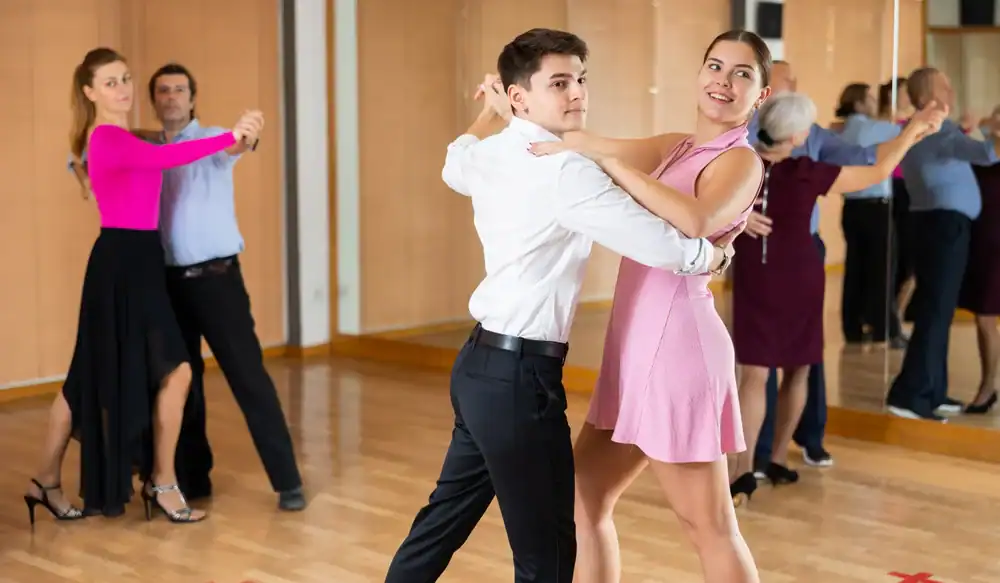
In a one-on-one lesson, your instructor watches only you. Every correction, every adjustment, every piece of feedback is directed at what you specifically are doing — not what the person next to you is doing. That kind of attention changes how fast you improve.
There’s a benchmark that gets cited often in the professional dance instruction world: one private lesson is roughly equivalent to three or four group classes in terms of what you actually retain and apply. That’s not marketing language — it reflects the simple reality that personalized feedback sticks in a way that general instruction doesn’t. When someone physically adjusts your frame, tells you exactly why your timing is off, and then watches you correct it in real time, the lesson lands differently.
For partner dances — Waltz, Tango, Salsa, Cha-Cha, Rumba — this matters even more. Lead-and-follow mechanics are subtle. They’re hard to learn by watching a demonstration from across a room, and they’re nearly impossible to self-correct from a YouTube video. You need someone in the room with you, responding to what you’re doing, to actually develop those skills.
One of the most common things we hear from new students is some version of “I didn’t want to look like an idiot.” That fear doesn’t go away in a group class — if anything, it gets worse when you’re surrounded by other students who seem to be catching on faster. In a private lesson, there’s no audience. It’s just you and your instructor, and the only thing being evaluated is your progress.
A good private dance teacher is also a patient communicator. They know how to break down a complex movement into steps you can actually execute, and they adjust their teaching style based on how you learn — not how the last student learned. That adaptability is what separates a skilled instructor from someone who’s simply a skilled dancer.
The honest answer is: most adult learners. But there are a few situations where one on one dance lessons make a particularly clear difference.
If you have a specific deadline — a wedding, a milestone anniversary party, a Sweet 16 performance — private lessons are almost always the smarter route. You don’t have the luxury of learning at a group class pace. You need a customized plan, a clear timeline, and an instructor who’s focused entirely on getting you ready for that specific moment. A group class can’t offer that.
If you’ve tried group classes before and felt like you weren’t keeping up, that’s often a sign the format wasn’t right for you — not that you can’t dance. Private instruction addresses whatever is actually holding you back, whether that’s timing, coordination, frame, or simply nerves. Many students who struggled in group settings make rapid progress once they switch to private lessons.
If you’re a complete beginner and you want to build good habits from the start, private instruction is worth it for that reason alone. Bad technique is genuinely hard to unlearn. Starting with a qualified instructor who can catch and correct problems early saves you a lot of frustration down the road.
If your schedule is unpredictable — which describes most people living and working across Suffolk County — private lessons give you flexibility that group classes simply can’t match. You’re not locked into a fixed class time. You book when your week allows, and when something comes up, you reschedule. That kind of flexibility makes it far more realistic to actually follow through and make consistent progress, which is the only way dance instruction works.
That said, group classes aren’t without value. They’re a great way to practice what you’ve learned in private lessons, meet other dancers, and get comfortable moving with different partners. Many students do both — private lessons to build skill, group classes to apply it.
Want live answers?
Connect with a Ballroom Factory Dance Studio expert for fast, friendly support.
Pricing is the question most people have but feel awkward asking. So let’s just address it directly. Nationally, private dance lessons average around $80 to $100 per session. At major franchise studios like Arthur Murray or Fred Astaire, rates typically run between $125 and $195 for a 45-minute lesson. Independent studios generally fall somewhere in that same range, depending on instructor experience and location.
Group classes are considerably less — usually $10 to $25 per session, or $40 to $160 per month for ongoing enrollment. So yes, private lessons cost more. The question is whether they deliver more — and for most adult learners with specific goals, they do.
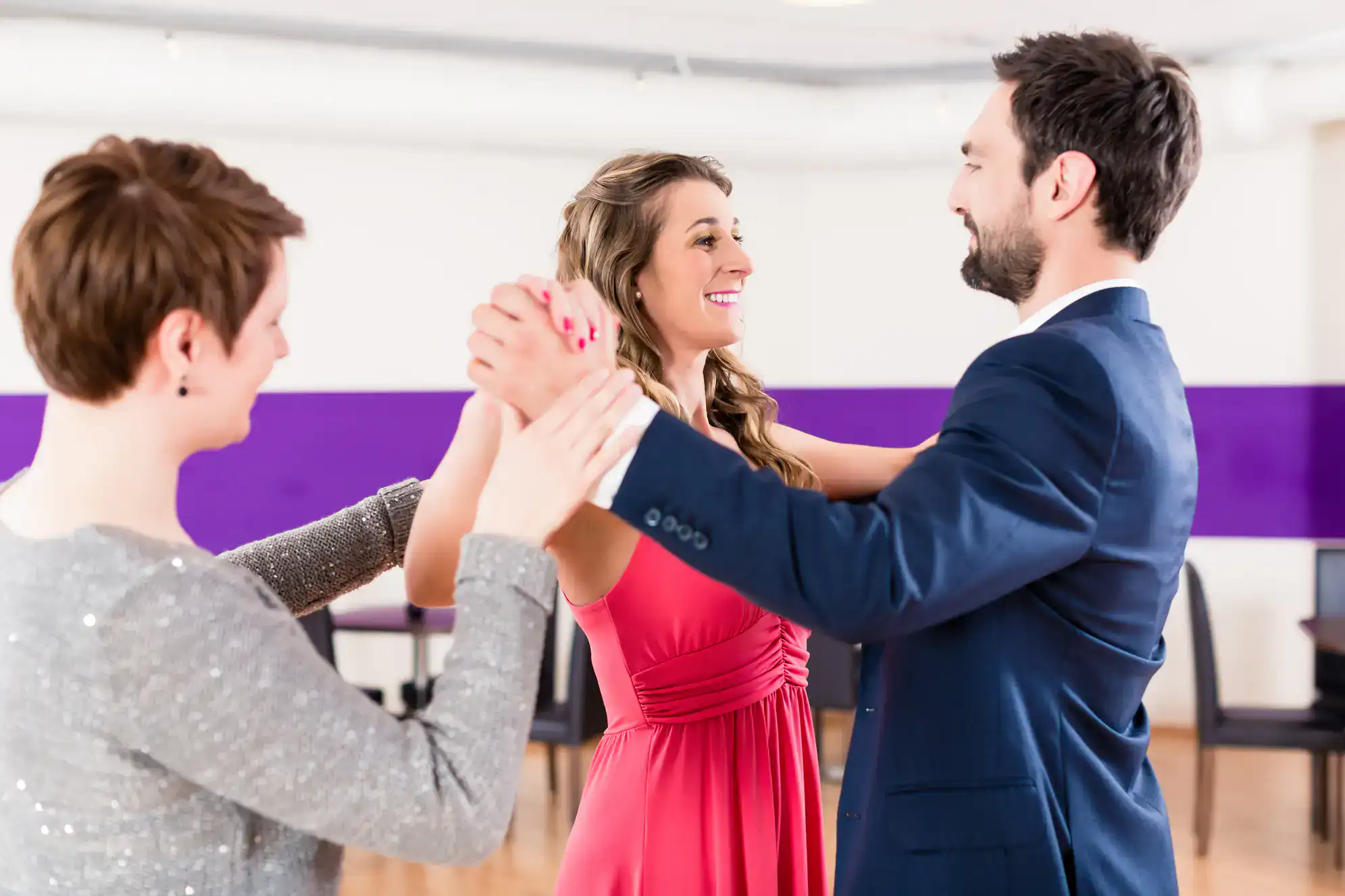
Think about it this way. If one private lesson is equivalent to three or four group classes in learning efficiency, the math shifts. At $20 per group class, you’d spend $60 to $80 to get the same result as a single private lesson. When you frame it that way, the premium for private instruction starts to look a lot more reasonable — especially for someone who’s time-limited and wants to make real progress without spending months in a beginner group class cycle.
For wedding dance preparation specifically, the investment can range from a single lesson at around $100 to a full package with custom choreography and multiple sessions, which can run up to $2,500 at the high end. What you actually need depends on your starting point, your song choice, and how much of the dance you want to choreograph. Most couples preparing for a first dance book somewhere between four and ten private lessons, depending on their timeline and how comfortable they want to feel on the day.
The other thing worth factoring in is what you’re not paying for. A private lesson means no catching up after missing a class, no falling behind because the group moved on, and no repeating material you’ve already mastered just because someone else in the room needs it again. Your lesson time is entirely yours.
Not everyone who can dance can teach. That distinction matters when you’re paying for private instruction and expecting real results. The professional dance world has its own credentialing system — the most widely recognized being DVIDA (Dance Vision International Dance Association), which is approved by the NDCA, the National Dance Council of America. A certified instructor has been formally evaluated on syllabus knowledge, technique, lead-and-follow mechanics, and teaching methodology. That’s meaningfully different from someone who dances well and decided to start offering lessons.
Beyond credentials, look for instructors who have a track record with students like you. Reviews that mention specific instructors by name — and describe real outcomes, not just general praise — are a strong signal. When you read something like “he made the whole process painless and I actually miss going,” that tells you something about the instructor’s ability to connect with adult beginners, not just their technical skill.
Flexibility and communication matter too. A good instructor adjusts their approach based on how you learn, not how they prefer to teach. They give specific, actionable feedback rather than vague encouragement. And they structure lessons so that each session builds on the last, with clear progress you can actually feel.
Scheduling flexibility is worth paying attention to. If you’re commuting from Patchogue, Sayville, Bay Shore, or anywhere along the South Shore, your evenings are already compressed. We offer lessons until 9:30 PM on weekdays and work around your schedule rather than the other way around. The same goes for rescheduling — life in Suffolk County doesn’t follow a neat weekly calendar, and we understand that so you can stay enrolled and making progress instead of falling off after the first scheduling conflict.
One more thing worth mentioning: you don’t need to bring a partner. Our instructors serve as your partner during the lesson. That’s true whether you’re a solo adult who wants to feel comfortable at social events or a couple who wants to learn together but can only come on alternating weeks.
For most people reading this, the answer is yes — with one condition. You have to have a real goal. Not “I’d like to learn someday,” but something specific: a wedding coming up, a social event you want to feel good at, a style you’ve always wanted to learn. When there’s a real reason behind it, private instruction delivers in a way that group classes simply can’t match.
The cost is real, but so is the return. Faster progress, personalized attention, flexible scheduling, and the confidence that comes from actually knowing what you’re doing on a dance floor — those things add up. For busy adults across Suffolk County who don’t have time to spend six months slowly working through a beginner group class, private lessons are often the most efficient path to getting where they want to go.
If you’re ready to stop wondering and start moving, we’re located in Patchogue and serve students from over 50 communities across Suffolk County. Reach out and find out what a first lesson looks like for you.
Summary:
Article details:
Share: