Not sure whether to start with Waltz or Tango? Here's an honest breakdown of both American Smooth styles so you can stop guessing and start dancing.
If you’ve been going back and forth between Waltz and Tango, you’re not alone. Most people who walk into their first ballroom lesson have already Googled both, watched a few videos, and still feel unsure. The dances look completely different, feel completely different, and seem to attract completely different types of people. So which one actually makes sense to learn first?
The honest answer depends on your goals, your personality, and what you want to do with the skill once you have it. This page walks you through both styles — what they feel like, how difficult they are, and how to figure out which one is the right starting point for you.
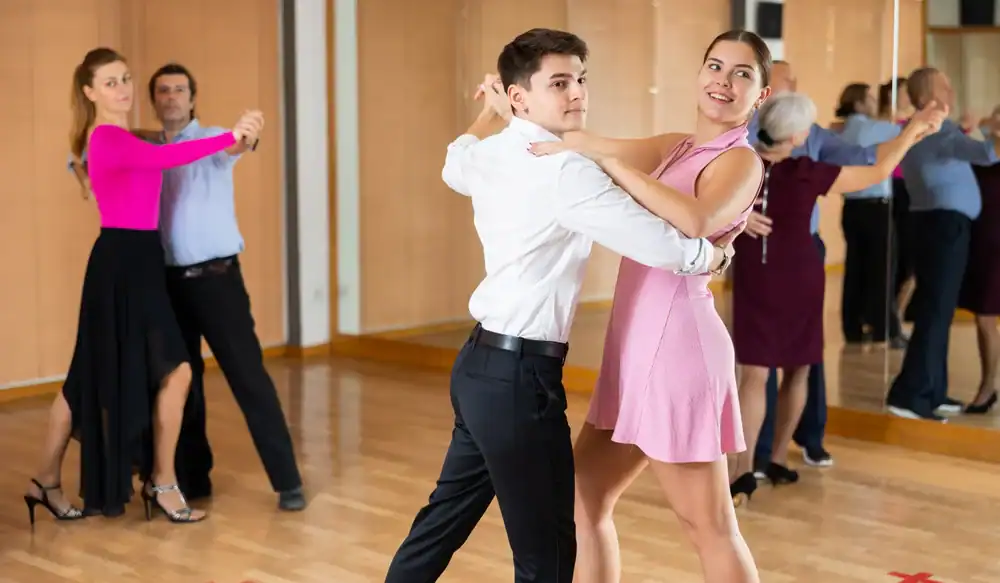
American Smooth is one of the two main branches of competitive ballroom dance in the United States, and it covers four dances: Waltz, Tango, Foxtrot, and Viennese Waltz. What sets it apart from International Standard — the style you typically see in European competitions — is that American Smooth allows open-position dancing. Partners can break frame, perform underarm turns, dance side by side, and move independently before coming back together. That freedom of expression is what gives American Smooth its personality.
It’s also why it’s growing faster than any other ballroom style in the country right now. The open-position elements make it more accessible for social dancers and more visually engaging for audiences. If you’ve ever watched a ballroom performance and thought “that actually looks like fun,” there’s a good chance you were watching American Smooth.
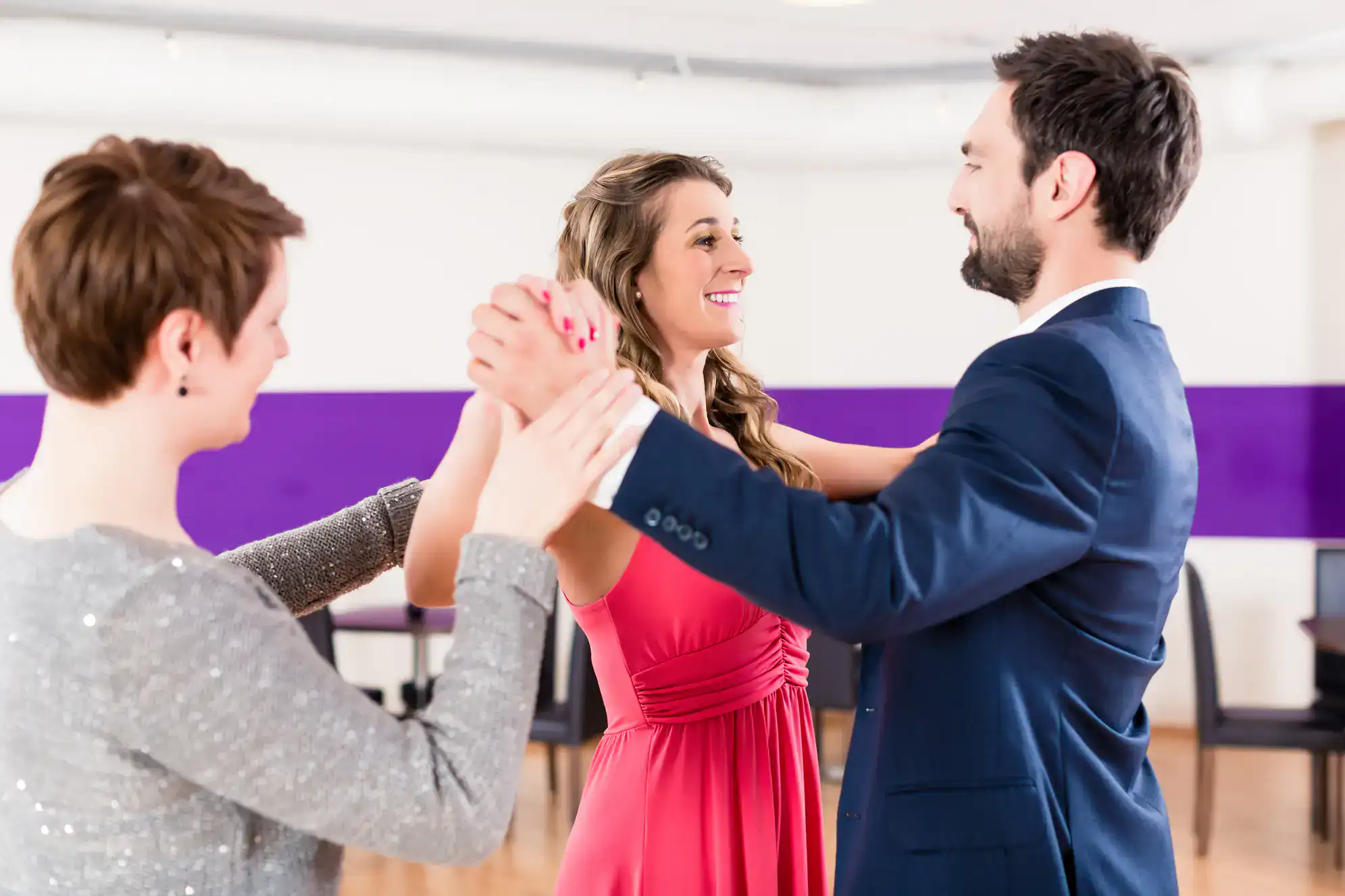
The Waltz is the oldest of the four American Smooth dances, and in a lot of ways it’s the most forgiving place to start. It moves at roughly 84 to 90 beats per minute in 3/4 time — that familiar ONE-two-three, ONE-two-three rhythm you’ve heard in everything from classical music to contemporary love songs. The pace is slow enough that you actually have time to think about what your body is doing, which matters a lot when you’re learning something new.
Technically, the Waltz is built around rise and fall — a continuous, flowing quality that comes from the way you move through your feet, ankles, and knees on each beat. The foundational pattern is the box step, and from there you build toward sweeping turns, traveling figures, and eventually the kind of movement that looks effortless from the outside. It takes time to get there, but the early stages feel achievable in a way that some other dances don’t.
For beginners, the Waltz teaches you things that carry over into every other ballroom dance: how to hold a frame with your partner, how to listen to music while moving, how to lead or follow without muscling through it. These are foundational skills, and the Waltz’s slow tempo gives you space to actually absorb them rather than just survive the beat.
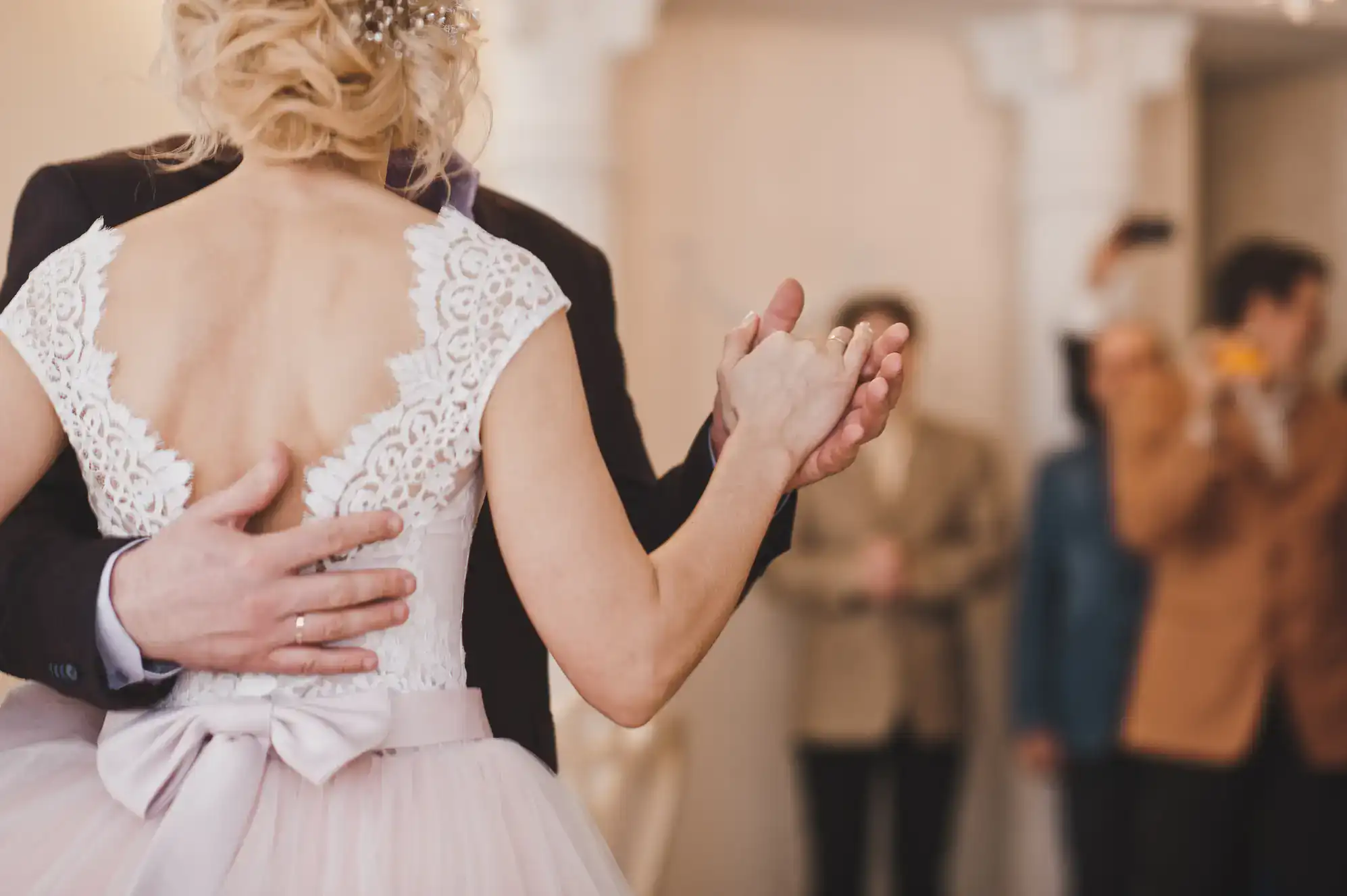
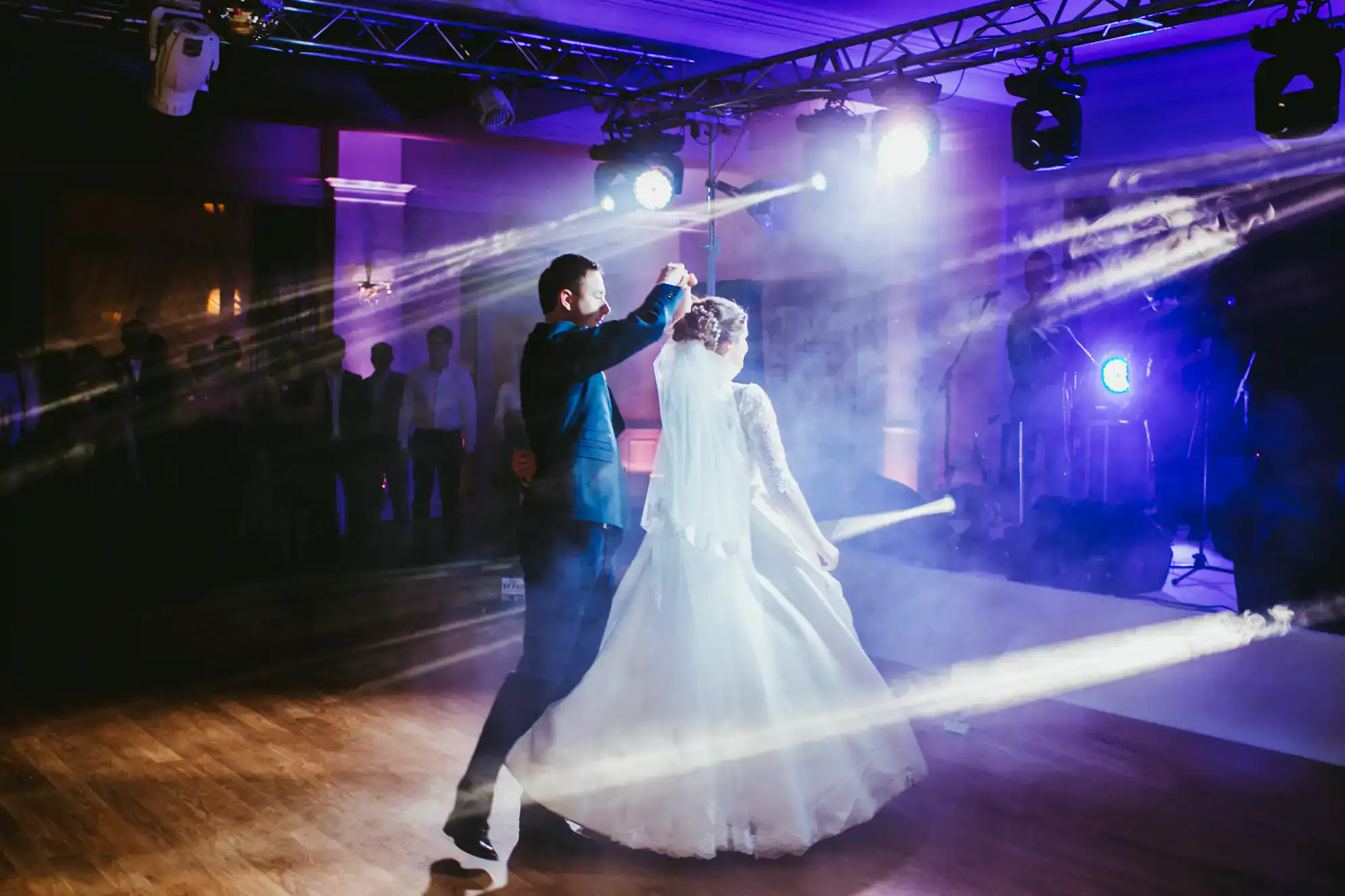
From a practical standpoint, the Waltz is also the most versatile choice for couples across Suffolk County preparing for a wedding first dance. It pairs naturally with almost any romantic song, it photographs beautifully, and it reads as elegant and intentional even when the dancers are relatively new. If your goal is a confident, graceful first dance at a waterfront hall in Sayville, a country club in Islip, or a vineyard on the North Fork, the Waltz is almost always the right starting point.
Here’s the most important thing to understand about American Smooth Tango before you decide it’s too advanced for you: it is not Argentine Tango. These are two completely different dances. Argentine Tango is improvised, intimate, and takes years to develop real fluency. American Smooth Tango follows a standardized syllabus, travels around the floor, and is structured enough that beginners can learn meaningful figures in a relatively short time. The confusion between the two leads a lot of people to write off Tango before they’ve ever tried the version that’s actually being taught in most ballroom studios.
The American Smooth Tango moves at a similar tempo to the Waltz but feels nothing like it. Where the Waltz flows and rises and falls, the Tango is flat, grounded, and sharp. Dancers keep their knees slightly bent throughout, which creates a low, stalking quality across the floor. The movements are staccato — quick, precise, and deliberate. There’s no softness in a well-danced Tango, and that’s exactly what makes it compelling to watch and, eventually, to dance.
For beginners, the Tango’s difficulty isn’t really about the footwork. The basic patterns are walking-based and straightforward. The challenge is the character — the sharp direction changes, the intense focus, the way the dance demands that you commit to every step. If you’re someone who finds the idea of flowing and floating a bit uncomfortable, or if you’re drawn to something with more edge and attitude, Tango might actually click faster for you than the Waltz would.
That said, most instructors recommend starting with Waltz if you have no prior dance experience, simply because the slower, more forgiving tempo gives you time to develop the physical fundamentals before adding stylistic intensity. Tango is an excellent second dance, and many students find that the contrast between the two styles accelerates their overall progress.
Want live answers?
Connect with a Ballroom Factory Dance Studio expert for fast, friendly support.
The comparison isn’t really about which dance is better. They’re both worth learning. The question is which one gives you the best starting point given your specific situation — your timeline, your goals, and honestly, your personality.
A few questions worth asking yourself: Do you have a specific occasion driving this, like a wedding? Are you drawn more to grace and flow, or drama and precision? Do you tend to learn better when the tempo gives you breathing room, or do you find that a clear, sharp rhythm is easier to lock into? There’s no wrong answer — but your honest response to those questions will point you in a direction.
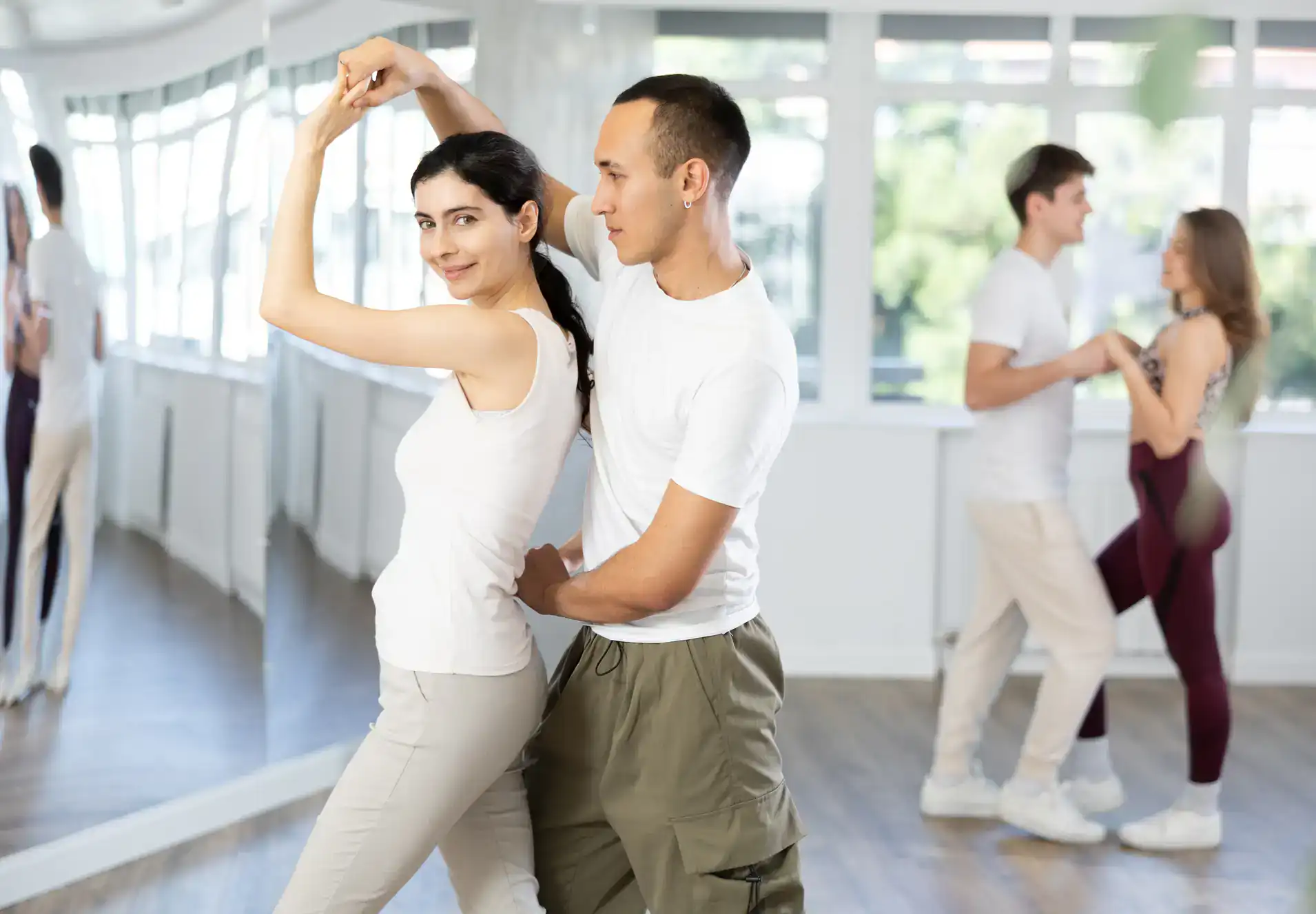
If you’re starting from zero, the Waltz is the most commonly recommended first dance — and there are real technical reasons for that, not just convention. The tempo is slow enough to process information in real time. The 3/4 rhythm is one of the most intuitive in all of music; most people can feel it almost immediately. The rise and fall technique, while nuanced at higher levels, gives beginners immediate physical feedback that they’re doing something right. And the box step — the Waltz’s foundational pattern — is simple enough to learn in a single lesson while still teaching you something genuinely useful about how partner dancing works.
The Foxtrot is worth mentioning here too, because it often gets overlooked in the Waltz vs. Tango conversation. It’s a 4/4 dance built around a walking action, and many instructors consider it the most natural-feeling of all the ballroom dances for adults who’ve never danced before. If you try the Waltz and it doesn’t immediately resonate, Foxtrot is worth exploring before you assume ballroom just isn’t for you.
The Tango, as mentioned, is more accessible than its reputation suggests — but the character demands more from a beginner than the footwork does. You can learn the steps relatively quickly, but dancing them with the right quality takes more time. For someone with a tight timeline, like a couple preparing for a wedding in the next two to three months, starting with Waltz is the more reliable path to a confident result. For someone who has time to explore and is genuinely drawn to the Tango’s energy, starting there isn’t wrong — it just requires a bit more patience in the early stages.
The most important thing is that you start. Choosing the “wrong” dance and switching after a few lessons is far better than staying undecided and never booking that first lesson at all. Every dance in the American Smooth division shares a foundation — frame, connection, musicality, body awareness — and the skills you build in one transfer directly to the others.
A lot of the students who come to us in Patchogue are in one of two situations. Either they have a wedding coming up and they need to make a decision quickly, or they’ve been thinking about learning to dance for a while and finally hit the point where they’re ready to stop thinking and start doing. Both situations are completely valid, and the approach we take is different for each.
For wedding couples across Suffolk County, the Waltz is almost always the starting point. Long Island has no shortage of beautiful venues — from waterfront catering halls along the Great South Bay to vineyards on the North Fork to country clubs scattered across central Suffolk County — and the Waltz works in all of them. It photographs and films beautifully, it pairs with almost any song, and four to six private lessons is usually enough to produce a first dance that feels confident and looks polished. Couples from Sayville, Holbrook, Islip, Medford, and across the county come to us for exactly this, and the outcome is almost always what one of our students described as “painless” — something they were dreading that turned into something they genuinely looked forward to each week.
For students who are exploring dance as a new chapter — maybe they’ve hit a point where they wanted something different in their routine, or they’re newly retired, or they just moved to the area and want to find a community — the decision is less urgent and more personal. In those cases, we’ll often start with a conversation about what draws you to dance in the first place. If you’re romantic and drawn to elegance, Waltz. If you want something with more intensity and edge, Tango. If you’re not sure, we’ll usually suggest starting with Waltz and letting the Tango find you once you’ve got some floor time under your feet. It always does.
We serve students from more than 50 communities across Suffolk County — Medford, Holbrook, Bayport, Blue Point, Coram, Bohemia, Bellport, Selden, Centereach, and beyond — and the one thing that’s consistent across all of them is that the hardest part is walking in the first time. After that, it tends to take care of itself.
If you’re preparing for a wedding or a specific event, start with the Waltz. It’s the most beginner-accessible of the American Smooth dances, it works with virtually any song, and it gives you a reliable path to a confident result in a realistic timeframe. If you have more time and you’re genuinely drawn to the Tango’s intensity, it’s a worthy starting point — just go in knowing the character takes longer to develop than the footwork does.
Either way, you don’t have to have it figured out before you show up. The whole point of a first lesson is to get a feel for both the dance and the instructor, and to walk away with a clearer sense of direction than you had when you walked in.
If you’re in Suffolk County and you’re ready to stop researching and start moving, we’re here to help. The floor is ready. Our instructors are patient and experienced. And the decision you’ve been overthinking is a lot simpler once you’re actually on your feet.
Summary:
Article details:
Share: