Not sure what to wear to your first dance lesson? You're not alone. Here's what actually works for private lessons and social events in Suffolk County.
You’ve booked your first private dance lesson or RSVP’d to a social mixer, and now you’re staring at your closet wondering what on earth to wear. Should you dress up? Can you wear sneakers? Will everyone else look like they stepped off a competition floor while you show up in yoga pants?
Here’s the truth: what you wear matters, but probably not in the way you think. It’s not about looking perfect. It’s about moving comfortably, learning effectively, and not spending the whole lesson adjusting your clothes or worrying about your shoes. Let’s talk about what actually works for private dance lessons, wedding dance practice, and social mixers in Suffolk County.
Your first private dance lesson should feel exciting, not stressful. The goal is simple: wear something that lets you move freely and helps your instructor see your posture and footwork.
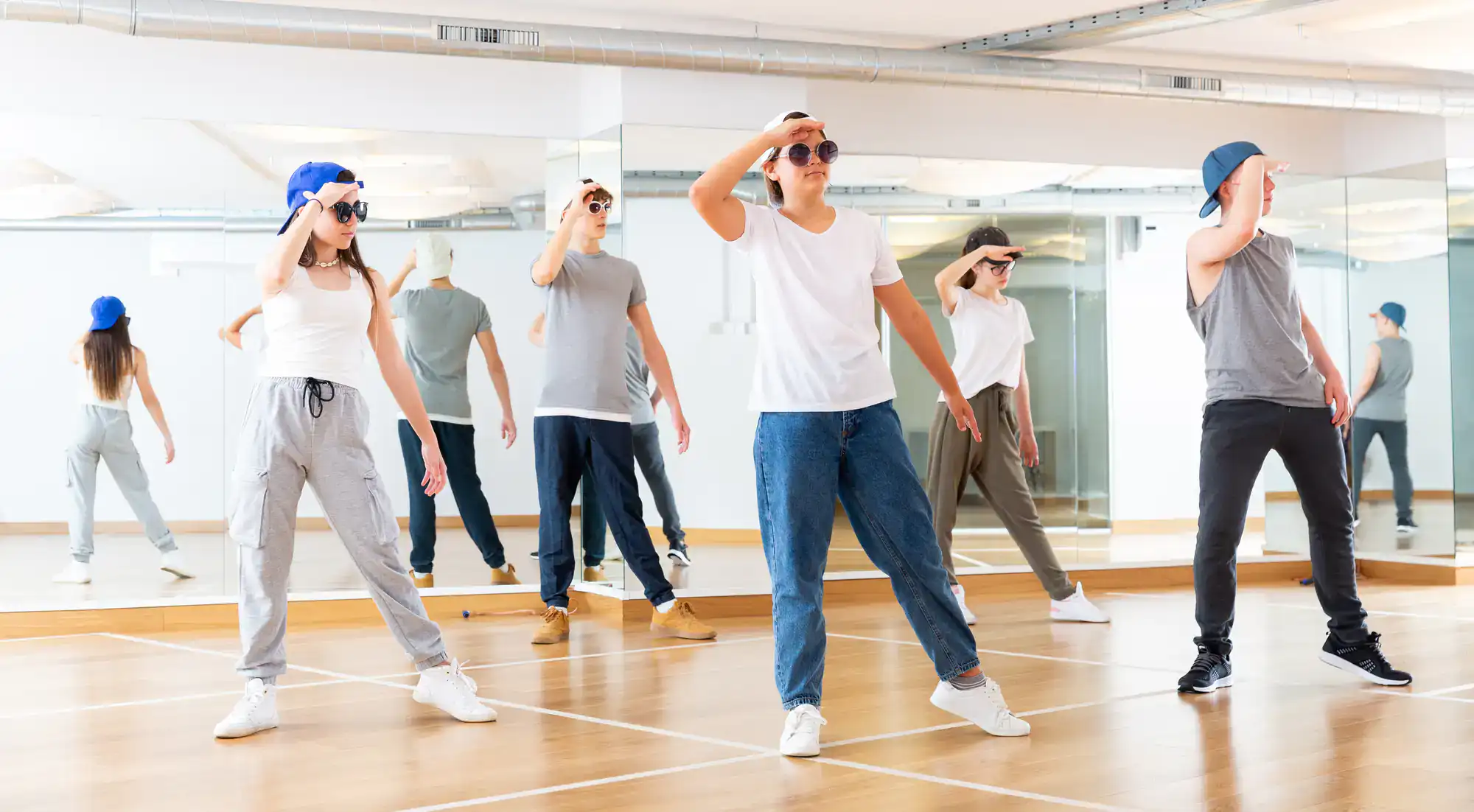
Think comfortable and fitted, not tight or baggy. Leggings or dress pants work well for bottoms. A fitted t-shirt, tank top, or blouse works for tops. You want your instructor to see your body alignment and movement, which helps them give you better feedback and corrections.
Avoid anything too loose or restrictive. Baggy clothes hide your form and can get in the way during turns or partner work. Super tight jeans or stiff fabrics limit your range of motion. You’re looking for that middle ground where you can lift your arms, take wide steps, and turn without fighting your outfit.
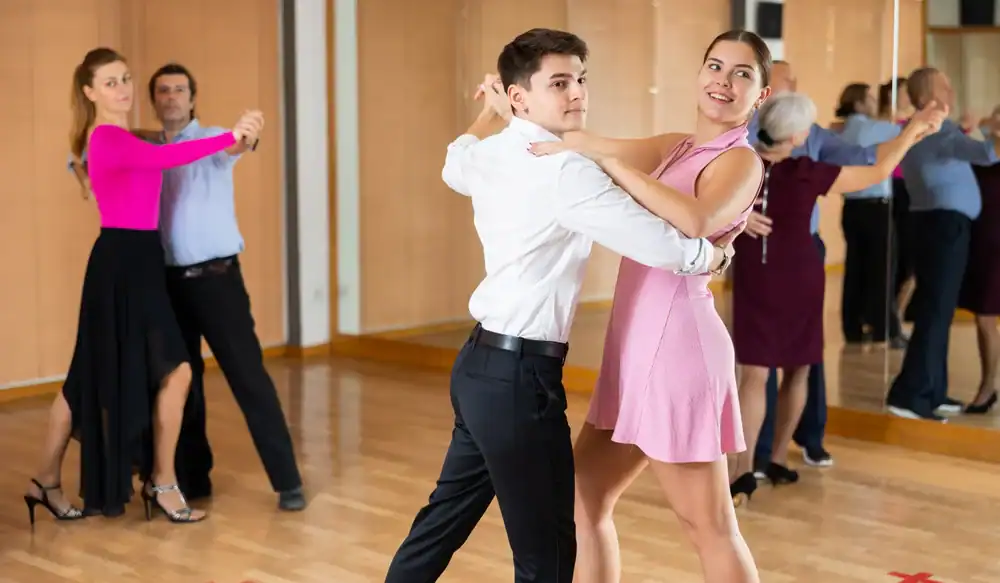
Shoes matter more than your outfit. This is where most beginners make mistakes that affect their experience and even their safety.
Rubber-soled sneakers grip the floor too much. When you try to turn or pivot, your shoe sticks while your body keeps moving. That’s how you twist an ankle or strain a knee. Dance studios have smooth floors designed for movement, and you need footwear that works with that surface, not against it.
For your first few private dance lessons, wear shoes with smooth, non-grip soles. Leather-soled dress shoes work well for men. Women can wear low heels with a back strap, ballet flats, or character shoes. If you don’t have any of these, flexible sneakers with minimal tread are better than heavy athletic shoes.
As you continue with lessons, investing in actual dance shoes makes sense. Ballroom dance shoes have suede soles that give you the perfect balance of grip and slip. They’re designed specifically for the movements you’ll be learning. Men’s ballroom shoes look like dress shoes with a suede bottom. Women’s come in various heel heights, and you can start low if you’re not used to dancing in heels.
If you’re taking private dance lessons to prepare for a wedding, bring your wedding shoes to at least your last few sessions. You need to know how they feel when you’re actually dancing. If your wedding heels are too high or uncomfortable, you’ll find out during practice, not during your first dance in front of 150 guests. For grooms, practice in your actual dress shoes or something very similar. Breaking them in during lessons means no surprises on your wedding day.
The investment in proper footwear pays off quickly. You’ll move more confidently, learn faster, and avoid the frustration of fighting against shoes that weren’t made for dancing. Your instructor will notice the difference immediately.
Wedding dance preparation has its own considerations. You’re not just learning to dance – you’re preparing to perform in specific attire on a specific day.
Start your early lessons in comfortable practice clothes. But as you get closer to your wedding, you need to simulate the actual conditions you’ll face. Brides should practice in a skirt or dress similar in length and fullness to their wedding dress. You don’t need to risk your actual gown, but a practice skirt that moves the same way helps you learn to navigate the fabric without tripping.
If your dress has a train, bustle, or lots of layers, practice moving in something similar. You might feel completely confident dancing in leggings, then put on your wedding dress and realize you can’t take the same size steps. Better to discover that during a private lesson than during your reception.
Grooms should practice in dress shoes with smooth soles, preferably the actual shoes you’ll wear at the wedding. Pair them with dress pants or slacks that fit similarly to your wedding attire. A button-down shirt helps you get used to the slightly more restrictive feeling compared to a t-shirt.
The goal isn’t to wear your full wedding outfit to every lesson. It’s to progressively prepare your body for how you’ll actually move on your wedding day. Most couples do their first few sessions in athletic wear, then gradually transition to more wedding-appropriate practice attire as the date approaches.
This approach has practical benefits beyond just getting used to the clothes. When you practice in heels, you build the foot and ankle strength needed to dance in them comfortably for hours. When you practice in a fuller skirt, you learn exactly how to hold it or move it out of the way during turns. These small adjustments make a massive difference in how confident you feel when it actually matters.
Temperature is another factor. Dance studios can get warm when you’re moving. Layer your practice outfits so you can remove a cardigan or jacket as you warm up. Breathable, moisture-wicking fabrics work better than heavy cotton that holds sweat. Black hides perspiration better than lighter colors if that’s a concern for you.
Want live answers?
Connect with a Ballroom Factory Dance Studio expert for fast, friendly support.
Social mixers and dance events have a different vibe than private lessons. These are social occasions where you’ll meet other dancers, practice what you’ve learned, and enjoy the community aspect of dancing.
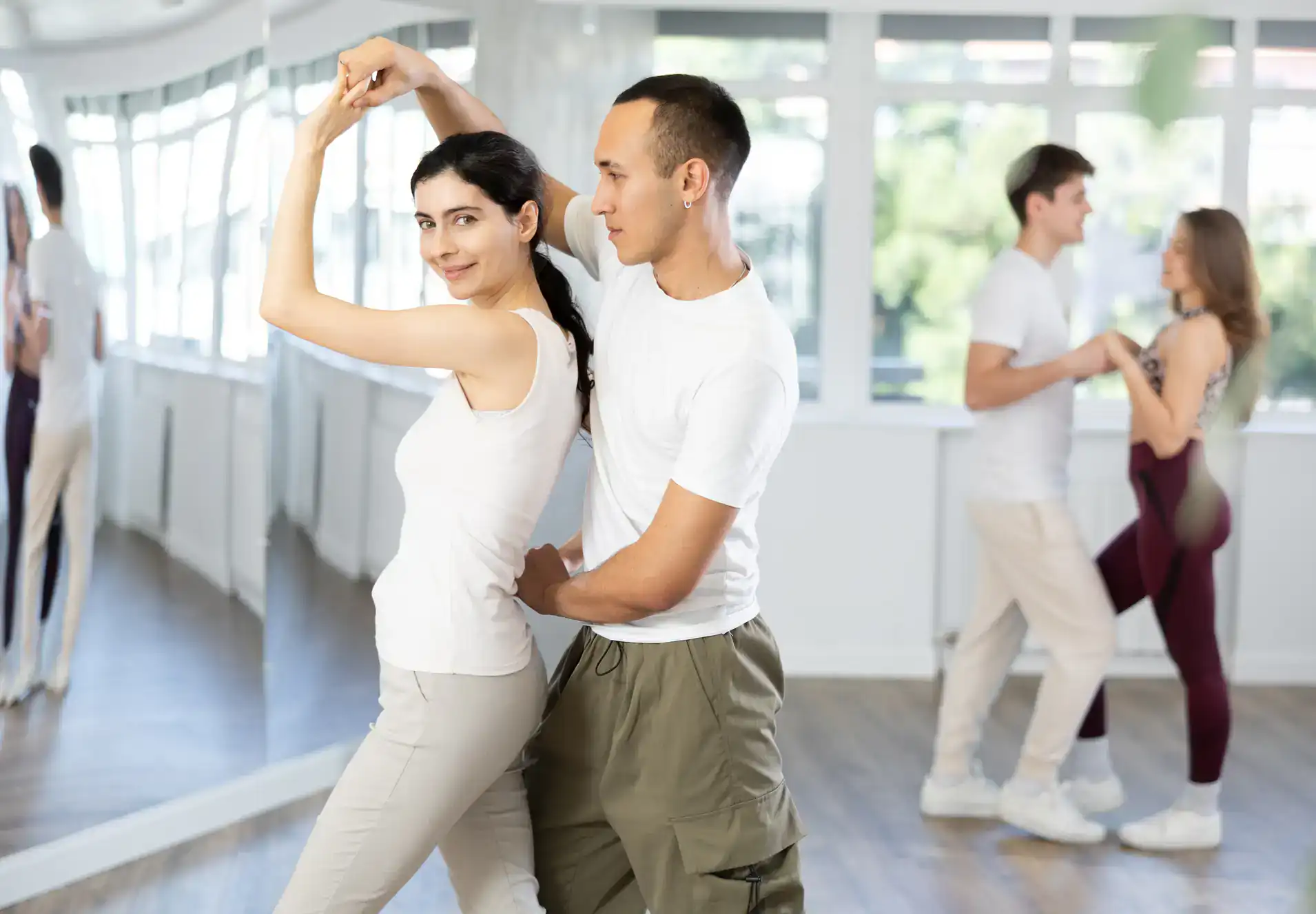
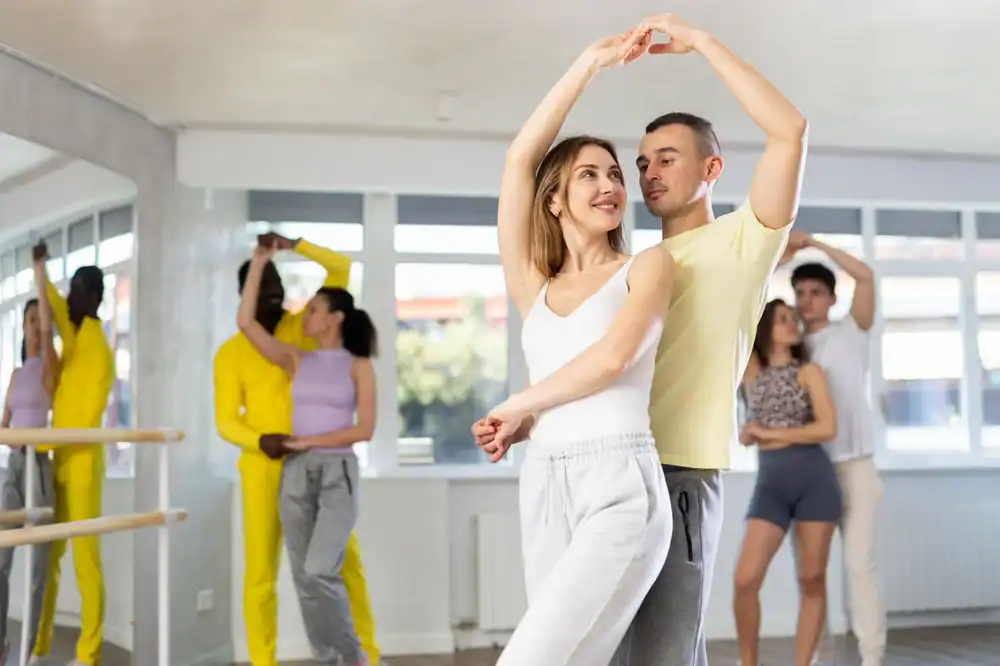
The dress code for most social mixers falls into “dressy casual” territory. Think of it like going to a nice restaurant or a casual date night. Men typically wear slacks or dress pants with a button-down shirt or polo. Women often choose dresses, skirts with nice tops, or dressy pants with blouses.
You’re dressing up slightly more than you would for a regular private lesson, but you’re not wearing formal ballroom competition attire. The goal is to look put-together while still being able to move comfortably for several hours of dancing. You’ll see a range of outfits at any social mixer, so there’s flexibility based on your personal style.
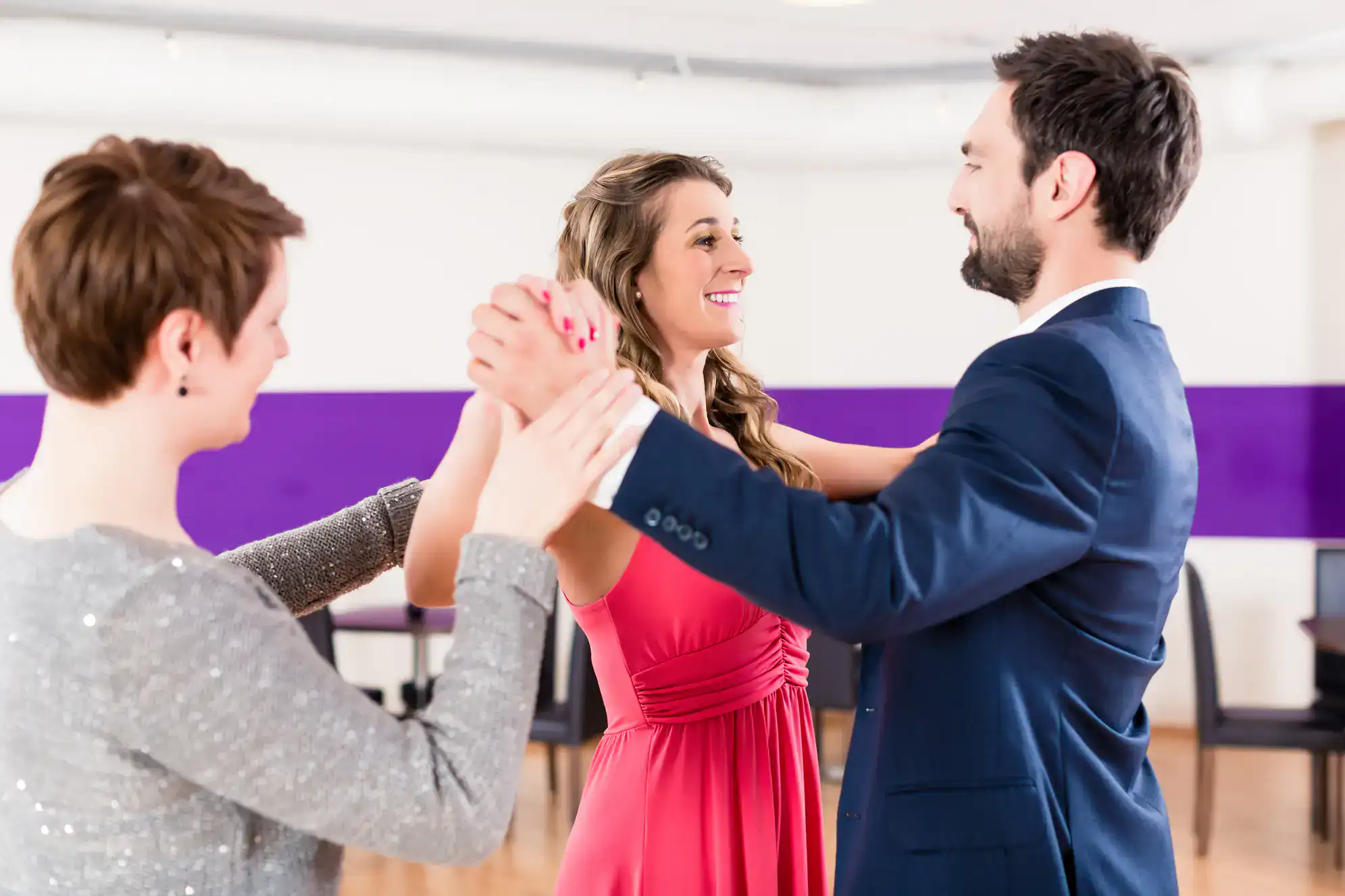
When you’re planning your outfit for a social mixer or dance event, think beyond just how it looks. You need to consider how it functions for several hours of movement.
Sleeves matter more than you might think. When you’re dancing with partners, especially in ballroom or Latin styles, you’ll have physical contact. Skin-to-skin contact during active dancing can get uncomfortable as you warm up. Tops with sleeves at least to the elbow help both you and your partners feel more comfortable. This doesn’t mean you can’t wear sleeveless tops, but having some coverage is generally appreciated in partner dancing situations.
Avoid anything too revealing, not because of strict rules, but because it can make partner dancing awkward. You want to focus on the dancing, not on adjusting your top or worrying about wardrobe malfunctions during dips or turns. Similarly, avoid excessive jewelry that can catch on a partner’s clothing or scratch someone during close contact.
Fabric choice affects your comfort level significantly. Breathable materials like cotton blends or moisture-wicking fabrics keep you cooler than synthetic fabrics that trap heat. Stretchy fabrics allow better range of motion than stiff materials. You’ll be moving more than you expect at a social mixer, so dress for an active evening.
Your shoes remain critically important. Dance shoes are ideal, but any shoe with a smooth sole and a secure fit works. Women should avoid very high heels if they’re not used to dancing in them – you’ll be on your feet for hours. A 2-inch heel is more sustainable than a 4-inch heel for most dancers. Men should wear leather-soled dress shoes rather than rubber-soled shoes.
Bring a light jacket or wrap if you tend to get cold. Studios often have air conditioning, and you might feel cool before you start dancing or during breaks. You can always remove a layer, but you can’t add one if you didn’t bring it.
Consider the practical aspects of your outfit. Can you move your arms fully overhead? Can you take wide steps without your skirt or pants restricting you? Can you turn without your shoes sticking? If you answer yes to these questions, you’re probably dressed appropriately for a social mixer.
Not all dance events have the same dress expectations. Understanding the differences helps you show up appropriately prepared for each type of occasion.
Practice parties and Friday social sessions at our studio are the most casual dance events. These are designed for students to practice what they’ve learned in a relaxed, supportive environment. Dressy casual works perfectly – nice jeans or slacks with a decent top, or a casual dress. The focus is on dancing and practicing, not on formal presentation.
Themed dance events might specify a dress code in the invitation. A Latin night might encourage brighter colors and more expressive outfits. A Viennese Ball would call for formal attire – gowns and tuxedos. Always check the event details or ask the organizers if you’re unsure. When in doubt, slightly overdressed is better than significantly underdressed.
Group classes and workshops fall somewhere between private lessons and social events. Comfortable, fitted dance clothes work well. You’ll be learning and practicing, so you need freedom of movement. But you’re also in a group setting, so most people dress slightly more intentionally than they would for a solo workout.
Competitions and showcases require the most formal attire, but these are specific performance situations. If you’re attending as a spectator, dressy attire is appropriate for evening events. If you’re competing, you’ll work with your instructor on proper competition attire, which has specific requirements depending on your dance category and level.
The Suffolk County dance community is generally welcoming and not overly rigid about dress codes for social events. You’ll see variety in what people wear, which reflects different comfort levels and personal styles. The common thread is that everyone chooses outfits that allow them to dance comfortably while showing respect for the social nature of the event.
Pay attention to what regulars wear at your first few events. You’ll quickly get a sense of our studio’s culture and what feels right. Some studios lean more casual, others slightly dressier. We create a welcoming environment where you can focus on learning and enjoying dance without worrying excessively about having the perfect outfit.
One last consideration: bring a change of shoes if you’re coming directly from work or another commitment. Dancing in the shoes you wore all day isn’t comfortable, and street shoes can damage studio floors. Many dancers keep a pair of dance shoes in their car or bag specifically for this reason.
Choosing what to wear to private dance lessons and social mixers comes down to comfort, movement, and appropriateness for the setting. Start with fitted, breathable clothes that let you move freely. Invest in proper footwear with smooth soles to protect your joints and improve your dancing. Adjust your attire as you progress, especially if you’re preparing for a wedding or planning to attend social events.
The most important thing is to start. Don’t let uncertainty about what to wear keep you from experiencing the confidence, connection, and joy that comes from learning to dance. Every dancer started as a beginner who wasn’t sure what to wear or how to move.
If you’re in Suffolk County and ready to begin private dance lessons, prepare for a first wedding dance, or join group classes and social mixers, we offer the personalized instruction and welcoming environment you need to succeed. Our experienced instructors will guide you through every step, from what to wear to how to move with confidence on any dance floor.
Summary:
Article details:
Share: