Picking the wrong dance class is the most common reason adults quit before they ever get good. Here's what to do instead.
You’ve thought about taking dance classes. Maybe there’s a wedding on the calendar, maybe you felt out of place at the last party, or maybe you’re just tired of standing on the sideline while everyone else is having fun on the floor. Whatever the reason, you looked into it — and then talked yourself out of it. Too expensive. Too embarrassing. Too late to start.
Here’s the thing: most adults who try dance classes and quit weren’t bad students. They just started wrong. The wrong format, the wrong style, or the wrong assumption about what learning to dance actually looks like. This guide is here to fix that.
“Ballroom dancing” is one of those phrases that means something different depending on who you ask. To some people it’s Waltz at a black-tie gala. To others it’s Salsa at a Bay Shore wedding reception. Both are technically correct — and that’s exactly why so many beginners get confused before they even sign up for a class.
The ballroom dance styles list covers a wide range of styles, each with its own rhythm, character, and social context. Knowing the difference before you walk into a studio saves you weeks of frustration and helps you choose a style that actually fits your goals. The ball room dance styles that come up most often for adult beginners in Suffolk County fall into two broad categories: smooth/standard dances and Latin/rhythm dances.
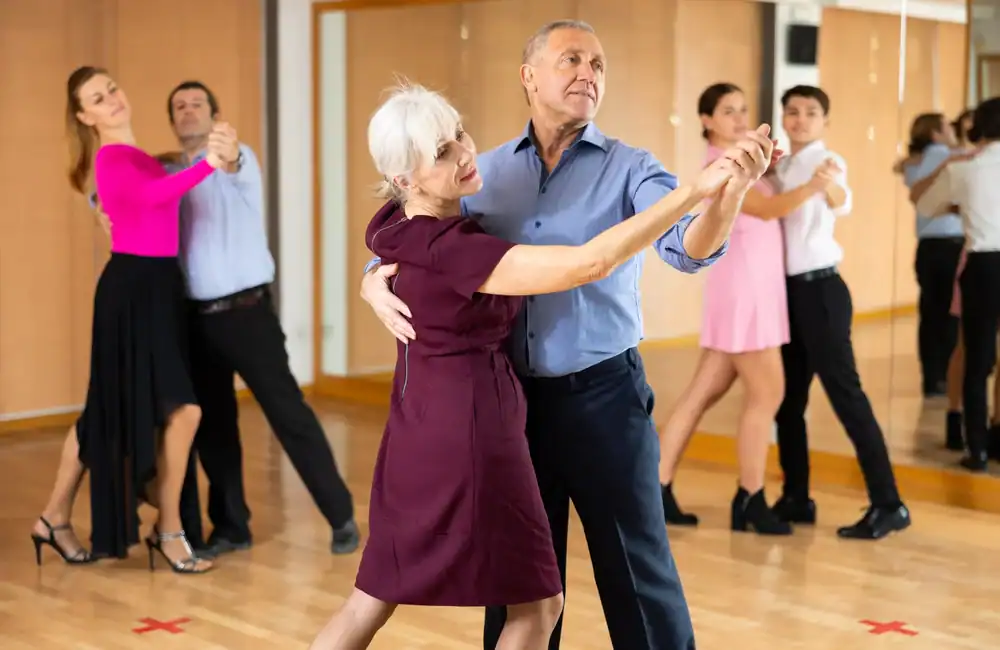
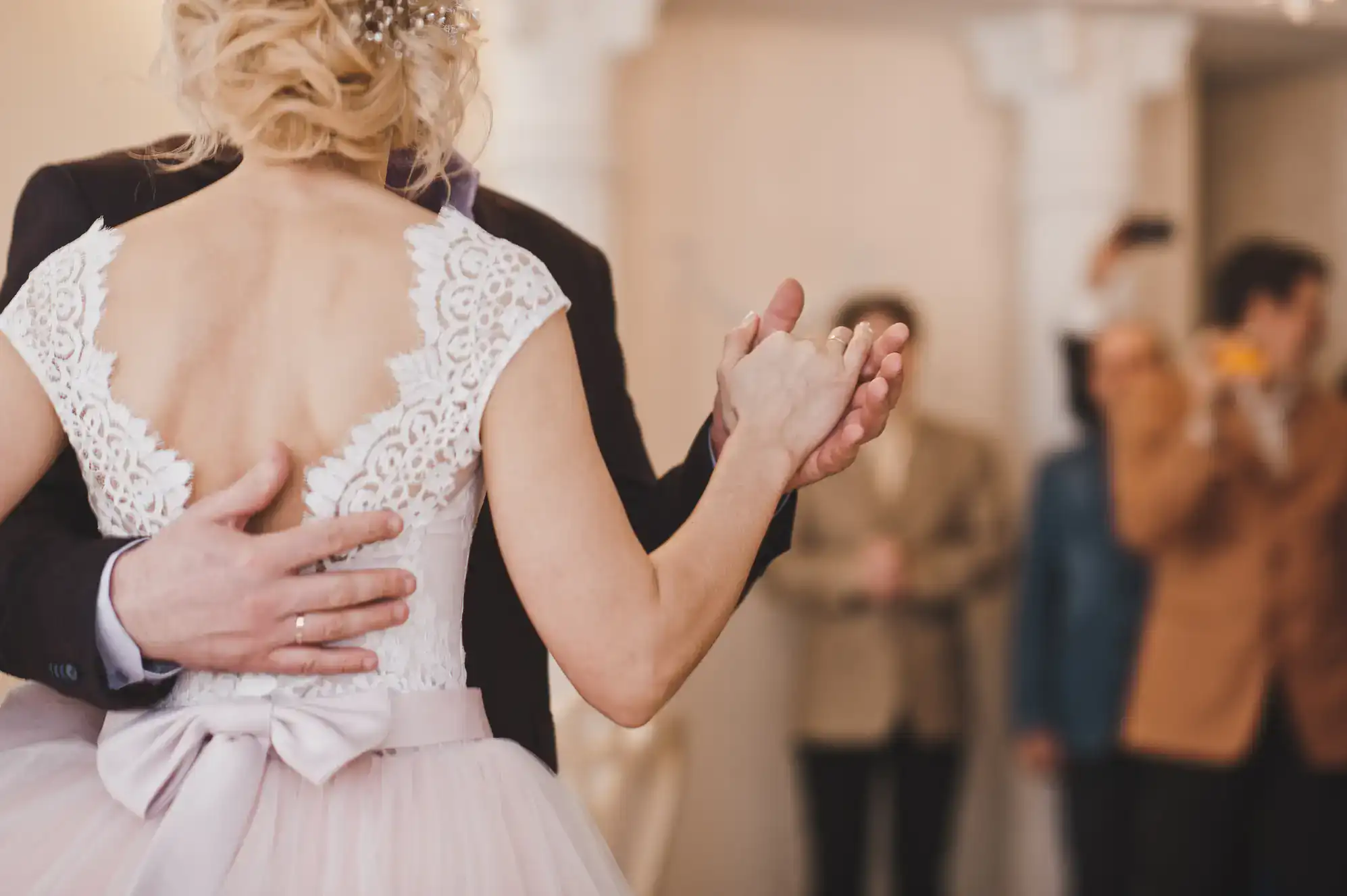
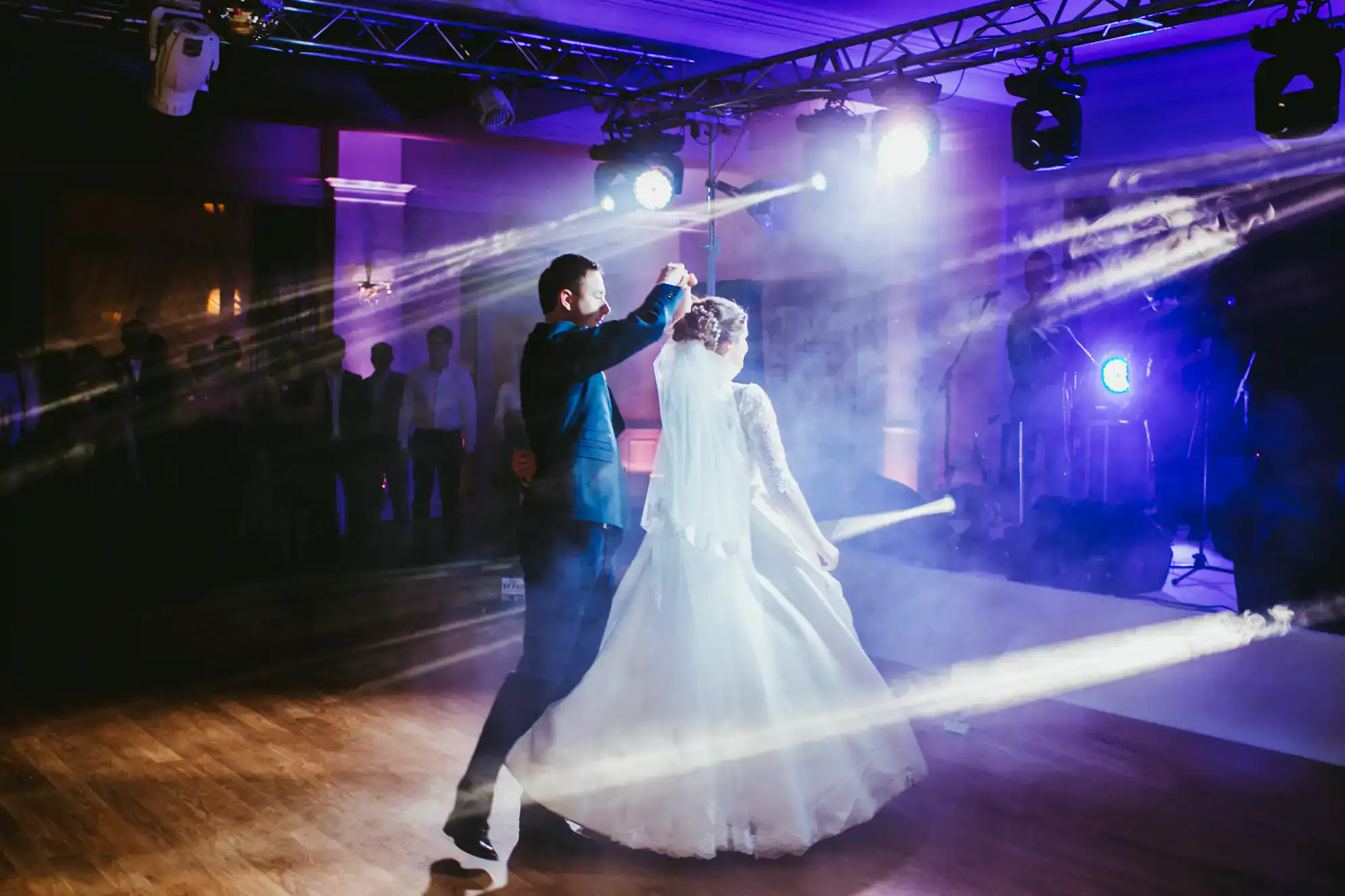
If you’re learning to dance for a wedding, a charity gala, or just to feel comfortable at any formal event in Suffolk County, Waltz and Foxtrot are the two styles worth knowing first. They’re the foundation of American Smooth Ballroom Dance, and they share enough structural overlap that learning one makes the other easier.
Waltz is the one most people recognize — sweeping, flowing movement in three-quarter time, the kind of dance that looks effortless when done well and feels surprisingly natural once you understand the rise-and-fall rhythm. Beginner Waltz focuses on posture, basic box steps, and how to move as a unit with a partner. You don’t need to be graceful going in. You just need to be willing to slow down and listen to the music.
Foxtrot is arguably the more versatile of the two. It’s danced to four-four time, which means it works with a huge range of popular music — jazz standards, big band, even slower pop songs. Beginner Foxtrot covers the slow-slow-quick-quick timing, basic traveling steps, and the kind of smooth, continuous movement that makes a couple look like they actually know what they’re doing. For adults in Suffolk County who want one dance that translates across the most social situations, Foxtrot is often the answer.
What both styles share is this: they reward patience. The footwork isn’t complicated at the beginner level, but the connection between partners — the lead and follow dynamic — takes some practice to feel natural. Most students feel a real shift somewhere between the third and fifth lesson, when the mechanics start to click and the dance starts to feel less like counting and more like moving.
One important note: both Waltz and Foxtrot are part of the American Smooth Ballroom Dance tradition, which is the style we teach most commonly and the most relevant for social dancing. If you’ve seen ballroom competition on television, you’ve likely seen the International Standard versions, which have a stricter frame and different technique. For beginners dancing at Suffolk County weddings and events — not competitions — American Smooth is the more practical starting point.
Not everyone wants to Waltz. That’s completely fine — and honestly, it’s part of what makes choosing a dance style interesting. The right style depends on your personality, your goals, and the kind of music that actually makes you want to move.
If you’re drawn to Latin music, to the kind of dancing you see at parties in Brentwood or at a Patchogue bar on a Friday night, then Salsa, Bachata, or Cha-Cha are worth exploring. Salsa is energetic and social — it’s built for parties, it’s taught in group settings, and once you have the basic timing, you can dance with almost anyone who knows it. Bachata is slower and more intimate, built around a simple eight-count rhythm that most beginners pick up faster than they expect. Cha-Cha sits somewhere in between — playful, rhythmic, and endlessly versatile.
The Foxtrot Dance is worth singling out again here because it surprises people. It looks formal, but it’s one of the most relaxed dances to actually learn. The timing is intuitive, the music is familiar, and the lead-follow connection is gentler than Tango or Salsa. For adults who are nervous about looking stiff or awkward, Foxtrot tends to be the style that makes them feel most like themselves on the floor.
Tango is the one people are most curious about and most intimidated by. It’s dramatic, precise, and requires a different kind of connection than any other style. It’s not the best starting point for most beginners, but it’s an incredible dance to grow into — and many students who come in for a wedding Waltz end up falling in love with Tango six months later.
The broader point: no single style is right for everyone. A good instructor doesn’t put you in a box — we help you figure out which style fits your goals, your body, and your personality, and then we build from there. That process of discovery is part of what makes private instruction so different from just showing up to a group class and hoping for the best.
Want live answers?
Connect with a Ballroom Factory Dance Studio expert for fast, friendly support.
Here’s the mistake. Someone decides to finally try dance classes. They find a group class nearby because it’s cheaper, sign up, and show up on a Tuesday night. The instructor runs through a sequence. Everyone else seems to follow. They don’t. The class moves on. They spend the next hour trying to catch up and leave feeling worse than when they walked in. They don’t come back.
This is not a rare story. It’s the most common reason adults quit dance before they ever get good. And it’s almost entirely avoidable.
Group classes are genuinely valuable — but not at the start, and not for every person. Understanding the difference between private and group instruction is the most important decision a beginner makes, and most people don’t think about it until after they’ve already had a bad experience.
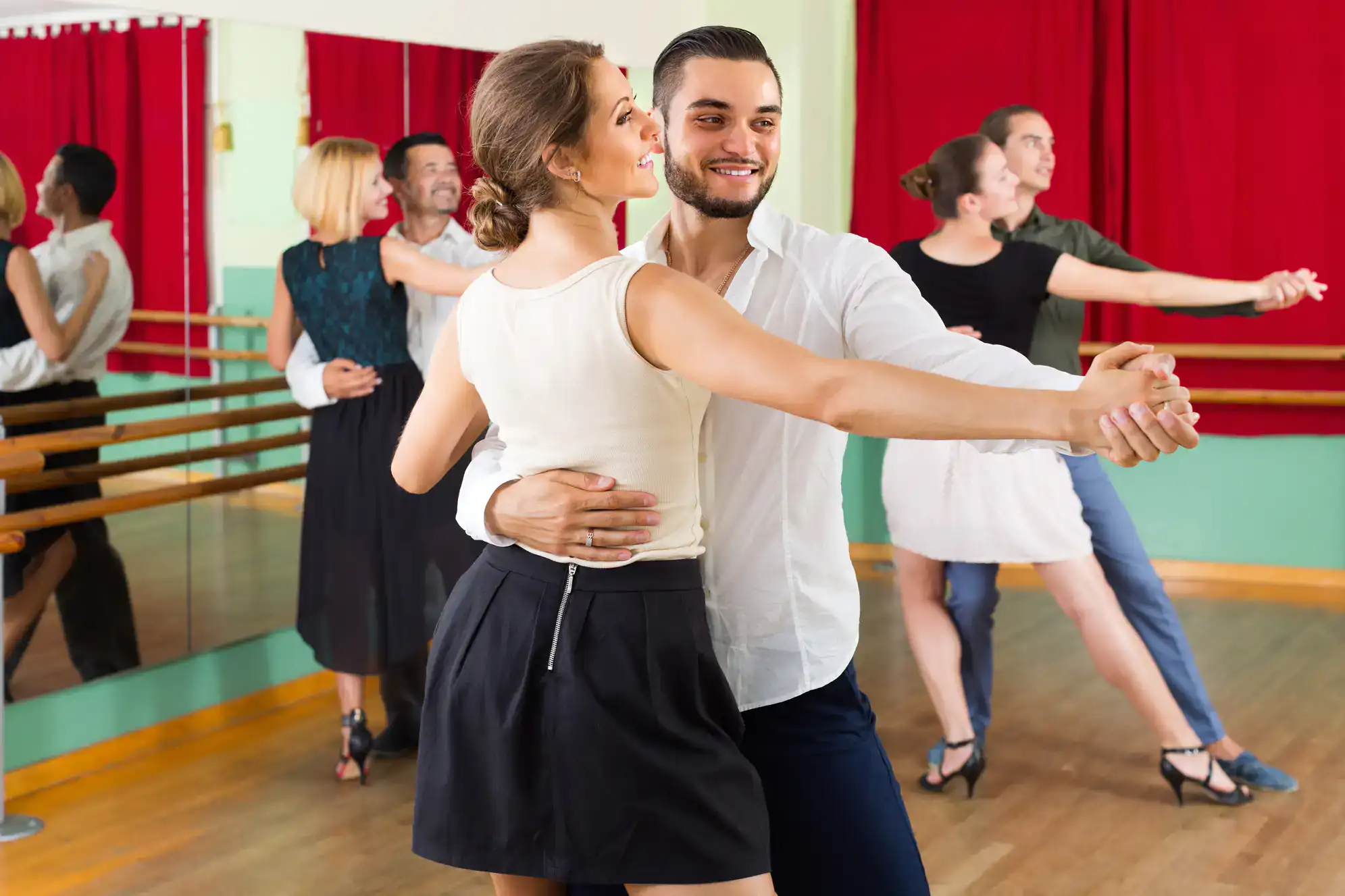
Private dance lessons exist for a simple reason: everyone starts from a different place. Your posture, your natural rhythm, your comfort with physical connection, the style you want to learn, the event you’re preparing for, the pace at which you absorb new information — all of it is different from the person standing next to you in a group class. Our private dance teacher works with your specifics, not the group’s average.
In a one-on-one setting, the instructor can see exactly what you’re doing with your feet, your frame, your weight transfer, and your timing. We can correct it in real time, explain it in the way that makes sense to you specifically, and slow down or speed up based on how you’re responding. That kind of attention is simply not possible when one instructor is managing a room of twelve people.
There’s also the confidence factor, and it’s a big one. The number one reason adults avoid dance classes in the first place is fear of embarrassment — fear of being the worst person in the room, of looking ridiculous, of not being able to keep up. Private lessons eliminate that entirely. It’s just you and your instructor. There’s no audience, no comparison, no one moving ahead while you’re still figuring out the first step. That environment changes how people learn. It changes how quickly they progress. And it changes how they feel about dancing overall.
Most students who start with private instruction and then move into group classes describe the transition as easy and fun — because they arrive with a foundation. They’re not struggling to keep up; they’re reinforcing what they already know. The students who start in groups and never quite click are often the ones who needed that private foundation first and never got it.
For Suffolk County adults preparing for a wedding, a milestone event, or just trying to finally get comfortable on a dance floor, one-on-one dance lessons are almost always the smarter starting point. The progress is faster, the experience is less stressful, and the results are more lasting.
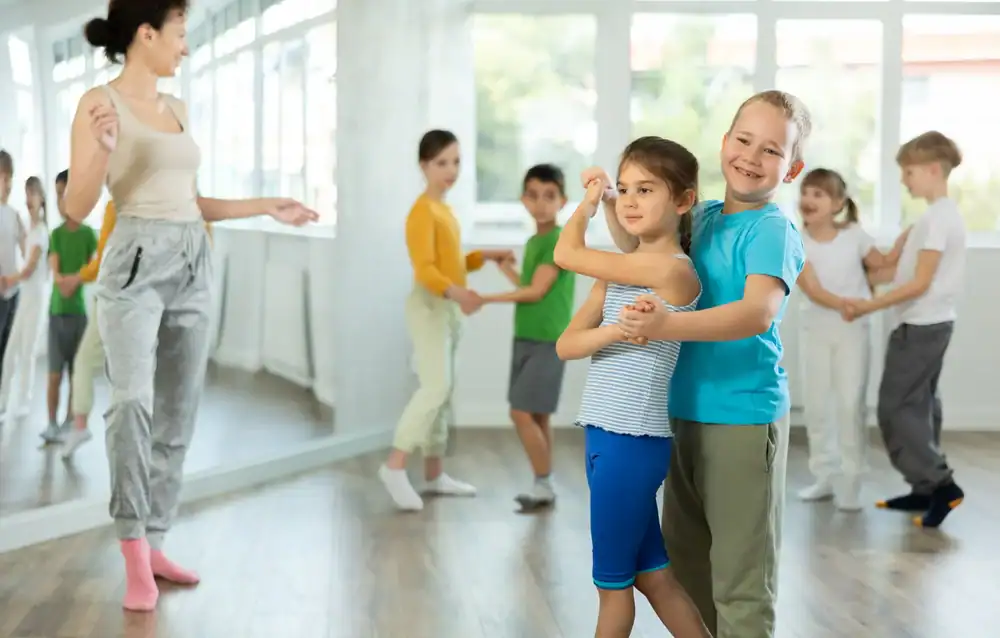
Group classes aren’t the problem — starting in them before you’re ready is. Once you have a foundation, group ballroom dance lessons become one of the best parts of the whole experience. They’re social, energetic, and genuinely fun. You meet other people who are at a similar level, you practice with different partners, and you start to feel what it’s like to dance with someone you’ve never danced with before — which is exactly the skill you need for a wedding reception or a social event.
The group classes that work best for beginners are the ones designed specifically for that level — not general “beginner” classes that assume some prior knowledge, but true introductory formats where no experience is assumed and no partner is required. At our studio, classes like Intro to Latin Dancing (covering Salsa, Merengue, and Bachata) and Intro to Social Dancing (covering Rumba, Foxtrot, and Lindy) are built for people who are genuinely starting from zero. The pace is set for the room, not for the fastest person in it.
The key distinction is intentionality. A group class that matches your current level, in a style you actually want to learn, with an instructor who keeps the environment welcoming rather than competitive — that’s a great experience. A group class where the instructor moves on before you’ve absorbed the last step, where you feel like you’re holding everyone else back, where the vibe is more performance than learning — that’s the one that sends people home and keeps them off the dance floor for another five years.
For adults in Suffolk County who’ve had a bad group class experience in the past, the takeaway is this: it wasn’t necessarily dance that wasn’t for you. It might have been the format, the level, or the instructor. Starting with a few private lessons to build your footing, then stepping into a group class with confidence, is a completely different experience than walking in cold and hoping for the best.
The adults who stick with dance — who actually get good, who start looking forward to their lessons, who show up to their nephew’s wedding and genuinely enjoy themselves on the floor — almost always have one thing in common. They found the right environment first. Not the cheapest option, not the most convenient, but the one where they felt like they could actually learn without feeling judged.
That’s what good instruction looks like. Patient, personalized, and built around where you are right now — not where someone thinks you should be. Whether you’re preparing for a first dance at a Long Island vineyard wedding, trying something new after years of the same routine, or just finally following through on something you’ve been putting off, the starting point is the same: one lesson, no pressure, with someone who actually knows how to teach adults from scratch.
If you’re in Suffolk County and ready to take that first step, Ballroom Factory Dance Studio is located at 620 Waverly Ave in Patchogue, NY — and we’d be glad to help you figure out where to start.
—
**FAQ**
**What should I look for in a ballroom dance teacher?**
The most important thing isn’t credentials on a wall — it’s whether the instructor can adapt to you. A qualified dance teacher should be able to assess where you are in the first lesson, adjust their pace and communication style to fit how you learn, and create an environment where you feel comfortable making mistakes. Ask whether they have experience teaching adult beginners specifically, not just competitive students. Here in Suffolk County, where most adults are learning for social events or personal enjoyment rather than competition, that distinction matters. An instructor who’s patient, specific in their corrections, and genuinely encouraging will get you further than one who’s technically impressive but moves too fast.
**What is the easiest ballroom dance to learn?**
For most adult beginners, Foxtrot and Merengue tend to come most naturally. Foxtrot has an intuitive slow-slow-quick-quick timing that works with a wide range of music, and the basic footwork is straightforward enough that most students feel a real sense of progress within the first few lessons. Merengue is even simpler in terms of footwork — it’s a marching rhythm that beginners often pick up in a single session. That said, “easiest” depends on the person. Someone with a natural feel for Latin music might find Bachata easier than Waltz. The best approach is to try a style that matches the music you actually like, because you’ll practice more and progress faster when you’re enjoying what you’re dancing to.
**What is the best dance teacher for an adult who has never danced before?**
The best dance teacher for a true beginner is one who has specifically taught adults starting from zero — not just children or competitive students. Adults learn differently than kids. They tend to be more self-conscious, more analytical, and more discouraged by early mistakes. A great professional dance teacher for adult beginners normalizes the learning curve, explains the “why” behind each step, and builds confidence steadily rather than rushing to cover material. In practical terms, look for reviews from people who describe themselves as having “never danced before” or “two left feet” — and see what they say about how the instructor handled that. Those testimonials tell you more than any credential. If you’re looking for a qualified dance teacher in Suffolk County, we’d recommend asking about their specific experience with ballroom lessons for beginners.
Summary:
Article details:
Share: