Not sure whether to start with bachata or salsa? Here's a straight answer — plus what to expect when you walk into your first class at a Suffolk County dance studio.
You’ve decided you want to learn to dance. Maybe there’s a wedding coming up, a quinceañera on the calendar, or you’re just tired of standing at the edge of the floor while everyone else is out there. So you start looking into classes — and immediately hit the first obstacle: bachata or salsa?
Both come up constantly. Both look fun. And every article you find seems to end with “just pick the one that inspires you,” which is not exactly helpful when you’re starting from zero.
Here’s a more honest answer — one that actually takes into account what’s playing at parties right now in Suffolk County, what’s easier to pick up quickly, and what will serve you best on a real dance floor.
There’s a reason bachata keeps coming up as the recommended starting point for adults who have never danced before. It’s not that it’s a lesser dance — at advanced levels, bachata body movement is genuinely complex. But the entry point is lower, and that matters when you’re just getting started.
Bachata moves side to side with a tap on the fourth beat. The rhythm is steady, the footwork is repetitive in the best way, and the tempo is slow enough that your body actually has time to process what it’s doing. One instructor put it simply: it’s pretty much walking pace. If you can walk, you already have the foundation.
Salsa, by contrast, is danced on a syncopated rhythm — counts 1-2-3, pause, 5-6-7, pause — with faster music and more complex footwork patterns from the start. That’s not a reason to avoid it. It’s just a reason not to start there if you’re feeling uncertain about your rhythm.
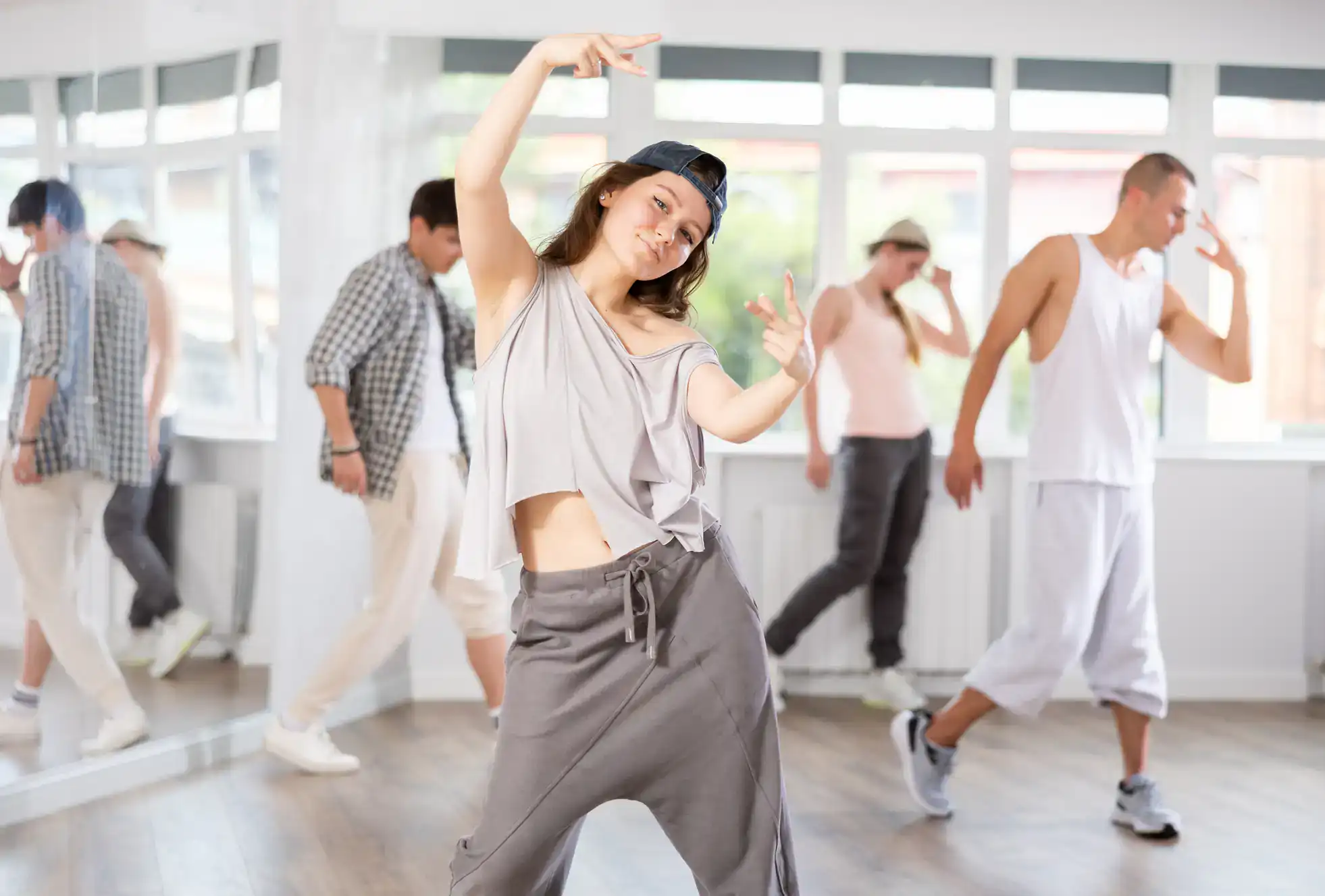
Almost every person who walks into their first Latin dance class feels nervous. You’re in a room with strangers, you’re being asked to move your body in ways you haven’t before, and there’s a part of your brain quietly convinced you’re going to embarrass yourself.
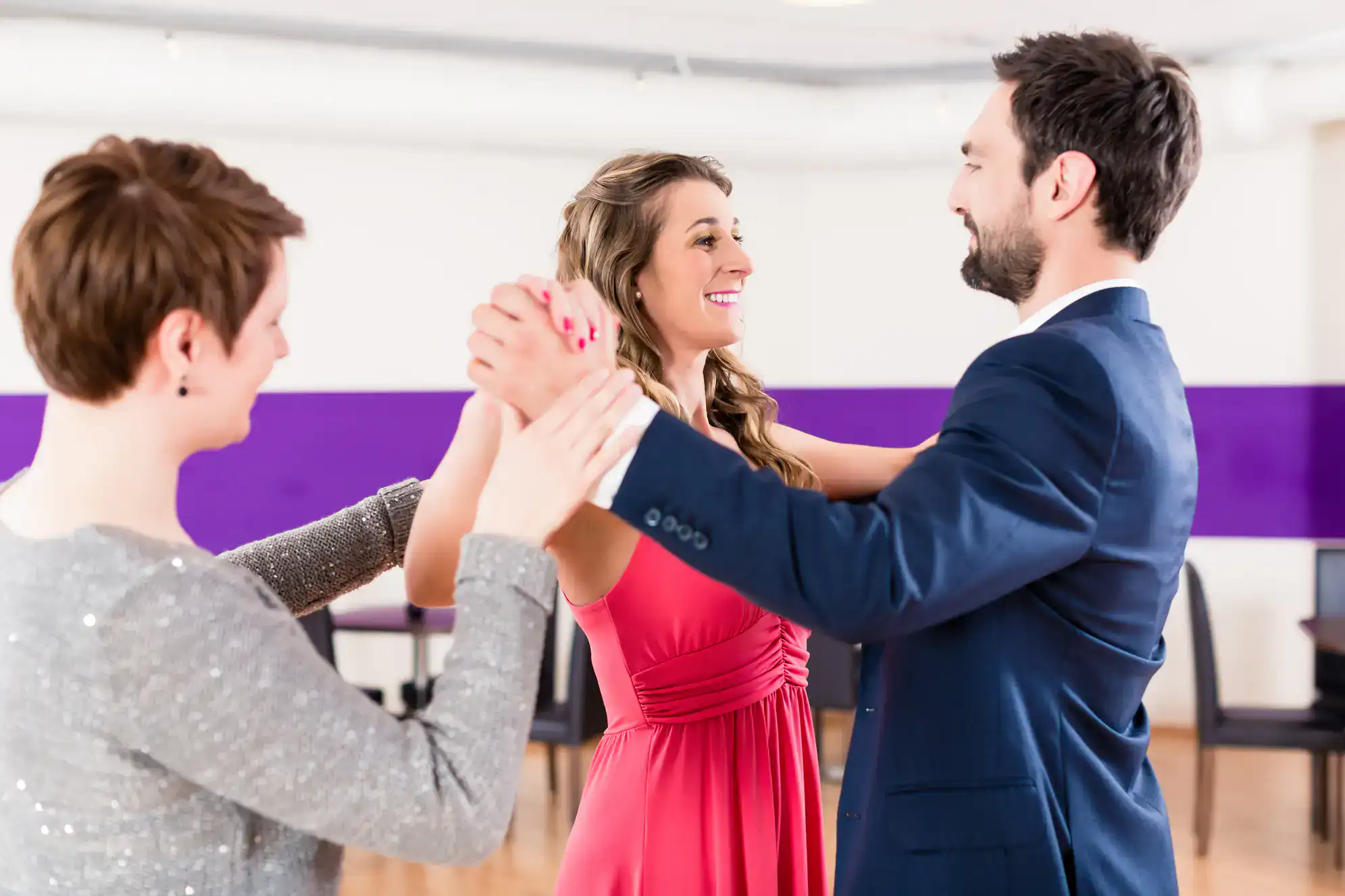
Good bachata dance lessons are designed with exactly that feeling in mind. A proper beginner class starts with a warm-up, moves into basic footwork and rhythm exercises, and only introduces partner work once you’ve had a chance to find your footing — literally. You’re not thrown into a spin combination in the first session.
The basic step usually clicks within the first class for most people. Not perfectly, but enough to feel like something is happening. That early win matters more than it sounds. It’s the difference between leaving a class thinking “I might actually be able to do this” versus leaving feeling defeated.
Most students who attend consistently start feeling comfortable dancing socially after about five to eight beginner bachata classes. That’s a few weeks, not months of grinding through something that doesn’t feel natural. Within three to six months of regular practice, many students describe themselves as confident social dancers — meaning they can go to a party, hear a bachata song come on, and actually get out on the floor.
One more thing worth knowing: you don’t need a partner to start. Partner rotation is standard in group classes, and private lessons are one-on-one with an instructor. You show up, and the class takes care of the rest.
Here’s something worth knowing before you make any decisions: the dance floor has shifted.
For a long time, salsa was the dominant Latin dance at social events. But that balance has changed significantly over the past decade. At many social events today, the music breakdown runs closer to 30% salsa and 70% bachata. Bachata’s search popularity has grown 86% since 2004, and it’s not slowing down. Billboard’s Latin editors noted in 2024 that bachata is now merging with R&B, pop, hip-hop, and electronica — which means mainstream artists are recording it, and it’s showing up at events that have nothing to do with the traditional Latin dance scene.
In Suffolk County specifically, this shift is very real. The Dominican and Puerto Rican communities in Brentwood, Bay Shore, and Central Islip have always kept bachata central to their social culture. But it’s also showing up at weddings in Patchogue, NY, birthday parties in Smithtown, NY, and summer events across the county. If you learn bachata first, you’ll have a skill you can use almost immediately — at the next gathering you attend.
That doesn’t mean salsa isn’t worth learning. It absolutely is. Salsa gives you access to a different kind of dance floor energy — faster, more improvisational, with a rich competitive and social scene of its own. But if your goal is to feel prepared for the parties and events that are actually on your calendar right now, bachata is the more practical first step. The good news is that once you have one Latin style in your body, the second one comes much faster. The musicality, the partner connection, the awareness of how to lead or follow — those transfer.
Want live answers?
Connect with a Ballroom Factory Dance Studio expert for fast, friendly support.
Once you’ve decided to start with bachata — or even if you’re still weighing both — the next question is where to take classes. And that decision matters more than most people realize going in.
The quality of your first few lessons has a significant effect on whether you stick with it. A patient, experienced instructor who explains the lead-follow connection clearly and builds your confidence early makes a very different impression than one who rushes through the basics and leaves you lost by week two.
Look for a studio that teaches bachata as part of a real Latin curriculum — not just as a side offering. Beginner-friendly group formats, private lesson options, and instructors who are named and reviewed by real students are all signs that the studio takes the teaching seriously.
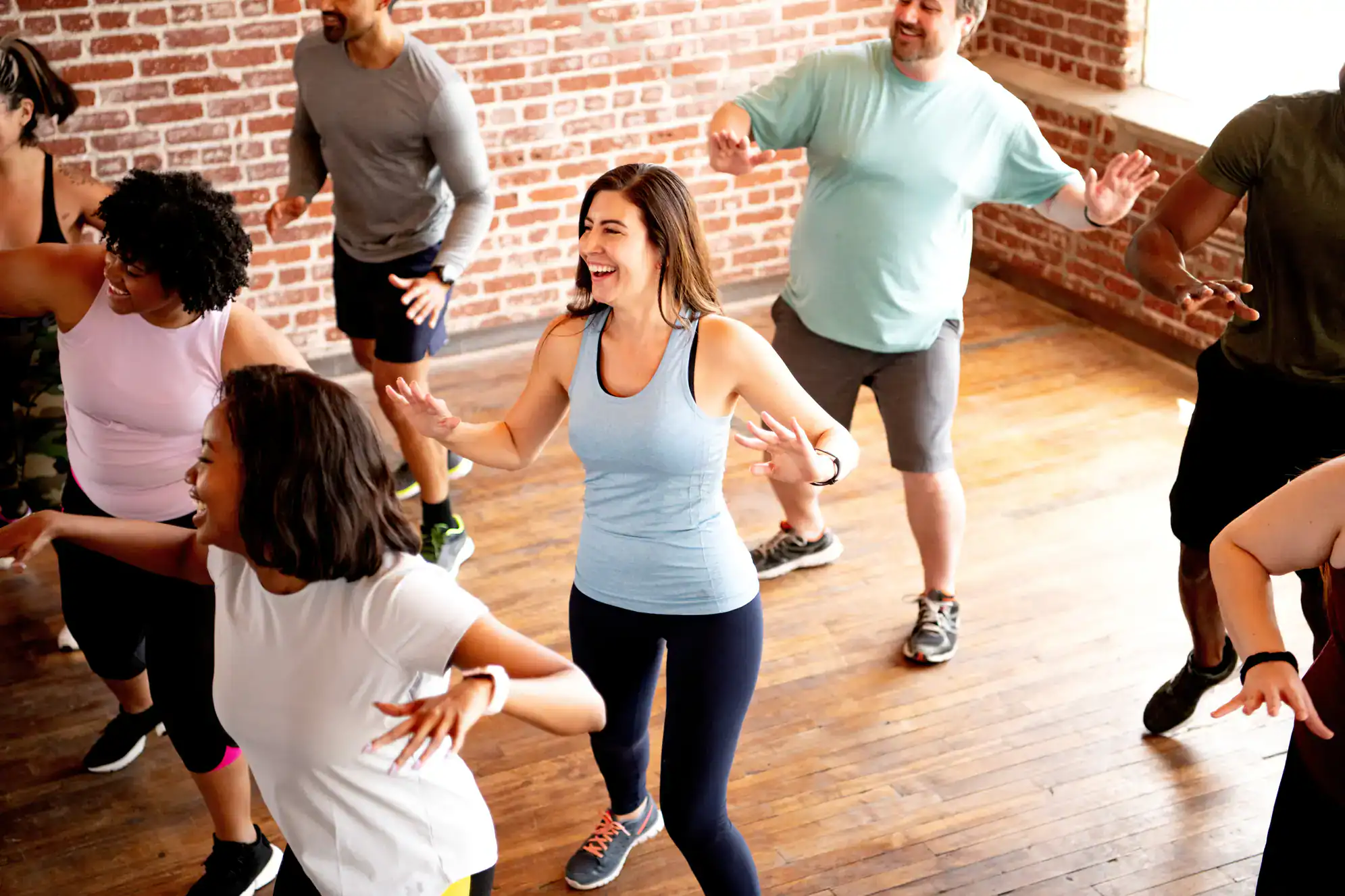
This comes down to how you learn and how comfortable you are starting something new in front of other people.
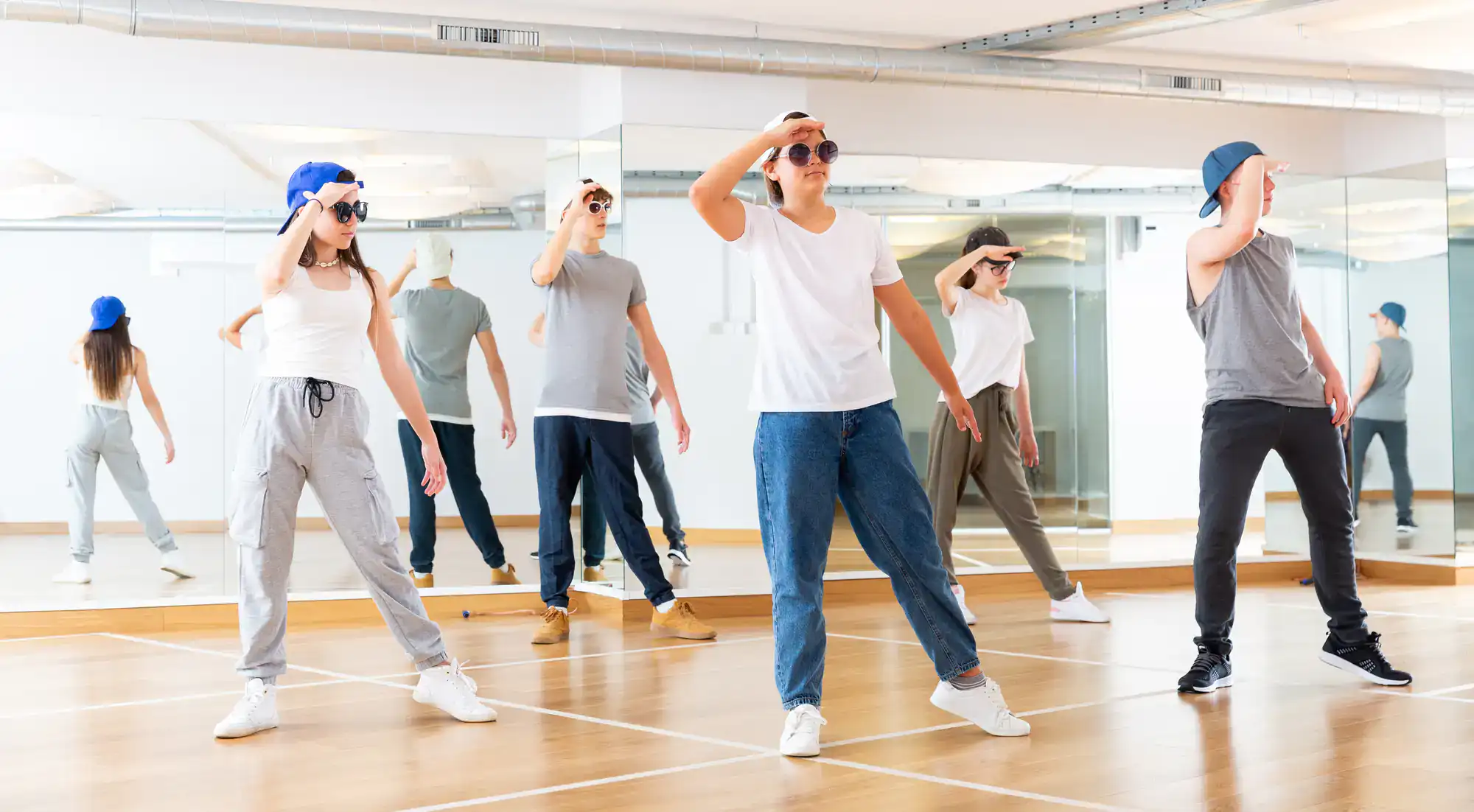
Group bachata classes are social by design. You’re rotating through partners, watching others figure out the same steps you’re figuring out, and building confidence in a room full of people who are all beginners together. For a lot of students, that shared experience is actually what makes it fun. The energy in a good group class is genuinely encouraging — people laugh when they mess up, cheer when something clicks, and leave feeling like they’re part of something.
Private lessons are a different experience entirely. It’s just you and your instructor, working at your pace, on the things that are specific to your body, your rhythm, and your goals. If you’ve always felt self-conscious about dancing, or if you have a specific event you’re preparing for — a first dance at your wedding, for example — private lessons let you move faster and with more precision than a group setting allows. There’s no keeping up with the class, no feeling like you’re slowing everyone down.
Many students do both. They’ll take a private lesson to get the fundamentals solid, then join a group class to practice in a social setting. That combination tends to accelerate progress noticeably. We offer both formats because we’ve seen firsthand how different students respond to different environments. Some people walk in ready for a group; others need a few private sessions before they’re comfortable being in a room with other people. Neither approach is wrong — it’s just a matter of knowing yourself.
What matters most is that you start. The longer you wait to find the “perfect” entry point, the longer you stay on the sidelines at events where you’d rather be dancing.
Yes — and for many students, this is actually the most practical approach, especially if you’re taking dance classes at a studio that teaches both styles.
The honest caveat is that it helps to have one style as your anchor. If you try to absorb both from day one without any foundation in either, the steps can blur together in the early weeks. But if you spend your first few classes getting the bachata basic step genuinely comfortable — to the point where your feet are doing it without you having to think too hard — then adding salsa alongside it becomes much more manageable. The partner connection skills, the musicality, the awareness of how to move with someone else: those carry over.
Our Latin Basics group classes cover salsa, merengue, and bachata together. That structure exists because we’ve found it works well for beginners who want to build a broad foundation without feeling like they’re starting over every time a new song comes on. You learn the relationships between the styles, which makes each one easier to understand.
The other reason to learn both early is purely practical: Latin music doesn’t pause between songs to announce what style is coming next. If you’re at a party in Bay Shore, NY or a wedding reception in Patchogue, NY and the DJ shifts from bachata to salsa, you want to be able to read the music and adjust. That’s a skill that comes with exposure to both styles, and it’s one of the things we genuinely enjoy teaching — that moment when a student stops counting beats and just starts listening to the music.
We also host social dance events at the studio, which gives students a real-world setting to practice both styles in a low-pressure environment before they’re out at an actual party. It’s one of the things that makes the learning process feel less like homework and more like something you actually look forward to.
If you’ve been going back and forth between bachata and salsa, here’s the short version: start with bachata. It’s more accessible for most beginners, it’s what’s dominating social floors in Suffolk County right now, and it gives you a foundation that makes learning salsa afterward significantly easier. You’re not giving anything up — you’re just choosing a smarter on-ramp.
The bigger decision isn’t which dance to learn first. It’s finding the right environment to learn it in — one where you feel comfortable, where the instruction is genuinely good, and where you’ll actually want to keep coming back.
If you’re in Suffolk County and ready to take that first step, we’re here to help. We teach both bachata and salsa, we work with complete beginners every week, and we’ll help you figure out the format — private, group, or both — that fits how you learn. Reach out and let’s get you on the floor.
Summary:
Article details:
Share: