Salsa, Bachata, Rumba — they're all Latin dances, but they feel completely different. Here's how to figure out which one is right for you.
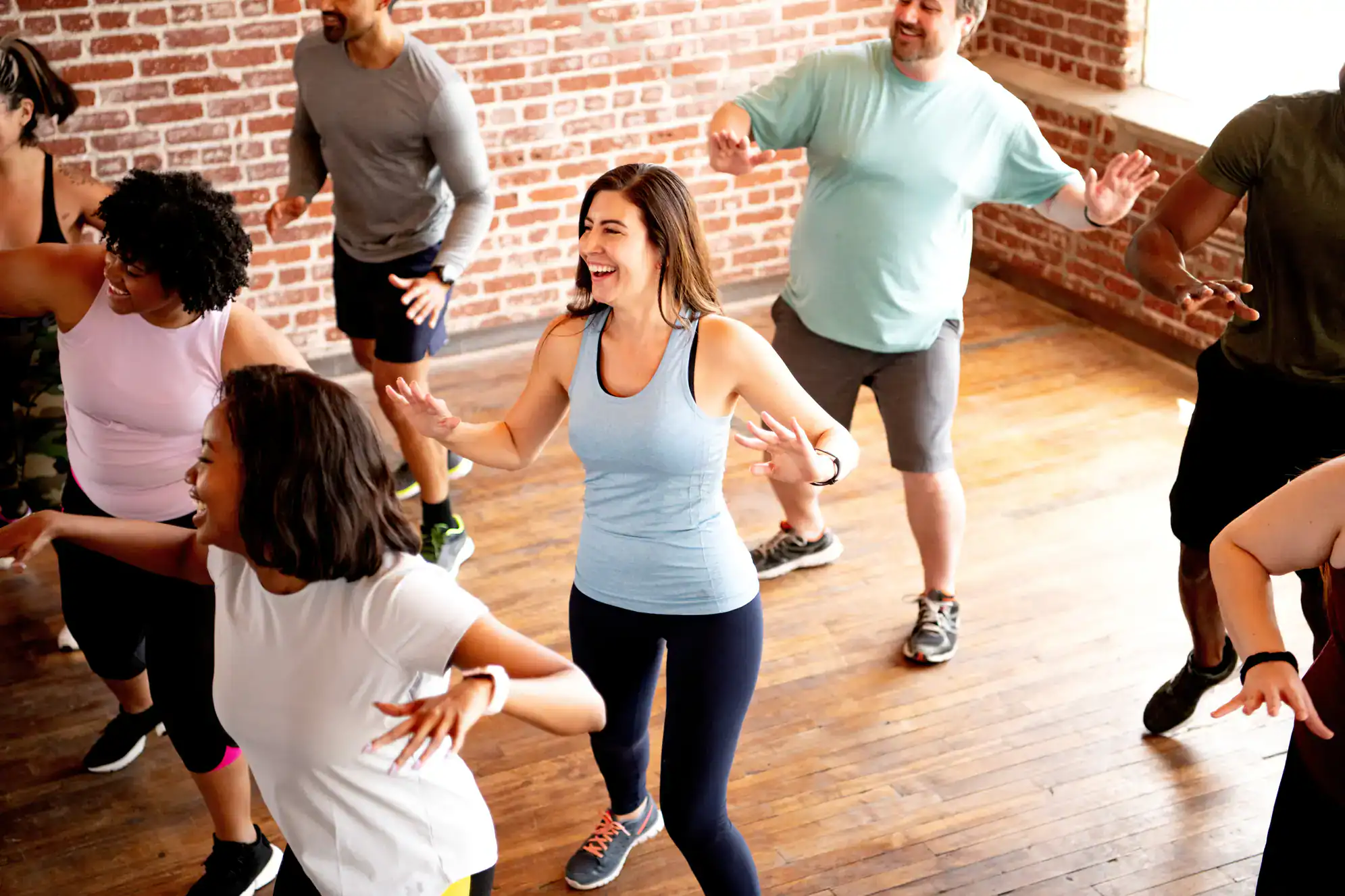
You’ve decided you want to learn Latin dance. Maybe it’s for a wedding, maybe it’s been on your list for years, or maybe you just want to feel comfortable when the music starts at a party. Whatever brought you here, you’re now staring at a list of class options — Salsa, Bachata, Rumba — and wondering where to even begin.
They all fall under the Latin dance umbrella, but they’re not interchangeable. Each one has its own rhythm, its own personality, and its own learning curve. The good news is that once you understand what makes each style different, the right choice usually becomes obvious. Let’s walk through it.
Most people searching for Latin dance classes aren’t looking for a specific style — they’re looking for a starting point. That’s completely normal. The challenge is that “Latin dance” covers a wide range of styles, each rooted in a different country, culture, and musical tradition. Salsa, Bachata, and Rumba are the three most common entry points for adult beginners, and they differ in ways that actually matter when you’re just getting started.
Tempo, footwork pattern, partner connection, and the emotional feel of the dance are all different across these three styles. Choosing based on what sounds coolest is fine, but choosing based on what actually fits your goals and personality will get you on the floor faster and keep you there longer.
Salsa is the most widely recognized Latin dance in the world, and for good reason — it’s energetic, playful, and designed for social settings. The music is fast, the footwork moves on a specific beat pattern, and the dance has a call-and-response quality between partners that makes it genuinely exciting once you get the hang of it.
Salsa is practiced by over 10 million people globally, which means there are social opportunities everywhere: clubs, community events, outdoor concerts. If your goal is to feel comfortable and confident in social settings, salsa is one of the best investments you can make.
That said, salsa is not the easiest Latin dance to learn from scratch. The tempo is quick, the timing is specific, and it takes most beginners a few weeks before the footwork starts to feel automatic. That’s not a reason to avoid it — it’s just something to know going in so you don’t get discouraged after your first beginner salsa dance class. The learning curve is real, but it flattens quickly with consistent practice.
For couples, salsa has a particular appeal. The lead-follow dynamic is clear and playful, and there’s a reason couples salsa classes tend to fill up fast. It’s one of the few partner dances where both people feel actively engaged throughout — not just moving in sync, but actually communicating through the dance. If you and your partner want something that feels alive and social, salsa is a strong choice. Beginner salsa dance lessons focus on the basic step, timing, and simple turns before building into more complex patterns, so you’re never thrown into the deep end without a foundation first.
If salsa is the life of the party, bachata is the conversation in the corner that turns into something meaningful. Bachata originated in the Dominican Republic and is often called the “Latin blues” — the songs are about longing, lost love, and deep feeling, and the dance reflects that. It’s slower, closer, and more connected than salsa.
The footwork pattern is simpler: three steps and a tap, repeated with variations. That simplicity is exactly why bachata dance classes are consistently recommended as the best starting point for adult beginners with no dance background.
Learning to dance bachata doesn’t require a natural sense of rhythm or years of prior experience. The tempo gives you time to think, the basic step is genuinely learnable in a single class, and the partner connection feels intuitive rather than technical. Most people who walk into their first bachata lesson nervous about looking foolish walk out feeling like they actually danced — because they did.
Bachata has also exploded in popularity over the last decade. What was once a niche style has become a fixture at Latin nights, weddings, and social dance events across Suffolk County and beyond. If you’re looking for a dance you can actually use in the real world quickly, bachata lessons give you the fastest return on your time. The style is intimate without being complicated, expressive without requiring years of training, and social without needing a permanent partner. For anyone who has ever thought “I’m not a dancer” — bachata is often the style that changes that story.
Want live answers?
Connect with a Ballroom Factory Dance Studio expert for fast, friendly support.
Rumba sits in a different emotional register than either salsa or bachata. It’s slower, more deliberate, and more focused on the connection between partners than on footwork or social energy. The rumba basic step is built around a specific weight transfer and hip movement that takes time to internalize, but once it clicks, it feels natural in a way that faster dances sometimes don’t.
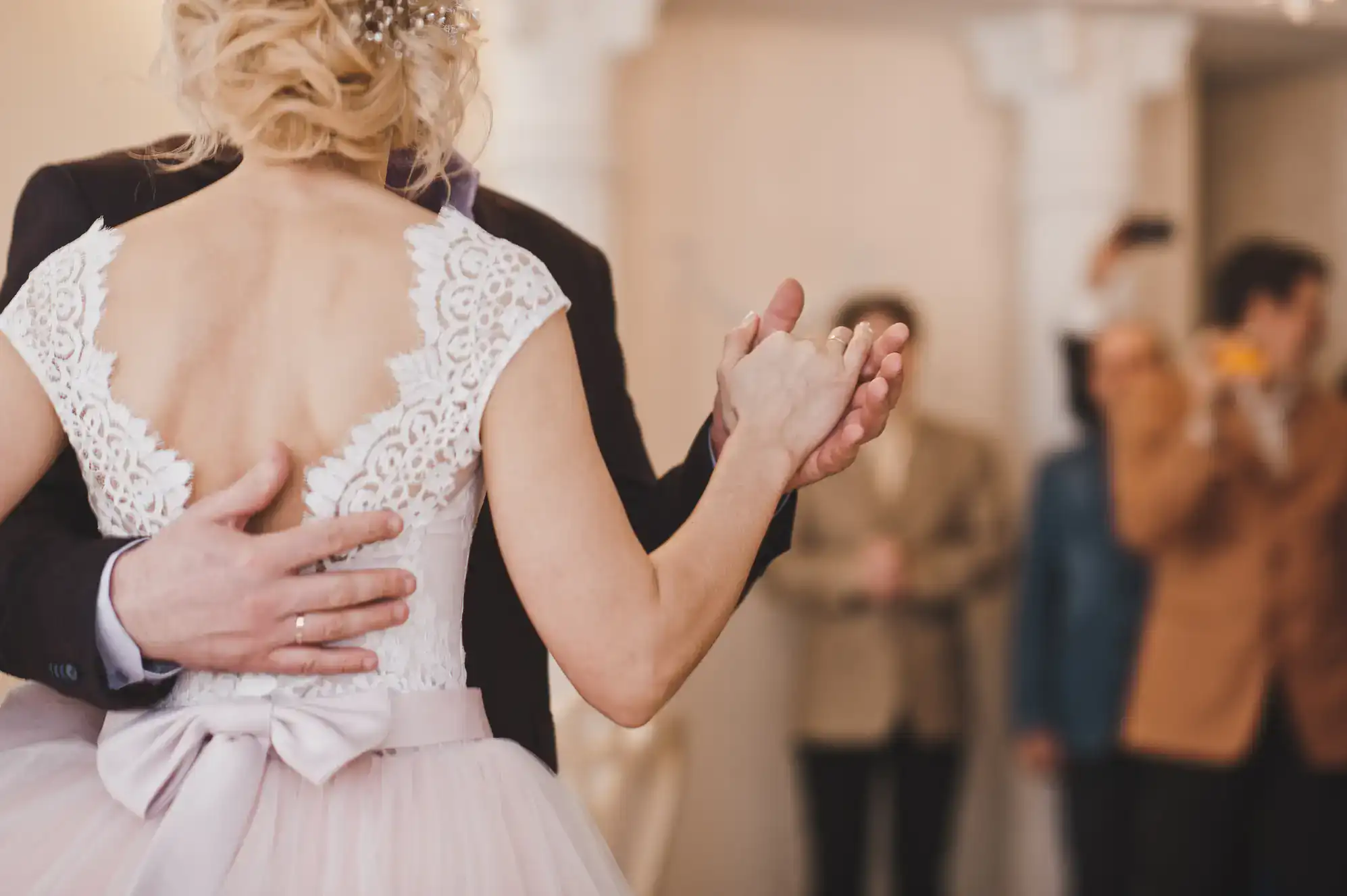
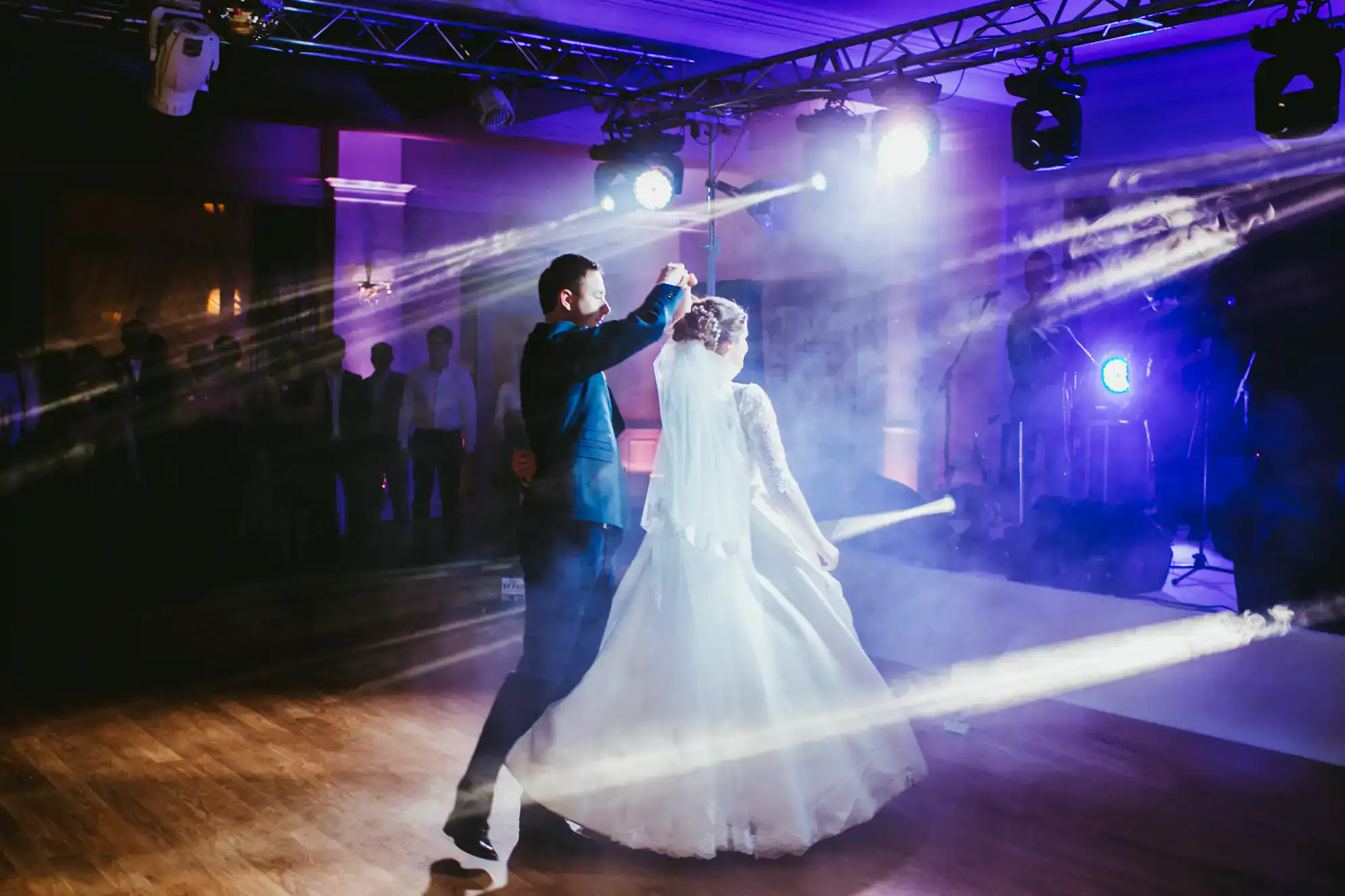
Rumba is often the first choice for couples preparing for a wedding first dance, particularly when the chosen song is slow and romantic. It’s also a strong option for anyone who wants to develop body awareness and partner connection before moving into faster styles.
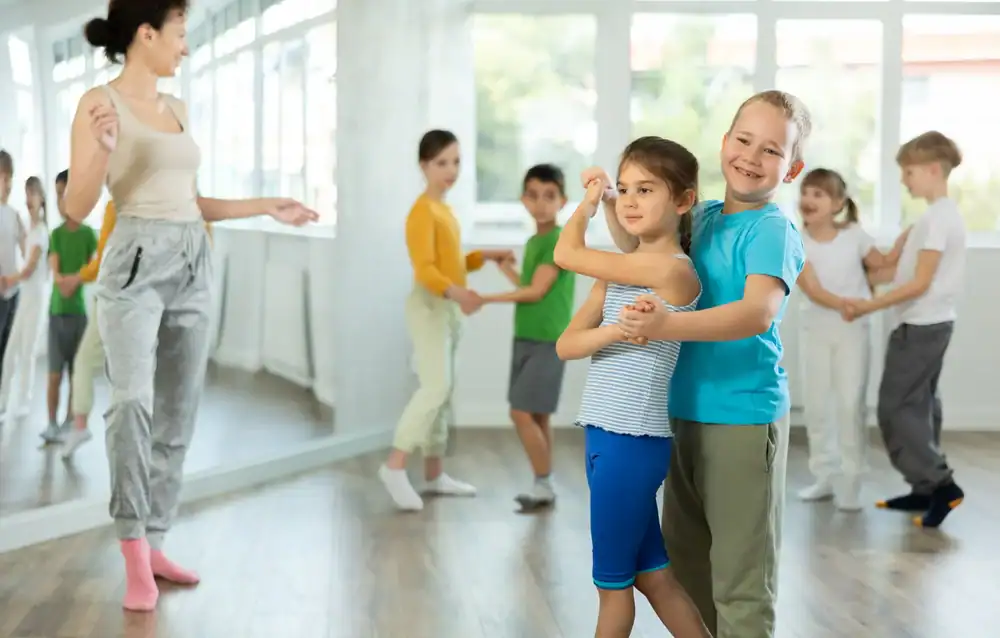
The honest answer is that it depends on what kind of experience you want to share. Salsa is playful and energetic — it’s great for couples who want to feel like they’re having fun together on the floor. Bachata is intimate and connective — it’s better for couples who want to feel close and in sync. Rumba is slow and romantic — it’s ideal when the moment calls for something more tender and intentional.
For wedding preparation specifically, rumba and bachata are both strong options depending on the song. A slow, romantic ballad pairs naturally with rumba’s deliberate pace and emotional weight. A mid-tempo song with a Latin feel often works better as bachata, where the rhythm is clear and the movement is accessible even for guests who’ve never danced before.
What we consistently see at Ballroom Factory Dance Studio is that couples who come in for wedding dance prep often end up continuing lessons long after the wedding — because they discover that dancing together is genuinely enjoyable, not just something to survive for the reception. The dance you choose to start with matters less than the fact that you start. We offer custom choreography for couples who want a first dance built around your specific song, comfort level, and vision rather than a generic routine.
If you’re unsure which style fits your situation, that’s exactly the kind of conversation we have in a first lesson. There’s no pressure to decide in advance — we’ll figure it out together based on your goals, your song, and what feels right when you’re actually moving.
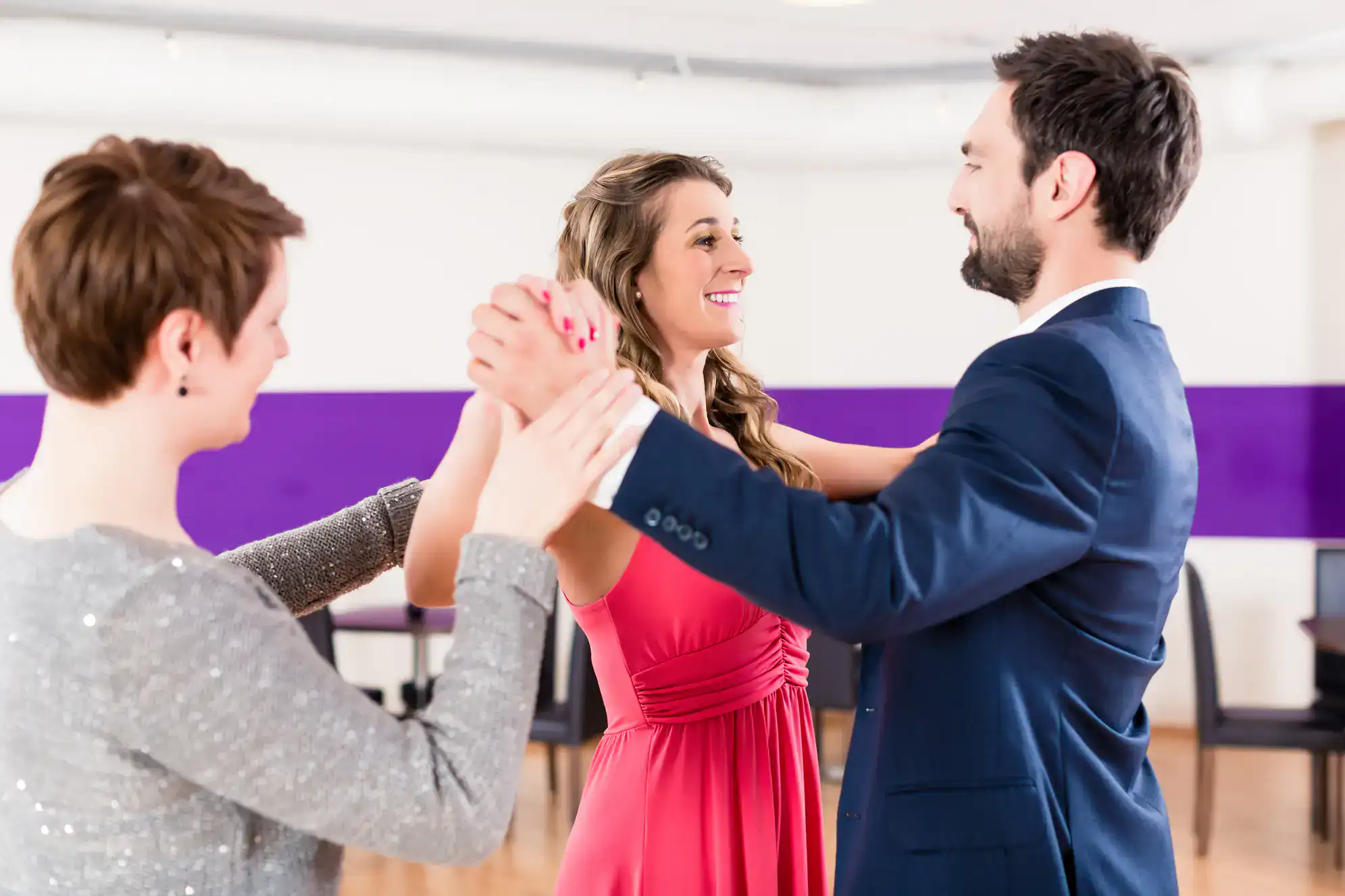
This is one of the most common questions we hear, and the answer is no — you do not need to bring a partner to take Latin dance classes. In group settings, partner rotation is standard practice. You’ll work with multiple people throughout the class, which is actually better for your development than dancing with the same person every time. It forces you to adapt, listen, and lead or follow clearly rather than relying on a familiar dynamic.
Private dance lessons for adults also require no partner. In a one-on-one setting, our instructor works with you directly, which means you get personalized feedback on your footwork, timing, and body movement without the added variable of coordinating with another beginner. Many adult students prefer to start with a few private lessons before joining a group class — it builds enough foundational confidence that the group setting feels manageable rather than overwhelming.
The “I don’t have a partner” concern is one of the most common reasons adults delay starting dance lessons, and it’s one of the least valid. Whether you come alone, with a friend, or with a partner, there’s a format that works for your situation. Adult dance lessons in Patchogue and throughout Suffolk County are designed specifically for people whose lives don’t fit neatly into a pre-packaged arrangement — and that flexibility is something we take seriously.
Here’s the short version: if you want the fastest path to social confidence, start with bachata. If you want energy, playfulness, and a dance you can take anywhere, start with salsa. If you’re preparing for a wedding first dance or want something slow and romantic, rumba is worth a serious look. And if you’re still not sure — that’s what a first lesson is for.
The decision about which Latin dance to learn first matters far less than most people think. What matters is that you start with an instructor who pays attention to where you actually are, not where they assume you should be. At Ballroom Factory Dance Studio, that’s the baseline, not the selling point.
If you’re in Suffolk County and you’ve been thinking about this for longer than you’d like to admit, reach out to us. The floor is ready when you are.
Summary:
Article details:
Share: